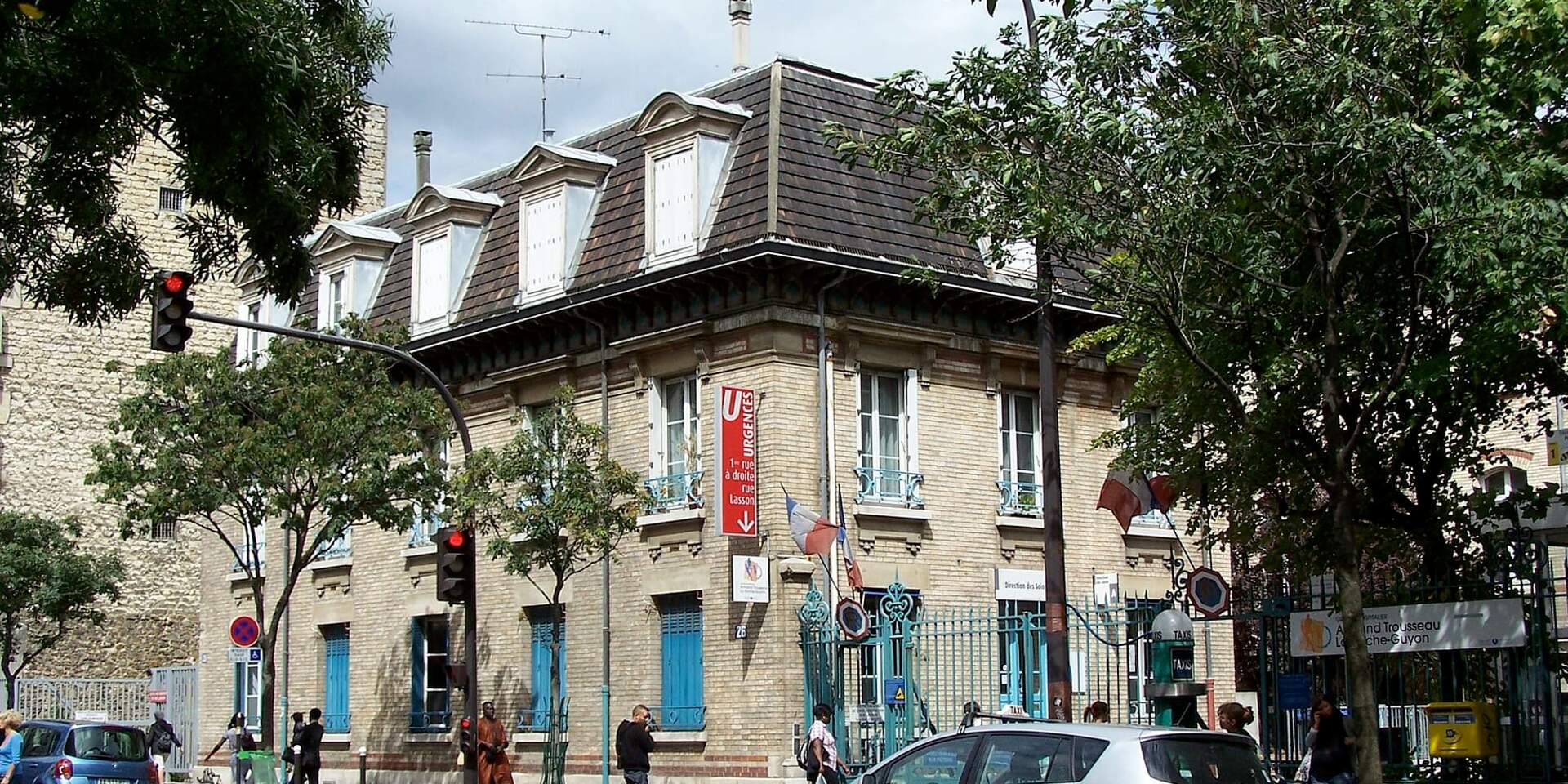
In the spring of 1958, in a sparsely equipped lab she had set up herself at the Armand-Trousseau children's hospital in Paris, a 32-year-old doctor named Marthe Gautier counted the chromosomes in cells from a child with Down syndrome and kept getting 47. Healthy cells have 46. That one extra chromosome, later numbered 21, was the first time anyone had linked a human condition to an abnormal number of chromosomes. For the next half century, though, the name attached to the discovery was Jérôme Lejeune: the colleague who took her slides away to be photographed.
The version going around on social media says the female scientist who found Down syndrome had her work stolen by a male colleague for decades. It's close, but two details need fixing. Gautier didn't find Down syndrome; the English physician John Langdon Down described the condition in 1866. She found its cause. And "stolen" is the word her supporters use, while the foundation named after Lejeune still disputes it. The most authoritative outside verdict, from the ethics committee of France's national medical research institute (Inserm) in 2014, came down largely on her side.
A heart doctor in a chromosome lab
Gautier was born on 10 September 1925 into a family of farmers in Seine-et-Marne, east of Paris. She trained in paediatrics under Robert Debré, the dominant figure in French paediatrics at the time, and wrote her thesis on fatal cases of rheumatic fever affecting the heart. In the early 1950s she was one of only two women among the 80 residents in the Paris hospital system.
In 1955 a scholarship took her to Harvard for a year. Part of the deal was working as a technician in a cell culture lab, growing fibroblasts (simple connective-tissue cells) from fragments of aorta. It sounded like a side job. It turned out to be the most valuable skill she brought home.
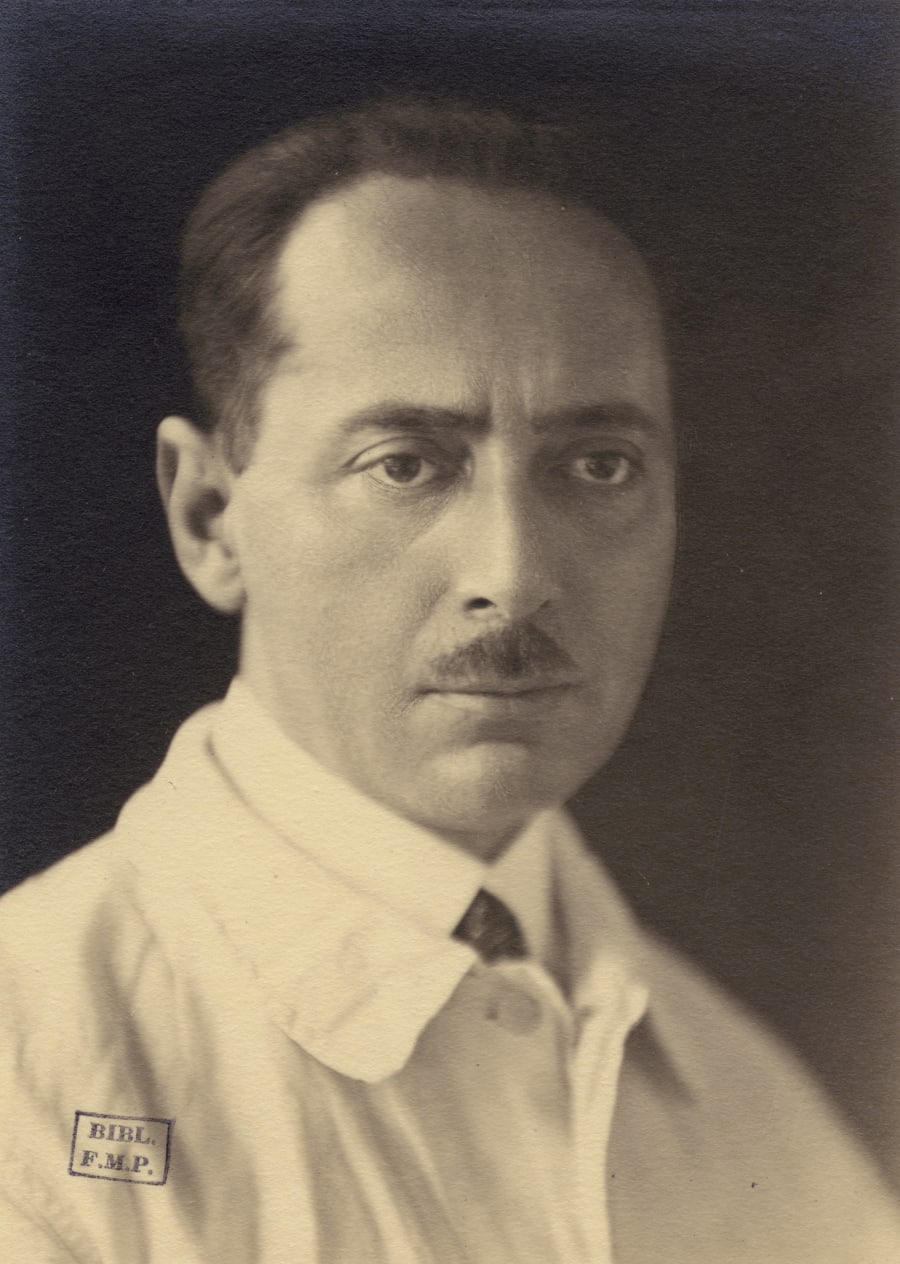
When she returned to Paris in 1956, the hospital post she had been promised had gone to a male colleague. She ended up instead in the paediatrics department of Raymond Turpin at Trousseau. Turpin had long suspected that "mongolism", as Down syndrome was then called, might come from a chromosome problem, and the timing was suddenly right: that same year Joe Hin Tjio and Albert Levan in Lund, Sweden, showed that human cells carry 46 chromosomes, not the 48 textbooks had taught for decades. Turpin wanted to count chromosomes in his patients. Nobody on his team knew how to grow the cells. Gautier did.
Counting to 47
What followed was improvised almost from scratch. According to the biologist Julie Batut, interviewed by CNRS in 2026, Gautier began by culturing cells in plasma from a rooster she bought herself; she also used her own blood serum, and her own money for lab equipment. She grew fibroblasts from small pieces of connective tissue taken under local anaesthetic, which were easier to get than other samples. Then she adapted a recent trick called hypotonic shock, which swells the cells so the chromosomes spread apart and can be counted, and stained them with a dye she mixed to her own recipe.
Cells from children without Down syndrome gave 46 chromosomes, as they should. Cells from children with the syndrome gave 47.
There was a catch. The extra chromosome was one of the smallest in the set, and her old, low-powered microscope couldn't photograph it clearly. In 1950s genetics, a count without a photograph was a claim, not proof.
The slides leave her lab
This is where Lejeune comes in. Born in June 1926, he was a CNRS researcher in Turpin's department who had been studying children with Down syndrome by other methods. He offered to have Gautier's slides photographed in a better-equipped lab, and she handed them over in May or June of 1958 (the published accounts give both months). She later wrote that she never saw the photos, which she was told were "with the boss."
In the autumn of 1958, Lejeune presented the finding at a seminar at McGill University in Montreal. Gautier wasn't told in advance. The paper, "Les chromosomes humains en culture de tissus" (Human chromosomes in tissue culture), appeared in the proceedings of the French Academy of Sciences in January 1959 with three names on it: Lejeune first, Gautier second, Turpin last. Her name was printed wrong. In her 2009 account she said she appeared as "Marie Gauthier", and that putting Lejeune first broke the usual rule that the first author is the person who designed and carried out the experiments.
In 1960 an international meeting of geneticists in Denver agreed the numbering system that labelled the extra chromosome as number 21, which is why the condition is also called trisomy 21: three copies of chromosome 21 instead of two.

Two careers, two directions
Lejeune became the face of the discovery, and the honours came quickly. He received the first Kennedy Prize, presented by President John F. Kennedy, in 1962; in 1964 he was given the first chair of human genetics at the University of Paris; in 1969 he won the William Allan Award, among the top prizes in human genetics. He also went on to do major work of his own, including the description of cri du chat syndrome in 1963. According to CNRS, he never offered to share the honours for trisomy 21 with Gautier.
Gautier left genetics. She went back to paediatric cardiology, later ran a pathology lab for childhood liver disease at Kremlin-Bicêtre hospital, and became a director of research at Inserm. Writing decades later, she said she had felt a moral obligation to return to treating children with heart disease. For roughly 50 years she said little in public about 1958.
Lejeune's later life explains part of why this credit fight became so bitter. A devout Catholic, he was horrified that his discovery made it possible to test pregnancies for Down syndrome and end them, and he campaigned against abortion for the rest of his life, including against France's 1975 law legalising it. He died on 3 April 1994. On 21 January 2021 Pope Francis declared him "Venerable", a step on the road to possible sainthood. The Jérôme Lejeune Foundation, which funds research and care for people with Down syndrome and also campaigns against abortion, has defended his claim to the discovery for years.
Breaking the silence at 83
The 50th anniversary of the discovery, in 2009, brought a wave of retrospective articles, and Gautier noticed that they mentioned Lejeune and not her. Encouraged by her friend and fellow geneticist Simone Gilgenkrantz, she published her own account that year in the French journal Médecine/Sciences; an English translation by the Welsh geneticist Peter Harper ran in Human Genetics. "I suspected political manoeuvring," she wrote of 1958. "And I wasn't wrong."
The response, five years later, was strange enough to make international news. On 31 January 2014, Gautier, then 88, was due to receive a medal from the French Federation of Human Genetics at its conference in Bordeaux and give a talk about the discovery. Hours before, two bailiffs arrived with a court order, obtained by the Lejeune Foundation, allowing them to record her speech; the foundation said it had reason to believe she would tarnish Lejeune's memory. The organisers cancelled the talk rather than hold it under the threat of a lawsuit, and she received her medal the next day at a small private ceremony. The federation said it "bitterly regretted" the decision. Gilgenkrantz, who had seen the slides for the talk, told Science they were "completely innocuous."
What Inserm concluded, and what the foundation says
A group of researchers then asked Inserm's ethics committee to look at the case. Its opinion, published in September 2014, judged that Lejeune's part in the discovery was unlikely to have been the predominant one. Lejeune certainly promoted the finding around the world, the committee wrote, but promoting a discovery is different from making it, and the technical work (Gautier's cell cultures) was a necessary condition for it.
Given that the discovery of Trisomy 21 could not have been made without the indispensable contributions of Raymond Turpin and Marthe Gautier, it is regrettable that their names have not been routinely associated with this discovery.
— Inserm Ethics Committee, September 2014 (English translation via Medscape)
The foundation hasn't accepted this. Its case rests on two documents: entries in Lejeune's lab notebook dated 22 May and 13 June 1958 recording 47 chromosomes, and a letter Turpin wrote to Lejeune on 27 October 1958 saying that "Miss Gautier and Mrs Massé are still at 46." The foundation reads that as proof Gautier hadn't seen the extra chromosome herself.
Gautier's account
She built the cell cultures, counted 47 chromosomes in her own preparations in 1958 and handed her slides to Lejeune only to have them photographed. She never claimed she identified the chromosome as number 21.
The Lejeune Foundation's account
Lejeune himself discovered the extra chromosome. It cites his lab notebook entries from May and June 1958 and Turpin's October 1958 letter saying Gautier was still counting 46.
Those dates are worth reading carefully. The notebook entries fall in the same weeks that, by Gautier's account, her slides were already in Lejeune's hands, so they show when he counted 47, not whose preparations he was looking at. The October letter is harder to place without knowing which cells Gautier was counting by then. Gautier herself never disputed that Lejeune did the work of pinning down which small chromosome was the extra one; her complaint was about who did the groundwork and who was allowed to tell the story.
Personally, I think Inserm's reading is the fairest one available: this was a team discovery in a strict hospital hierarchy, and only one member of the team was allowed to own it. Gautier was a junior woman in a department where Lejeune outranked her, and she said herself she was too inexperienced to know how credit was handed out. That doesn't make Lejeune's own contribution fake. It does make the "sole discoverer" version, repeated for decades, wrong.
Key dates
- 1866English physician John Langdon Down describes the syndrome that will carry his name.
- 1955–56Marthe Gautier spends a year at Harvard and learns cell culture.
- 1956Tjio and Levan show that human cells have 46 chromosomes. Gautier joins Raymond Turpin's department at Trousseau.
- Spring 1958Gautier counts 47 chromosomes in cells from children with Down syndrome; her slides go to Jérôme Lejeune to be photographed.
- Autumn 1958Lejeune presents the finding at a seminar at McGill University in Montreal.
- Jan 1959The paper is published with Lejeune as first author and Gautier's name misspelled.
- 1960The Denver conference numbers the extra chromosome 21: trisomy 21.
- 2009Gautier publishes her account for the 50th anniversary.
- 31 Jan 2014Her talk in Bordeaux is cancelled after bailiffs arrive on behalf of the Lejeune Foundation.
- Sep 2014Inserm's ethics committee says the discovery was impossible without Gautier and Turpin.
- 21 Jan 2021Pope Francis declares Lejeune Venerable.
- 30 Apr 2022Marthe Gautier dies, aged 96.
Recognition, very late
In 2014, the same year as the Bordeaux episode, Gautier was made an Officer of the Legion of Honour. She died on 30 April 2022 at the age of 96. Since then her story has become a standard example of what historians call the Matilda effect, the pattern of women's scientific work being credited to male colleagues, alongside Rosalind Franklin and Lise Meitner. A play about her, La Découvreuse oubliée (The Forgotten Discoverer), ran in Paris until March 2026.
The most public correction is still to come. Gustave Eiffel had the names of 72 French scientists, all men, painted in gold around the first floor of his tower in 1889. In January 2026 a commission set up with the City of Paris named 72 women scientists to be added beneath them, with the engraving planned for 2027 once the permits for altering a historic monument are in place. Marthe Gautier is on the list, and this time her name will be spelled correctly.
Read next: Mária Telkes, the forgotten "Sun Queen" whose solar still saved WWII airmen · the 1922 insulin discovery and its own fight over credit · how a Tokyo medical school rigged exams against women
Sources (10)
- Gautier M., Harper P.S., Fiftieth anniversary of trisomy 21: returning to a discovery, Human Genetics 126, 317–324 (2009); French original: Gautier M., Cinquantenaire de la trisomie 21: retour sur une découverte, Médecine/Sciences 25(3), 311–316 (2009)
- Inserm Ethics Committee, opinion on the contribution of Marthe Gautier to the discovery of trisomy 21 (September 2014)
- Elisabeth Pain, After more than 50 years, a dispute over Down syndrome discovery, Science (11 Feb 2014)
- Stéphanie Lavaud, Marthe Gautier, 'forgotten' discoverer of trisomy 21, dies, Medscape (18 May 2022)
- Léa Galanopoulo, A supernumerary discoverer, interview with Julie Batut, CNRS News (2026)
- Fondation Jérôme Lejeune, press kit on the trisomy 21 controversy (2014)
- Sam Kean, The battle over the cause of Down syndrome, Science History Institute
- EWTN News, Pope Francis recognizes heroic virtues of French geneticist Jérôme Lejeune (21 Jan 2021)
- Le Monde, Eiffel Tower to honor 72 women scientists for posterity (26 Jan 2026)
- Images: cover, LPLT, CC BY-SA 3.0; Raymond Turpin, Bibliothèque interuniversitaire de santé, Licence Ouverte; karyotype, National Human Genome Research Institute, public domain