There's a photo that keeps going around: a cracked concrete cosmonaut holding his helmet at his hip, knee-deep in dead scrub. The caption usually calls him Vladimir Komarov, the first person to die during a spaceflight, and says he's crumbling away in an abandoned Soviet children's camp. We ran that caption on our own X account in November 2026. The first part holds up. The second part has been out of date since April.
In April 2026 a Russian ultramarathon organiser saw the same picture on a foreign social media page, sent a team to find the statue, and had it lifted out for restoration. The plan is to give it to a space museum. And the man it shows has been followed for decades by a story about his last minutes (screaming, cursing, a tearful goodbye) that the surviving recordings don't support.
The photo that got the statue rescued
Mikhail Dolgiy founded Running Heroes Russia, the team behind some of the country's biggest trail races. Shortly before Cosmonautics Day on 12 April, he told the history magazine Rodina, he was scrolling through social media when he hit the picture on a foreign page. The comments underneath were harsh, and he took them personally. Nobody seemed to know where the statue actually was, so he sent part of his team to look for it.
The search, led by the team's course safety specialist Dmitry Kulinichenko, ended on the grounds of a former Young Pioneer camp in Vladimir Oblast, on land that's now private. According to the team's Telegram post, the statue was in far worse shape than the photo suggested. The owner agreed to release it within days, and a picture published by the regional outlet Chesnok shows it hanging in yellow slings from a truck crane.
Dolgiy doesn't oversell what he saved. He says an unknown sculptor made it around 1973 and that it has no artistic value; its worth, in his telling, is the memory it carries. It also has no internal frame, which is why he reckons it had about a year left before it fell apart.
The caption needs two fixes. "Near Moscow" is loose: Vladimir Oblast is the next region to the east, and the Russian reports don't name the camp or the district. (A Russian urban explorer's May 2025 post describes a Komarov-named Pioneer camp with a cracked statue at the centre of its assembly square and cabins painted with fairy tales. It gives no address either, so I can't confirm it's the same place.) And "slowly crumbling" stopped being true when the crane arrived.
Dolgiy's team says it will pay for the restoration, has found a workshop, and is in talks to donate the finished statue to the Museum of Cosmonautics. Russian coverage has pitched it as a gift for Komarov's 100th birthday on 16 March 2027. I couldn't find any report since April saying the work is finished or that the museum has agreed.
Who Komarov was
Komarov was born in Moscow in 1927 to a father who worked as a janitor, then a porter, storekeeper and metalworker. He entered an air force school at 15, graduated with honours from the Zhukovsky Air Force Engineering Academy in 1959, and joined the first cosmonaut group the next year, about five years older than the others. He was pulled from training twice (a hernia operation, then a single extra heartbeat on an ECG) and got back in both times.
In October 1964 he commanded Voskhod 1, the first spacecraft to carry more than one person. When Soyuz needed a commander for its first crewed flight, the historian Asif Siddiqi writes, Komarov was the unanimous choice. He was 40, married to Valentina for 17 years, with a son, Yevgeny, who was 16, and a daughter, Irina, who was nine.
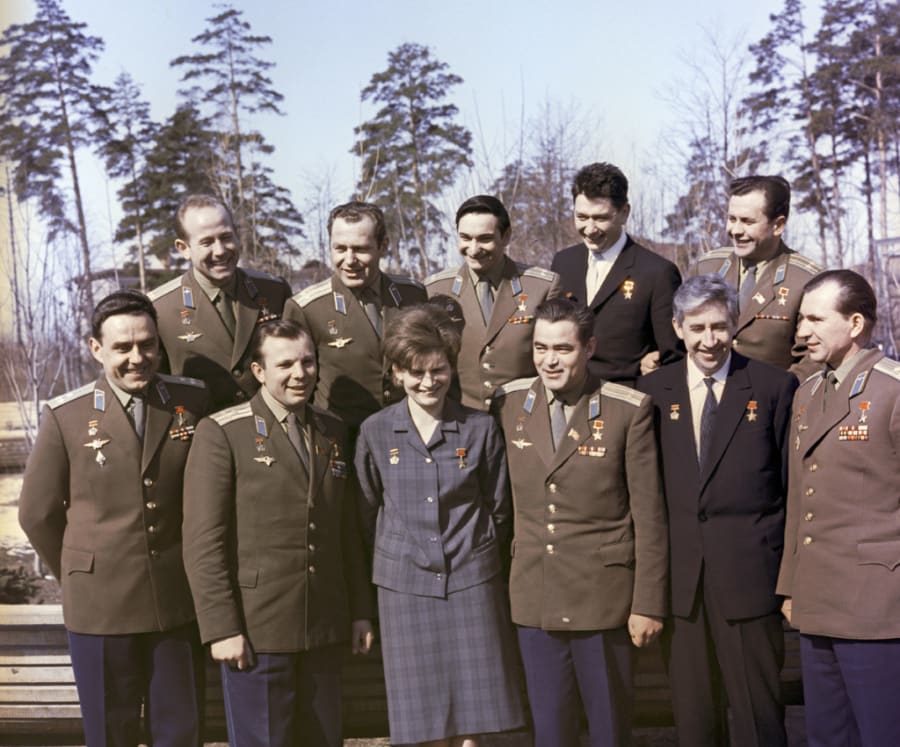
One correction, because it's spreading through the rescue coverage: several Russian reports call him the first person to go to space twice. He wasn't. Gus Grissom flew in 1961 and again on Gemini 3 in March 1965, two years before Soyuz 1. Komarov was the first Soviet cosmonaut to do it.
A spacecraft that hadn't passed a single test
Soyuz had never completed a fully successful uncrewed flight. In the three attempts before Komarov's, one ship failed to orient itself on re-entry and was destroyed (November 1966), one blew up the launch pad after an aborted liftoff (December 1966), and one landed far off target on the frozen Aral Sea with a hole burned through its heat shield, then broke through the ice and sank (February 1967).
The pressure to fly anyway was enormous. No Soviet crew had gone up since March 1965, NASA had flown ten Gemini missions in that gap, and both May Day and the 50th anniversary of the revolution were coming. At a State Commission meeting on 14 April, technical heads reported at least 101 anomalies across the two spacecraft being prepared. General Nikolai Kamanin, who ran cosmonaut training, wrote in his diary the next day: "Today there is not such confidence in victory." Three officials objected at various stages and were outvoted, though Siddiqi notes that even they never expected the parachutes to be the problem.
The plan was hugely ambitious for the time. Komarov would launch alone; a second Soyuz with three men would follow a day later, dock with him, and two of its crew would spacewalk across. He lifted off at 03:35 Moscow time on 23 April 1967, and within minutes he was telling the ground he couldn't see the left solar panel. It had never opened. A sensor needed to point the ship was contaminated too, and on the second orbit he was shouting that the panel's current was zero. The second launch was called off, and Komarov was told to rest and prepare to come home.
Coming home turned out to be the hard part. The first attempt, on orbit 17, failed when the ship's ion sensors lost their signal over the night side and the computer correctly blocked the engine. A second try that same orbit, using a complicated manual method he had never trained for, also failed. With the batteries running down and Gagarin relaying instructions, he tried again on orbit 19: line the ship up by eye against the horizon in daylight, hand over to gyroscopes in the dark, take back control, fire the engine. This time it worked: the engine burned for about 146 seconds, as planned. (Gordon Cooper had to do something similar when Faith 7's systems failed in 1963, in a far simpler ship.) Personally, I think this is what the statue ought to commemorate: he'd been handed a failing spacecraft and he flew it back into the atmosphere anyway.
I feel excellent, everything is in order.
— Vladimir Komarov to ground control during re-entry, 24 April 1967, from the Soyuz 1 mission transcript
What went wrong on the way down
Re-entry worked. The parachutes didn't, and the Soviet investigation spent more than a year working out why.
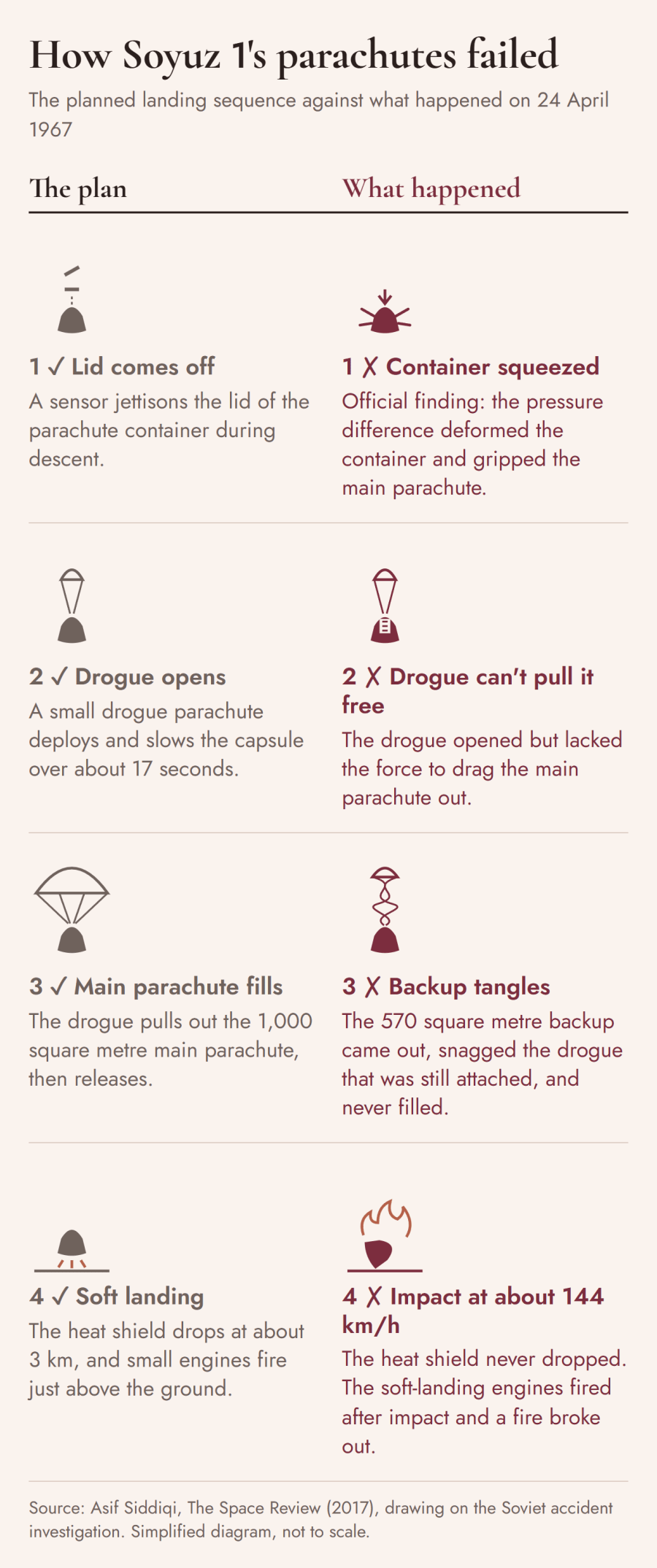
The commission concluded that when the container lid came off, the pressure difference between the thin air outside and the sea-level cabin deformed the container and clamped the main parachute inside. The small drogue simply didn't have the pull to drag it out. The backup then deployed into the drogue, which was still attached, and tangled.
A second, unofficial explanation went around among engineers, and Boris Chertok later published it: the Soyuz capsules had gone into a high-temperature autoclave without the covers for their parachute compartments, breaking the approved process, which left the inside of the containers rough and sticky. Factory workers were furious at the claim and disputed it. Chief Designer Vasily Mishin believed for years that the parachute had been packed badly. The pressure and friction theories lead to the same frightening place, and Siddiqi puts it bluntly: had Soyuz 2 launched and the mission gone ahead, "all four cosmonauts would have most certainly died on return."
The capsule came down in open steppe about 65 km from the city of Orsk at about 06:24 Moscow time. An autopsy found Komarov died on impact; the fire came afterward, when the soft-landing engines detonated on the ground. Rescuers smothered the flames with dirt and had to dig to find him.
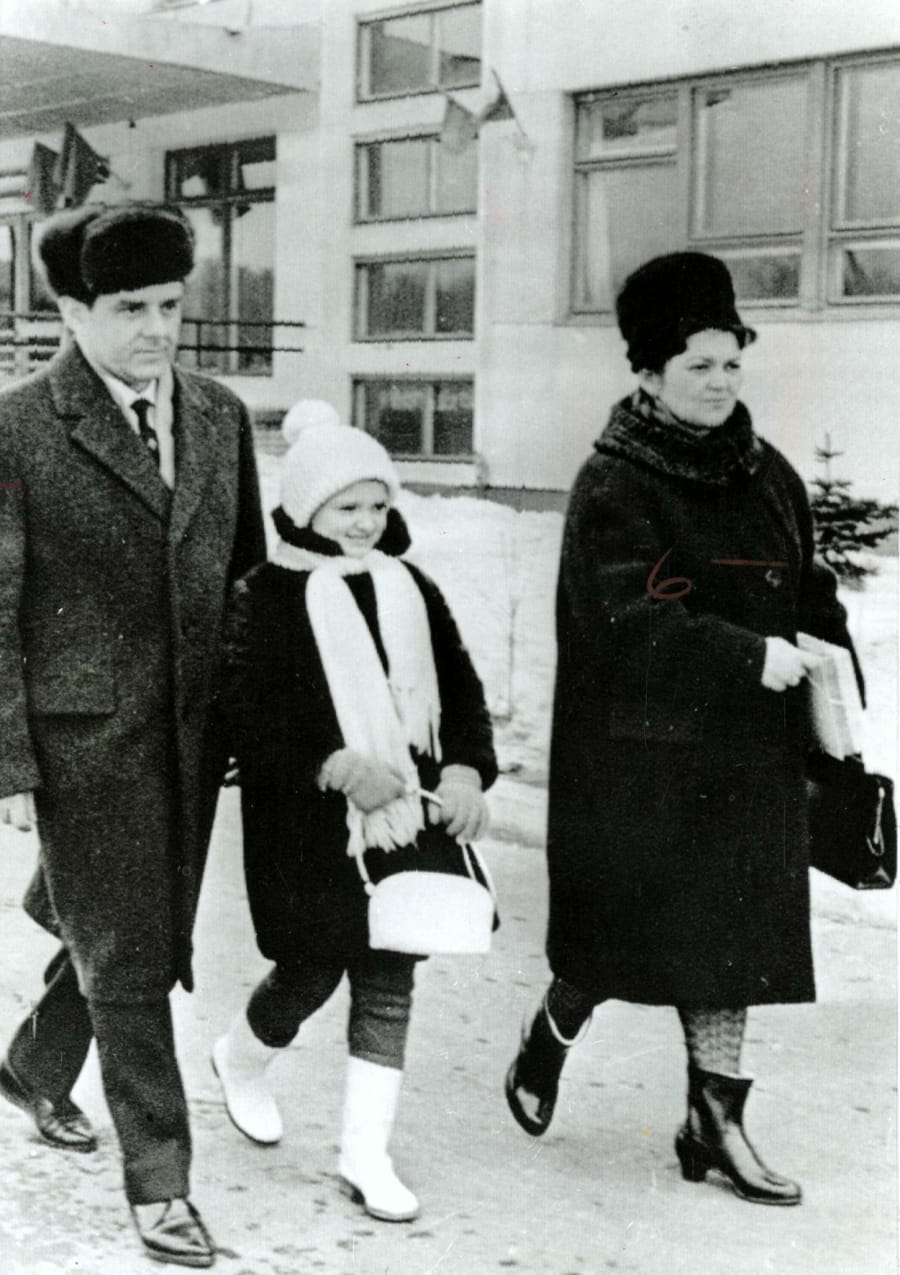
In Moscow, his family knew something was wrong when the phone lines went dead. Irina Komarova recalled in 2013 that a three-star general came to the door and her mother asked only, "Are you sure?" Komarov got a state funeral, and his ashes went into the Kremlin Wall. Not all of his remains had been recovered, though. A group of Young Pioneers later found more at the crash site, and those were buried there, something party officials reportedly tried hard to keep from the public. About six years after the crash, a Pioneer camp in Vladimir Oblast had its concrete cosmonaut.
The death scene that probably never happened
If you've read about Komarov online, you've probably met a much more dramatic version, mostly drawn from Jamie Doran and Piers Bizony's book Starman. NPR repeated it in 2011, and space historians immediately pushed back.
The popular version
Komarov knew the ship would kill him and flew to protect Gagarin. He said goodbye to his wife and a weeping Premier Kosygin by video link, then fell to Earth screaming curses at the engineers while US listening posts in Turkey recorded it all.
What the record supports
Archived ground-to-air recordings show him calm and working the problem until contact was lost. No evidence of the calls has surfaced. His radio links during the final fall depended on parachute lines that never deployed, so no recording of his last seconds is known.
Those details trace mainly to two men: Venyamin Russayev, a former KGB officer, and Perry Fellwock, a former NSA analyst. Siddiqi and the historian Slava Gerovitch went to the Russian State Archive of Scientific-Technical Documentation and transcribed the mission audio themselves. In that audio, the last words anyone heard from Komarov are a half-garbled report that his spacecraft's modules had separated. Siddiqi says the screaming claim rests on "absolutely zero evidence."
The technical argument is the one I find hardest to get around. The high-frequency antennas used during that phase of descent were on the parachute lines, and those lines never properly deployed; the only other option, a VHF antenna in the hatch, had nobody within range. The critics also say Gagarin was a backup in name only, since the Kremlin wouldn't have risked him, which undercuts the idea that Komarov flew to save his friend.
To be fair to the other side, Bizony told NPR he wished the book had downplayed Fellwock's quotes, but he stands by Russayev and argues that an official Soviet transcript can't be trusted. And the recordings do have limits: some of Komarov's transmissions went to remote tracking stations and aren't in that archive set. Whether he felt doomed before launch can't be proved either way, since only Russayev reports that conversation. Siddiqi himself says that what Komarov thought in those final seconds "will never be known."
I'd still go with the transcripts, and honestly I find them harder to read than the legend. A man with a dead solar panel and failing batteries tells mission control he feels excellent, thanks them, and is gone.
Where he's remembered now
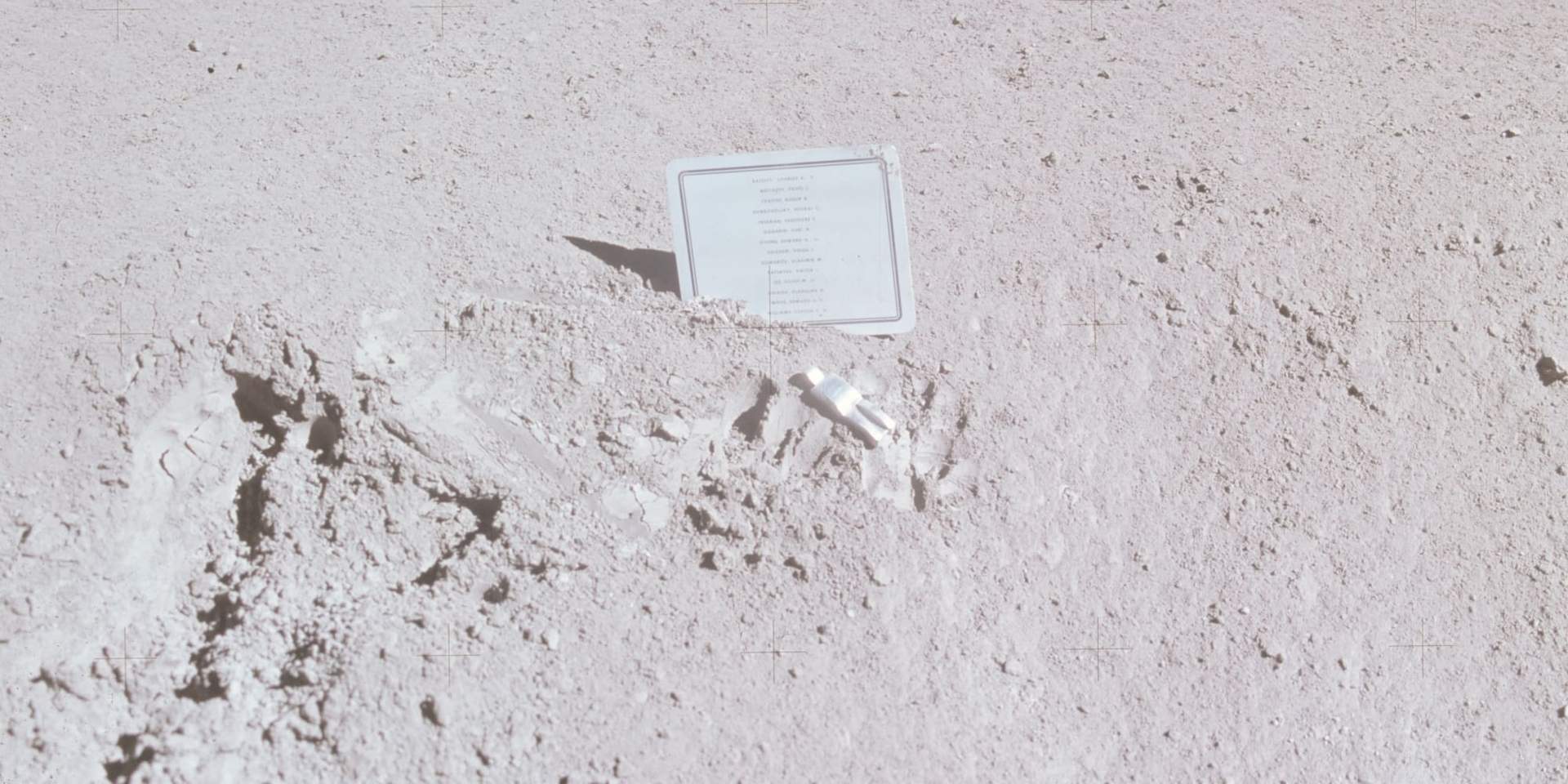
Komarov ended up with two graves, as Rodina puts it: the niche in the Kremlin Wall and a small memorial on the steppe near Karabutak. His name also went further than either. In August 1971, David Scott of Apollo 15 left a plaque on the Moon listing 14 astronauts and cosmonauts who had died, with Paul Van Hoeydonck's 8.9 cm aluminum figure beside it. Komarov and Gagarin are both on the list.
Key dates
- 16 Mar 1927Vladimir Komarov is born in Moscow.
- Oct 1964He commands Voskhod 1, the first spacecraft with a multi-person crew.
- 23 Apr 1967Soyuz 1 launches. The left solar panel fails to open.
- 24 Apr 1967After three re-entry attempts, the parachutes fail and Komarov is killed near Orsk.
- June 1967Soldiers put up an obelisk at the crash site.
- Aug 1971Apollo 15 leaves a plaque bearing his name on the Moon.
- About 1973An unknown sculptor makes the statue for a Pioneer camp in Vladimir Oblast.
- 1982A six-metre monument with a bronze bust replaces the crash site obelisk.
- April 2026Running Heroes Russia finds the statue and removes it for restoration.
- 16 Mar 2027Komarov's 100th birthday, the date linked to the statue's return.
The commission recommended rebuilding the parachute container as a cone with polished inner walls instead of a cylinder, and the descendants of that spacecraft still carry crews to the International Space Station. The statue has one date left to meet: 16 March 2027. Nobody has said publicly whether it'll be ready.
Read next: Gordon Cooper Flew Faith 7 Home by Hand · Ruby Bridges and the Doll in the Coffin: What the Photo Really Shows · The 'Elephant Man' Skull Photo: Joseph Merrick's Real Story
Sources (12)
- Oksana Manukovskaya, Под Владимиром нашли и отправили на реставрацию памятник космонавту Комарову, Rodina (24 Apr 2026)
- Running Heroes Russia, official Telegram channel post on the statue (April 2026)
- Chesnok, Во Владимирской области нашли второй памятник космонавту (25 Apr 2026)
- Vladimir News, Во Владимирской области нашли брошенный памятник космонавту; AiF Vladimir, Памятник космонавту Комарову нашли во Владимирской области (24 Apr 2026)
- Заброшки и путешествия (p01ina), post on an abandoned Komarov Pioneer camp (May 2025). The site isn't identified, and the link to this statue is unconfirmed.
- Asif Siddiqi, Fifty years later: Soyuz-1 revisited, The Space Review (2017): part 1, part 1, page 2, part 2, part 2, page 2
- NASA, Mir Hardware Heritage, Part 1 (Soyuz test flights)
- Robert Krulwich, A Cosmonaut's Fiery Death Retold, NPR (3 May 2011)
- Leonard David, Historical Document Details Ill-fated Flight of Soviet Cosmonaut (27 Feb 2020), on Siddiqi's article in Quest 27, no. 1
- Elisa Neckar, April 23, 1967: Soyuz 1 suffers a fatal crash, Astronomy (2026)
- Space.com, Belgian artist of 'Fallen Astronaut' figurine on the moon dies at 99; Guinness World Records, Art in space (2025)
- Images: cover, NASA, AS15-88-11894, public domain; cosmonauts, Alexander Mokletsov / RIA Novosti archive, CC BY-SA 3.0; family, United Press International / Smithsonian Institution Archives, no known copyright restrictions; diagram, The Verified Post