The photo doing the rounds shows a skull swollen with bony growths, and the caption delivers the gut-punch: this is Joseph Merrick, “the Elephant Man.” His head was so heavy he had to sleep sitting up, and he died at 27, probably after trying to lie down like everyone else.
The heartbreaking part of that caption is true. The rest of the story is worth knowing too, because Merrick was a great deal more than a skull in a photograph, and the photo itself is not quite what it seems.
What the post gets right
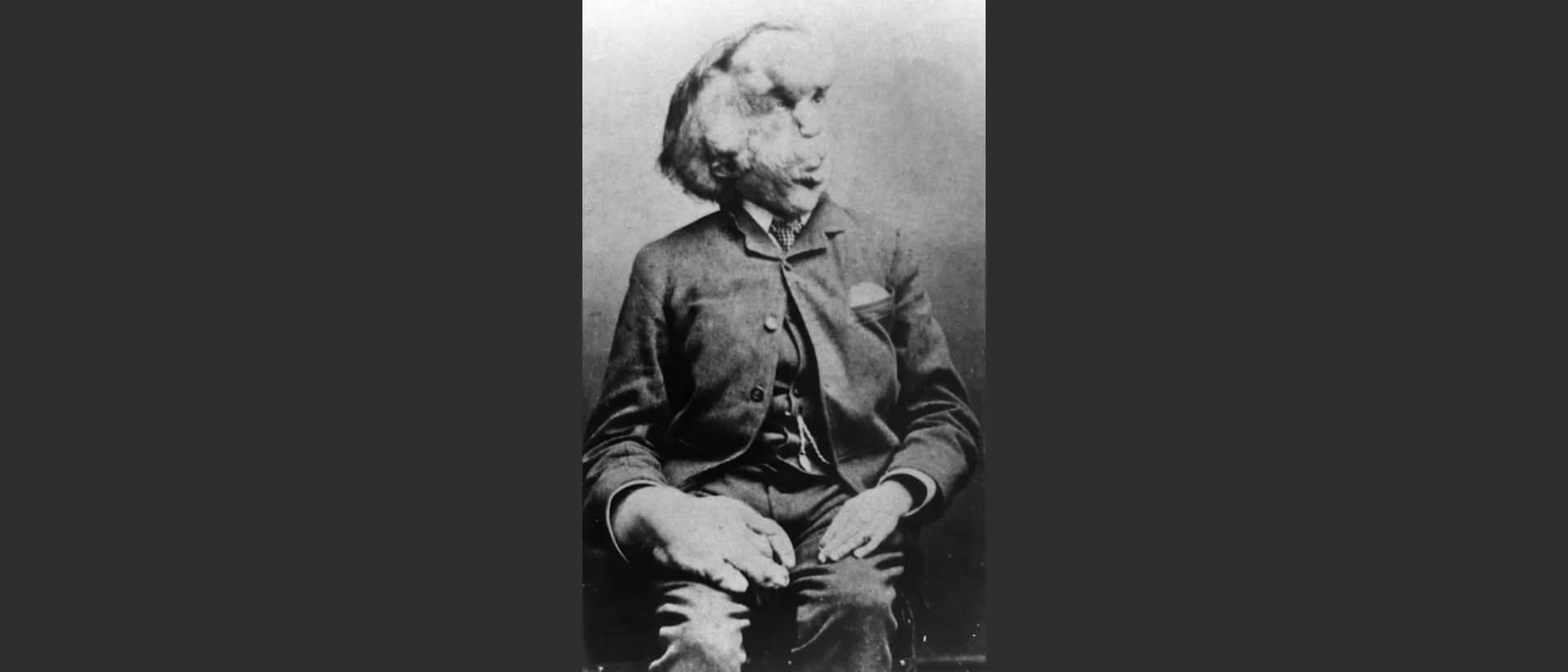
Joseph Carey Merrick was born in Leicester on 5 August 1862. Before he was five, his body began to change: his skin thickened, a bony lump grew on his forehead, and over the years his head, right arm and both feet became greatly enlarged. When the surgeon Frederick Treves first examined him in 1884, his head measured about 36 inches (91 cm) around.
Its weight shaped his nights. Merrick could not sleep lying flat. Treves described him sleeping sitting up, with his knees drawn up and his head resting on them. On 11 April 1890 he was found dead in his bed at the London Hospital. He was 27.
The official cause of death was asphyxia. Treves, who examined the body, concluded that Merrick’s neck had been dislocated, and he offered an explanation that has been repeated ever since: that Merrick had tried, for once, to sleep lying down.
Thus it came about that his death was due to the desire that had dominated his life, the pathetic but hopeless desire to be 'like other people.'
— Sir Frederick Treves, The Elephant Man and Other Reminiscences (1923)
It is worth being clear that this was Treves’s interpretation, written decades later. Nobody saw what happened that night. But it fits everything he and others recorded about how Merrick had to sleep.
What the photo doesn’t tell you
Merrick’s skeleton was kept after his death for teaching and research. It is still held by Queen Mary University of London, but it is not on public display; it is kept in a locked collection open only to researchers. What visitors to the Royal London Hospital Museum saw instead was an exact replica, made in 2012 from 3D scans of his fragile bones.
Pictures of the skull circulate online with no credit, and 3D-printed copies are even sold as curiosities. We couldn’t trace where the viral image came from, so we can’t say whether it shows his real skull, the museum replica, or another copy. That matters less than the caption suggests. The shape is his either way. The person is the part that gets lost.
The viral post
This is the skull of the Elephant Man. His head was so heavy he slept sitting up, and he died at 27 after trying to lie down.
The record
He did sleep sitting up and died at 27; the official cause was asphyxia, and his surgeon believed he had tried to lie down. His real skeleton is kept privately, the museum showed a replica, and the photo's source is unknown.
The life behind the nickname
Merrick’s early life was hard even by Victorian standards. His mother died in 1873, his father remarried, and he left a home where he was not wanted. He struggled to hold down work, and at 17 he entered the Leicester Union Workhouse.
In 1884, looking for a way out, he contacted a showman and proposed that he be exhibited. He was billed as “the Elephant Man” and ended up in a rented shop on Whitechapel Road in London, directly opposite the London Hospital. That is where Treves first saw him, and where he arranged to examine him and present him to a medical society.
Freak shows were falling out of favour, and the show moved on. In 1886, on a tour of Belgium, Merrick was robbed by his road manager and abandoned in Brussels. He made his way back to London alone, and arrived at Liverpool Street station exhausted, surrounded by a staring crowd. The one thing he had that could help was Treves’s card. Treves came to collect him.
The London Hospital let him stay for the rest of his life, in rooms of his own. It was the first stable home he’d had in years. Treves visited daily, and the two became friends. Visitors from London society came to meet him, among them Alexandra, Princess of Wales.
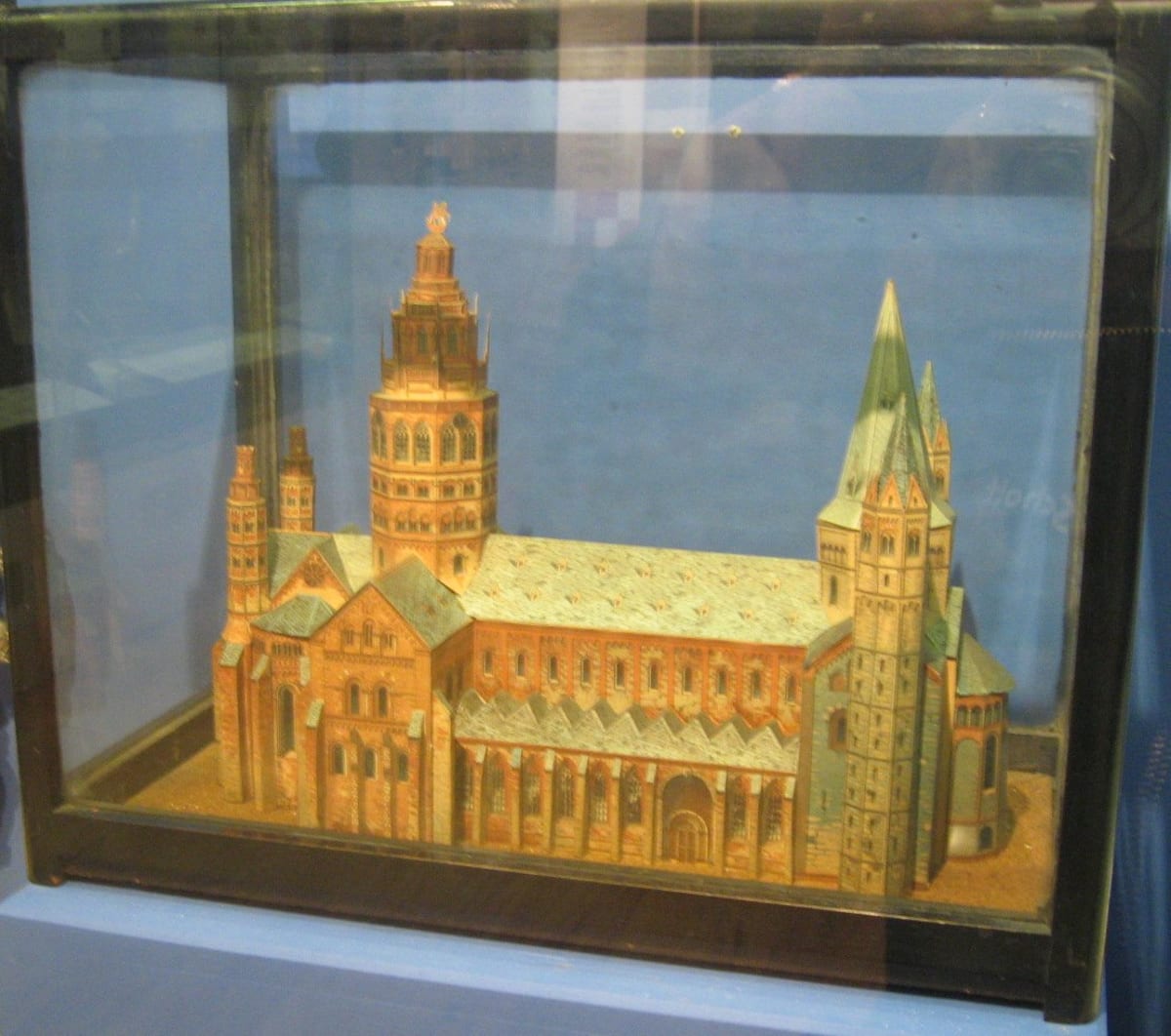
What his visitors found surprised them. Merrick was gentle, intelligent and fond of reading, and he spent hours on careful handiwork like the model above, built with the one hand he could use well. The man the posters sold as a monster turned out to be, by the accounts of those who knew him, gentle and kind.
Joseph Merrick, by the numbers
What did he actually have?
Despite the nickname, Merrick had nothing to do with elephants, and for most of the 20th century doctors assumed he had neurofibromatosis type 1. In 1986, two doctors writing in the British Medical Journal argued that his features fitted a much rarer condition instead: Proteus syndrome, which causes bones, skin and other tissues to overgrow unevenly.
In 2011, researchers identified the cause of Proteus syndrome: a mutation in a gene called AKT1 that arises in some of the body’s cells after conception, rather than being inherited. That is why it affects one part of the body more than another. Attempts to confirm Merrick’s diagnosis from his own DNA have so far been inconclusive, because his bones were bleached and treated many times over the years.
Key dates
- 1862Joseph Carey Merrick is born in Leicester on 5 August.
- 1873His mother dies; his father remarries.
- 1879At 17, he enters the Leicester Union Workhouse.
- 1884He is exhibited in London as 'the Elephant Man' and meets surgeon Frederick Treves.
- 1886Abandoned in Brussels, he returns to London and is given a home at the London Hospital.
- 1890He dies on 11 April, aged 27.
- 1923Treves publishes his account, mistakenly calling him 'John' Merrick.
- 1986Doctors propose that he had Proteus syndrome.
- 2012An exact replica of his skeleton goes on display at the Royal London Hospital Museum.
- 2019Author Jo Vigor-Mungovin traces where his soft tissue was buried, in the City of London Cemetery.
The image going viral is meant to shock, and it does. But the most remarkable thing about Joseph Merrick isn’t the shape of his skull. It’s that a man who was abandoned, exhibited and stared at for most of his life spent his last years reading, building cathedrals out of card and making friends, and still wanted, more than anything, just to sleep like everybody else.
Read next: Alessandro Moreschi, the last castrato, the Victorian girl who slept for nine years, and how tuberculosis became a Victorian beauty ideal.
Sources
- Sir Frederick Treves, The Elephant Man and Other Reminiscences (Cassell, 1923).
- Queen Mary University of London, “Public to meet Joseph Merrick for the first time, thanks to replica skeleton” (2012).
- BBC News, “Unlocking the secrets of the Elephant Man” (2013).
- BBC News, “Elephant Man: Joseph Merrick’s grave ‘found by author’” (2019).
- J.A.R. Tibbles and M.M. Cohen, “The Proteus syndrome: the Elephant Man diagnosed,” British Medical Journal 293 (1986)
- Marjorie J. Lindhurst et al., “A Mosaic Activating Mutation in AKT1 Associated with the Proteus Syndrome,” New England Journal of Medicine 365 (2011)
- Hektoen International, “Joseph Merrick, ‘The Elephant Man’” (2020).
- Images: Joseph Merrick carte de visite, c. 1889, photographer unknown, original held by the Royal London Hospital Archives (public domain); Merrick’s model of Mainz Cathedral, photo by Jack1956 (public domain), both via Wikimedia Commons