How a Deadly Plague Became the Ultimate Beauty Standard — and What That Says About Us
I should like, I think, to die of consumption — because then the women would all say, 'see that poor Byron — how interesting he looks in dying!'
— Lord Byron, Romantic Poet
Imagine a disease that makes you cough up blood, wastes your body to bones, burns you with fever, and slowly suffocates you over months or years. Now imagine that society looks at the person dying of this disease and says: beautiful.
Related: when homesickness was diagnosed as a deadly disease.
This was the Victorian era's relationship with tuberculosis — then known as "consumption." At its peak, the disease caused an estimated quarter to a third of all deaths in Europe. And yet for nearly a century, its symptoms were not just tolerated but actively coveted, imitated, and celebrated as the pinnacle of feminine beauty and artistic genius. It is one of the strangest, most revealing episodes in the history of human culture — and it tells us more about society than it does about disease.
What Consumption Actually Was
Tuberculosis is a bacterial infection caused by Mycobacterium tuberculosis, primarily attacking the lungs. Its symptoms are relentless and brutal: persistent fever, night sweats, dramatic weight loss, a wasting of the body so severe that the Latin term for the disease — phthisis — literally means "to waste away." And then there is the signature symptom: the bloody cough, the red-stained handkerchief, the moment John Keats held his after a coughing fit in 1820 and said, "I cannot be deceived in that colour — that is arterial blood. I cannot be deceived in that colour. It is my death warrant."
Keats was right. He died of tuberculosis the following year, aged 25. He was not alone. Of the six Brontë siblings, five would die of tuberculosis. The list of artists, writers, and composers consumed by consumption reads like a hall of fame: Frédéric Chopin, Anton Chekhov, Franz Kafka, Emily and Anne Brontë, Marie Duplessis — the courtesan who inspired both La Dame aux Camélias and La Traviata.
It killed indiscriminately. It killed the brilliant and the ordinary, the wealthy and the destitute. And at the height of its death toll, Victorian society decided it was elegant.
"Consumption, I am aware, is a flattering malady."
— Charlotte Brontë, 1849 — the same year she lost her sister Anne to tuberculosis, a year after losing Emily to the same disease
How Dying Became Beautiful
The aestheticization of tuberculosis did not happen overnight. Between 1780 and 1850, historian Carolyn Day writes, there was a slow and deliberate entanglement of consumptive symptoms with feminine beauty ideals. It happened because, by a grotesque coincidence, the physical effects of tuberculosis perfectly mirrored what Victorian society had already decided a beautiful woman should look like.
The consumptive appearance included dramatically pale, almost translucent skin — caused by anemia and blood loss. Flushed, rosy cheeks and red lips — caused by the persistent low-grade fever. Bright, glittering eyes — another symptom of fever. And a thin, fragile, wasted frame — caused by the weight loss the disease inflicted month after month. These were, simultaneously, the exact traits the Victorian beauty standard demanded of women: pale, delicate, slender, feverishly vivid.
It was as if the disease had read the fashion magazines. The result was a cultural feedback loop in which dying women were considered beautiful, and healthy women were considered deficient — unless they could find ways to look like they were dying.
Corsets, Arsenic, and the Art of Looking Ill
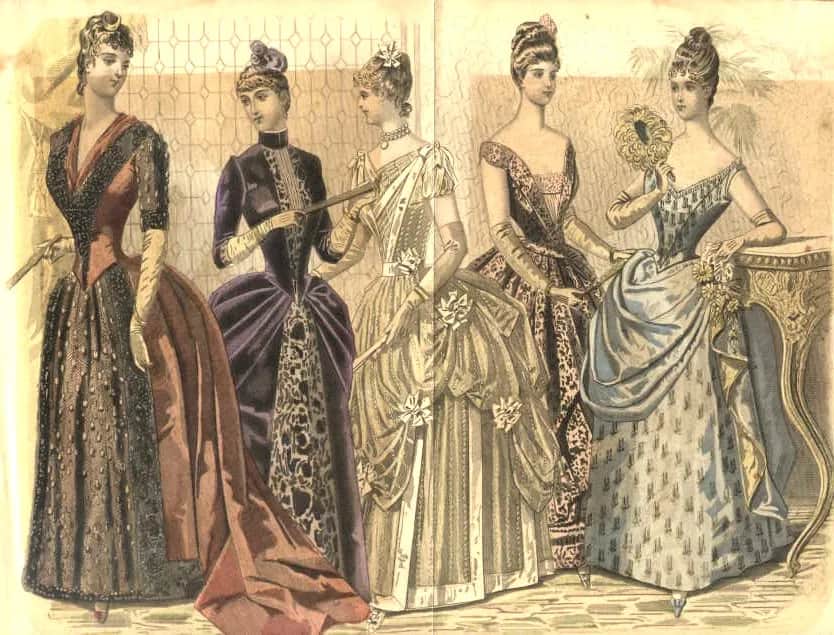
If you did not have tuberculosis and wished to look as though you did, Victorian society had options for you. Women powdered their faces to achieve the ghostly pallor. They rouged their cheeks and lips to mimic the feverish flush. They wore tightly-laced pointed corsets to compress their waists to impossibly narrow dimensions — creating a fragile, stooped silhouette that evoked the wasted frame of a consumptive patient. Voluminous skirts further exaggerated the narrowness of the middle.
For those willing to go further, beauty products of the era offered more dangerous solutions. By the mid-to-late 19th century, women were swallowing arsenic wafers — advertised, astonishingly, as "absolutely harmless" — washing with ammonia, and coating their skin with white lead-based paints and toxic enamels in pursuit of a complexion pale enough to satisfy the consumptive ideal.
The corset itself carried real medical consequences. Excessive use could displace internal organs, compress the lungs, and make physical exertion genuinely dangerous. In pursuing the look of a dying woman, healthy women damaged their own bodies. The aesthetic demanded fragility so completely that it manufactured it.
"Between 1780 and 1850, there is an increasing aestheticization of tuberculosis that becomes entwined with feminine beauty. We begin to see elements in fashion that either highlight symptoms of the disease or physically emulate the illness."
— Carolyn Day, historian and author of Consumptive Chic: A History of Fashion, Beauty and Disease
Art, Opera, and the Romantic Genius Myth
The aestheticization of tuberculosis was not limited to fashion. It saturated the art, literature, and music of the Romantic era. A popular myth arose that tuberculosis was drawn to creative souls — that it was a disease of genius, sensitivity, and elevated feeling. Romanticists pointed to what ancient Greek physicians had called spes phthisica: a euphoria intermingled with depression, thought to produce bursts of creative inspiration as the body deteriorated.
The idea was that as the mortal body wasted, the mind blazed more brilliantly. Byron wished openly to die of consumption because of how romantically it would appear. Keats, Shelley, and their circle treated the disease as a mark of artistic distinction. In reality, the slow growth rate of the tuberculosis bacteria caused a lengthy physical deterioration — and the heightened energy some consumptives experienced was simply fever. But the myth was powerful precisely because so many brilliant people happened to have the disease. In a world where tuberculosis killed a third of all people, genius was not exempt.
Death on the Opera Stage
On stage and in literature, the consumptive heroine became a stock figure: pale, ethereal, doomed, and irresistible. Verdi's La Traviata in 1853 gave the world Violetta, based on the real-life Marie Duplessis who died of tuberculosis at 23. Puccini's La Bohème gave the world Mimì, expiring beautifully in the final act. Dumas' La Dame aux Camélias gave the world Marguerite, clutching her blood-spotted handkerchief as a symbol of tragic, refined suffering.
A Class Divide Hidden in the Aesthetic
There is a darker layer beneath the consumptive chic aesthetic that is rarely examined. While tuberculosis crossed class boundaries — spreading easily through overcrowded Victorian cities — its romanticization was strictly a privilege of the wealthy. When the disease struck upper-class women, it was treated as a sign of delicacy, sensitivity, and tragic beauty. When it struck the poor — and it struck the poor far more frequently and far more brutally — it was simply squalor.
When Science Killed the Fantasy
As the 19th century progressed and scientific understanding of tuberculosis improved, this class dynamic inverted sharply. Once Koch identified the bacteria in 1882 and germ theory established that tuberculosis was contagious — not hereditary, not a mark of sensitive genius — the disease rapidly lost its glamour. It became associated with poverty, overcrowding, and filth. What had once been a tragically beautiful affliction of the upper classes was rebranded as a scourge of the slums.
The corset loosened. The powder lightened. The fashion plates began depicting healthier silhouettes. The romanticization of tuberculosis did not end because society grew more compassionate. It ended because science revealed that you could catch it — and suddenly, nobody wanted to look consumptive anymore.
"How is it possible that a disease characterized by coughing, emaciation, relentless diarrhea, fever, and the expectoration of phlegm and blood became not only a sign of beauty, but also a fashionable disease?"
— Carolyn Day, Consumptive Chic
The Ghost That Never Left
Consumptive chic did not vanish with the Victorians. Its ghost has haunted Western beauty standards ever since. The "heroin chic" aesthetic of 1990s fashion — hollow cheeks, pale skin, skeletal frames — was a direct descendant. The dying heroine trope in opera and cinema persists to this day: Nicole Kidman in Moulin Rouge!, coughing into a handkerchief; the countless film characters whose bloody cough in the first act signals their death by the third.
The Silhouette That Survived
The connection between thinness, fragility, and feminine desirability — so aggressively promoted in the Victorian era under the guise of consumptive beauty — did not disappear when the corset was loosened. It mutated. It found new forms and new justifications. And it continued to tell women the same essential message: that to be beautiful is to appear, in some fundamental way, as though you are fading.
Tuberculosis is still with us today — it remains one of the world's leading infectious killers, disproportionately affecting the global poor. It is no longer fashionable. But the beauty standards it left behind have proven far more durable than anyone expected. The disease is gone from the runways. Its silhouette is not.
A Final Word
The story of consumptive chic is not just a Victorian curiosity. It is a warning about what happens when culture is allowed to aestheticize suffering — when the appearance of illness becomes aspirational, and the bodies of dying women become a standard against which healthy women are measured and found lacking. Beauty standards have always had consequences. The Victorians just made theirs unusually visible.