Millions of women cut their hair after the war. The men who came home didn't recognize them. That was the point.
Before 1914, a woman's hair was not her own.
It belonged to tradition. To expectation. To the quiet contract that said if you are a respectable woman, you will keep it long, keep it pinned, keep it under a hat in public and brushed out only behind closed doors for your husband to see.
When Hair Meant Obedience
Long hair was femininity. It was modesty. It was class. It was a woman saying, without words, that she knew her place.
Then the war came.
And her place changed overnight.
I cut my hair the day I started at the munitions factory. My mother wept. I told her I couldn't afford to weep — I had shells to build.
— A British factory worker, circa 1916. Oral history collected by the Imperial War Museum.
The Men Left. The Women Had No Choice But to Become Everything.
When World War I erupted in the summer of 1914, it emptied entire countries of their men. In Britain alone, nearly six million men were mobilized. In France, eight million. In Germany, eleven million. Farms lost their laborers. Factories lost their workers. Hospitals lost their orderlies. Offices lost their clerks.
The economy didn't stop. It couldn't. There was a war to supply.
So women stepped in.
Not gently. Not gradually. Not with a polite invitation from the government. They stepped in because someone had to drive the buses, run the banks, operate the lathes, fill the artillery shells, nurse the wounded, dig the fields, and keep civilization from collapsing while an entire generation of men was being fed into the trenches.
And almost immediately, they discovered something practical that nobody had warned them about.
Long hair could kill you.
The Machines Didn't Care About Femininity
In munitions factories — where women made up the majority of the workforce by 1916 — loose hair near heavy machinery was a death sentence. One stray strand caught in a lathe, a belt drive, or a pressing machine, and you were pulled in.
It happened. More than once.
Women who worked near open flames — in welding shops, in kitchens feeding thousands of troops, in chemical plants producing explosives — found that long hair was a fire hazard. Women working as nurses in field hospitals, where hygiene meant the difference between life and death for soldiers with open wounds, found that long hair was unsanitary.
The solution was obvious. The solution was a pair of scissors.
But it wasn't just practical.
Something Deeper Was Breaking Free
Something else was happening — something no one had planned for and no one could stop.
"When I cut my hair, I felt something I had never felt before. I felt like I belonged to myself."
— From collected testimonies of women workers during WWI, published in "Singled Out" by Virginia Nicholson
But Here Is the Part No One Talks About
The hair wasn't just about the factories.
It was about the men who didn't come back.
World War I killed roughly 20 million people. An entire generation of young men was decimated. In Britain, 886,000 soldiers died — from a total population of 46 million. In France, 1.4 million. In Germany, over 2 million. Villages lost every young man they had. Towns held memorials where the list of the dead was longer than the list of survivors.
The women who had been told their long hair was for their future husbands realized, with a grief too large for words, that many of those husbands were dead in the mud of the Somme.
There was no one left to perform femininity for.
The contract was broken. Not by the women. By the war.
And when a contract is broken that completely, you don't go back to pretending it still holds. You cut your hair. You smoke in public. You shorten your skirt. You dance to jazz. You refuse to return to the kitchen. Because the kitchen belonged to a world that no longer exists — a world that burned itself to the ground in four years of trench warfare and took the old rules with it.
The Bob Was Not a Haircut. It Was a Declaration of War.
The bob didn't arrive quietly.
When women began cutting their hair short in the years after the war — 1919, 1920, 1921 — the reaction from society was ferocious. Newspapers called it immoral. Clergy called it sinful. Husbands forbade it. Employers fired women for it. In some cases, fathers disowned daughters who came home with short hair.
Barbers in many cities refused to cut women's hair at all.
Think about that. Women who had spent four years building bombs, driving ambulances through shellfire, nursing men with blown-off limbs, and keeping entire national economies running were told they were not allowed to choose the length of their own hair.
They chose anyway.
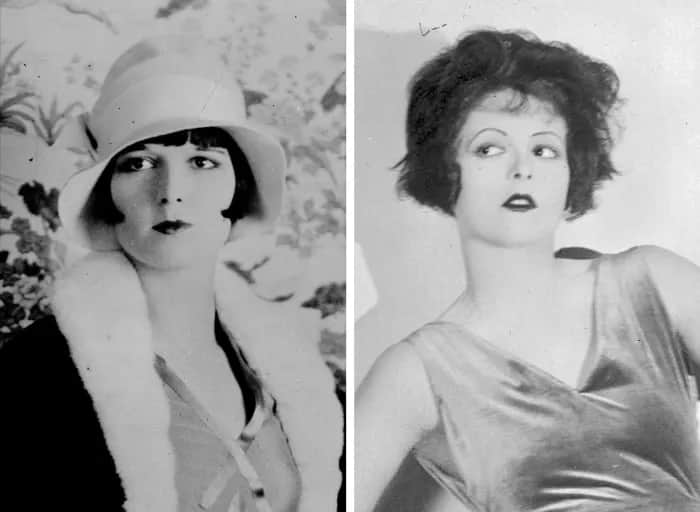
The bob spread like wildfire. By the mid-1920s, it was everywhere — Paris, London, New York, Berlin. It crossed class lines. It crossed national borders. It crossed racial boundaries. Black women, white women, working-class women, aristocratic women. Film stars wore it. Flappers danced in it. Office workers showed up on Monday morning with it. It was the single most visible symbol of a social revolution that was happening in real time, in every country that had been touched by the war.
And it drove men absolutely insane — which, frankly, was part of the point.
Coco Chanel Understood Before Anyone Else
There is a story — possibly apocryphal, almost certainly true in spirit — that Coco Chanel cut her hair after a gas stove singed it in her apartment. She walked out with short hair the next day, and within weeks, women across Paris were copying her.
But Chanel didn't create the movement. She gave it its most glamorous ambassador.
What Chanel understood — what she built an empire on — was that the war had not just changed what women did. It had changed what women wanted. They didn't want corsets. They didn't want floor-length skirts. They didn't want hair that took an hour to pin up every morning and had to be maintained like a decoration on someone else's shelf.
They wanted to move. To work. To drive. To live in their bodies as instruments rather than ornaments.
Chanel gave them the clothes. The bob gave them the silhouette. The war gave them the permission they had never been granted and would never have received voluntarily.
"A woman who cuts her hair is about to change her life."
— Coco Chanel
It Wasn't Just Hair. It Was a Funeral for the Old World.
There is something people miss when they tell this story as a fashion story.
It was grief.
The women who cut their hair after World War I were not celebrating. Not most of them. They were mourning. They were burying a version of the world that had promised them a certain life — marriage, children, a husband who came home — and then sent that promise into the trenches and never brought it back.
The Surplus Women of Britain
In Britain, they were called the Surplus Women — a generation of women for whom there were simply not enough surviving men to marry. Nearly 2 million women in Britain alone would never have husbands, not because they chose singlehood, but because the men who might have married them were buried in France and Belgium.
The bob wasn't defiance. Not entirely.
It was a woman looking in the mirror and cutting away the last piece of a life that had been promised to her and then destroyed by forces she had no say in. It was practical. It was political. And underneath all of it, it was unspeakably sad.
The Vote Came Next. It Was Not a Coincidence.
In 1918, British women over 30 won the right to vote. In 1920, American women won the same right with the 19th Amendment. In 1928, British women achieved full equal suffrage.
The suffrage movement had been fighting for decades before the war. But the war broke the last argument against it.
How do you tell a woman she is not competent to vote when she has been building your artillery shells for four years? How do you tell her she belongs in the home when the home only survived because she left it? How do you tell her she cannot participate in public life when she has been running public life since 1914?
You can't.
The hair, the vote, the shortened skirts, the cigarettes, the jazz clubs, the financial independence — they were all the same thing. They were the aftershocks of a world that had shattered so completely that the old rules couldn't be reassembled.
The bob wasn't a fashion trend. It was the visible scar of a revolution that happened in factories and hospitals and trenches and cemeteries — and then showed up, one morning, in the mirror.
The Point
They didn't cut their hair because a magazine told them to. They cut it because the world they had been dressing for was buried in Flanders. Because the men they had been growing it for were dead. Because the factories they were running didn't care about pins and curls. Because the life they had been promised had been replaced by a life they had to build from scratch — and they needed to move. The bob was not a trend. It was a woman standing in front of a mirror, holding a pair of scissors, and deciding that if the old world was gone, she was going to look like someone who belonged to the new one. That is not fashion. That is survival. That is grief made visible. That is freedom born from the worst possible reason to need it.