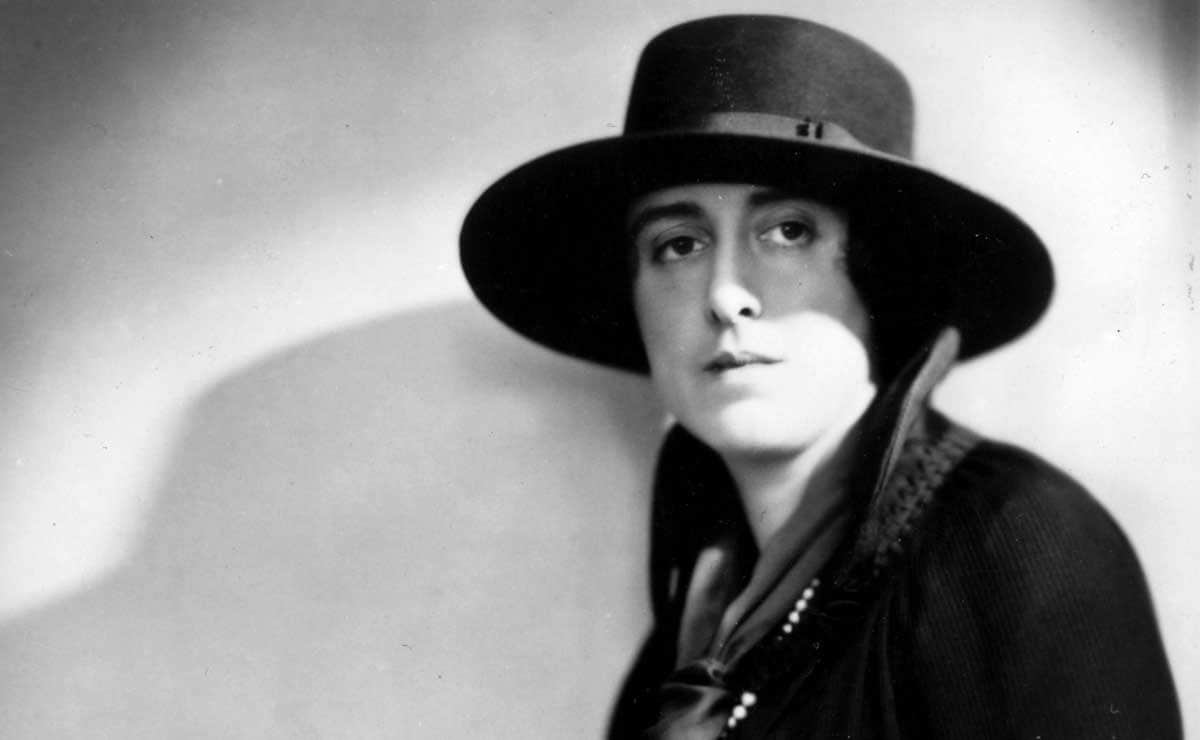
On the evening of October 20, 1928, Virginia Woolf stood up to speak to the women students of Newnham College, Cambridge. She was 46 years old. She had already published Mrs Dalloway, To the Lighthouse, and Orlando. She was one of the most celebrated writers in England.
She had been asked to speak on the subject of women and fiction. What she said that evening — and six days later at Girton College, the second of Cambridge's women's colleges — became one of the most important pieces of literary criticism written in the twentieth century. Published the following year as A Room of One's Own, it is a book that has been continuously in print since 1929, translated into more than fifty languages, placed fourth on the Modern Library's list of the 100 best nonfiction works in the English language, and credited with fundamentally changing how literature was taught, studied, and written.
It began, as the best arguments do, with a very simple question.
The Question She Was Actually Answering
The question Woolf was there to answer was deceptively straightforward: why, as of 1928, had there not been as many great women writers as men? Where was the female Shakespeare? Where were the women who had produced the works that constituted the Western literary canon — the plays, the epics, the philosophical treatises, the great novels of the eighteenth and nineteenth centuries?
The conventional answer of the era — and it was an answer that prominent male critics gave publicly and without apparent embarrassment — was that women simply lacked the intellectual capacity for great literature. That the absence was biological, natural, and permanent. Woolf's contemporary Desmond MacCarthy, a respected literary journalist, had described the writer Rebecca West as an "arrant feminist" in a review that Woolf cited directly in her lecture. The Earl of Birkenhead, one of the most senior lawyers in England, had made similar pronouncements about women's writing that Woolf quoted and then, with characteristic precision, declined to engage with further — noting only that she would not "trouble to copy out Lord Birkenhead's opinion."
Woolf's answer to the question was entirely different. The absence of women from the literary canon was not, she argued, biological. It was material. It was structural. It was the direct and predictable result of centuries of specific, documentable conditions — and she was going to show her audience exactly what those conditions were.
Her argument, stated in its most famous form, was this: a woman must have money and a room of her own if she is to write fiction. Not as a luxury. As a precondition. Without financial independence and physical space — a room with a lock on the door, time that was genuinely her own — the creative act was not merely difficult. It was structurally impossible.
Literature would be incredibly impoverished — as indeed literature is impoverished beyond our counting — by the doors that have been shut upon women.
— Virginia Woolf, A Room of One's Own, 1929
The World Woolf Was Speaking Into
To understand what Woolf was arguing in 1928, it helps to understand what 1928 actually looked like for a woman in Britain who wanted to write.
Women in England had only received the right to vote on equal terms with men that same year — the Equal Franchise Act was passed in May 1928, five months before Woolf delivered her lectures. For the preceding decade, only women over thirty who met property qualifications had been able to vote. Women could not, in most cases, hold property independently of their husbands. They could not attend Oxford or Cambridge as full members — Newnham and Girton, the two colleges where Woolf was speaking, were women's colleges operating at the margins of a university that did not formally grant degrees to women until 1948, twenty years after Woolf's lectures.
Woolf's own father, Sir Leslie Stephen — a prominent Victorian critic and biographer — had believed, in line with the thinking of his era, that only the boys of the family should be sent to school. Virginia Woolf educated herself largely from her father's extensive library. She never attended university. She was speaking to women who had the opportunity she had been denied, and she was acutely aware of how recently and how precariously that opportunity had been won.
The financial argument in A Room of One's Own was not abstract. An aunt had died and left Woolf five hundred pounds a year — the exact figure she cited in her lectures as the minimum income necessary for a woman to write freely. That inheritance, she said, had done more for her sense of herself as a writer than any political victory she had witnessed. The vote was important. The money came first.
Judith Shakespeare: The Thought Experiment That Changed Literary History
The most enduring passage in A Room of One's Own is a thought experiment Woolf constructs in the essay's third chapter. She asks her audience to imagine that William Shakespeare had a sister. Not a real sister — a hypothetical one, as gifted and as driven as Shakespeare himself. Woolf gives her a name: Judith.
Judith Shakespeare, in the sixteenth century, would have been as adventurous, as imaginative, as eager to see the world as her brother. While William was sent to school, Judith was kept at home. When she picked up a book, she was chastised for neglecting her household duties. When she was betrothed against her will, her father beat her when she refused. She ran away to London — as William had done — and attempted to become an actor and playwright. She was turned away from the theatre doors. She was mocked, harassed, and exploited. She was impregnated by an actor-manager who promised her help he did not deliver. She killed herself and was buried at a crossroads, her name unremembered.
The point of Judith Shakespeare was not sentimentality. It was precision. Woolf was demonstrating, through a specific imagined life, the exact mechanisms by which a woman of equal genius to Shakespeare would have been prevented — not discouraged, not disadvantaged, but structurally and violently prevented — from producing the work she was capable of. The absence of women from the Elizabethan literary canon was not evidence of their inadequacy. It was evidence of what had been done to them.
Woolf closed the Judith passage with a claim that has proved to be among her most quoted lines. The poet who never wrote a word, she said, still lives. She lives in the women who are washing up the dishes and putting the children to bed. She lives as a continuing presence, waiting only for the opportunity to walk among us in the flesh. That opportunity, she told the students of Newnham and Girton, was now coming within their power to give her.
The Women She Named — and What Their Lives Proved
Woolf did not only deal in hypotheticals. A substantial portion of A Room of One's Own is a survey of the real women who had managed to write despite the conditions she was describing — and an examination of what those conditions had cost them.
She identified Aphra Behn — a seventeenth-century playwright, poet, and spy who became the first woman in England to earn her living as a professional writer — as the foundational figure of the tradition she was tracing. Before Behn, women who wrote did so in secret, in borrowed time, without the possibility of acknowledgment or income. Behn changed that. She proved it was possible. She laid the ground on which Austen, the Brontës, and George Eliot would later stand.
Jane Austen wrote in the common parlour of her family home, hiding her manuscripts under blotting paper whenever anyone entered the room. She had no study. She had no independent income. She published her novels anonymously — the title pages read "By a Lady" — because a woman's name on a novel was, in the early nineteenth century, considered a liability. What she produced under those conditions, Woolf observed, was extraordinary. What she might have produced with a room and five hundred pounds a year was something literature would never know.
Charlotte Brontë had genius, Woolf argued — more raw genius than Austen — but her work was occasionally damaged by circumstance. Writing from the Yorkshire parsonage where she lived with her father and sisters, denied the travel and education and experience that her male contemporaries took for granted, Brontë's prose sometimes buckled under the weight of unexpressed rage. Not because the rage was illegitimate — it was entirely legitimate — but because a novelist's rage, unprocessed and unexamined, distorts the work. The conditions of Brontë's life made it impossible for her to write entirely as a writer rather than as a woman writing against the circumstances of being a woman. George Eliot, one of the greatest novelists of the nineteenth century, published under a male pseudonym for the same reasons.
What Woolf was building, through these examples, was a documented historical case. The absence of women from the literary canon was not mysterious. It was the entirely predictable outcome of denying half the population the money, the education, the space, and the social permission to write.
The Shakespeare Passage — and What It Was Actually Saying
One of Woolf's most rhetorically precise moves in the entire essay is a passage about Shakespeare — specifically about men in Shakespeare. She inverts the argument entirely.
Suppose, she writes, that men were only represented in literature as the lovers of women — never as friends, soldiers, thinkers, dreamers. How many parts in Shakespeare could then be allotted to them? Most of Othello — because Othello is partly about jealousy in love. Some of Antony. But no Caesar, no Brutus, no Hamlet, no Lear, no Jaques. Literature, Woolf observes, would be incredibly impoverished by this restriction. Then she delivers the point: as indeed literature is impoverished beyond our counting by the doors that have been shut upon women.
The move is elegant and devastating. She is not asking the audience to sympathise with women's exclusion from literature. She is asking them to calculate the cost. She is quantifying, through a thought experiment about men, the exact scale of what literature has lost by excluding the perspective of half the human race. The impoverishment is not a social injustice to be regretted. It is a literary catastrophe to be reckoned with — books not written, characters not created, entire territories of human experience never mapped in language because the people best positioned to map them were prevented from picking up the pen.
This is what made A Room of One's Own different from the feminist writing that preceded it. Mary Wollstonecraft, writing in 1792, had argued for women's rights on moral grounds — that it was unjust to deny women education and autonomy. Woolf was making an aesthetic argument. She was saying that the exclusion of women was not merely a wrong done to women. It was a wrong done to literature itself. To everyone who reads. To the entire project of trying to understand human experience through language.
Woolf was not asking her Cambridge audience to feel outrage on behalf of women writers. She was asking them to calculate a loss. The books not written. The voices not heard. The entire territories of human experience that had never been mapped in language because the people best positioned to map them had been kept from the pen. The argument was not moral. It was literary. And that is why it lasted.
What Happened to the Argument After 1929
A Room of One's Own was published in September 1929 by the Hogarth Press — the publishing house Woolf ran with her husband Leonard. It was received well by critics, though some found it too personal in style for a work of literary criticism. Woolf herself, characteristically, described it as a minor contribution on a minor point.
It was anything but. The essay became central to the second wave of feminist criticism in the 1970s — read alongside Betty Friedan's The Feminine Mystique and Simone de Beauvoir's The Second Sex as one of the foundational texts for thinking seriously about women's relationship to culture and creative production. De Beauvoir, writing in 1949, had counted among all women who ever lived only three she considered truly great writers — Emily Brontë was one of them, Woolf another — a judgement that itself demonstrated the continuing relevance of everything Woolf had argued twenty years earlier.
Alice Walker extended and complicated Woolf's argument in her 1983 essay collection In Search of Our Mothers' Gardens, pointing out that the room of one's own Woolf described was a specifically white, middle-class, Western concept — that the further exclusions suffered by women of colour made Woolf's already-constrained vision of access still more constrained. The conversation Woolf had started in 1928 was larger and more complicated than she had fully reckoned with.
On January 1, 2025, A Room of One's Own entered the public domain in the United States, ninety-six years after its publication. It has been in continuous print throughout. It has been adapted for the stage, referenced in academic curricula on every continent, and named by the Modern Library as one of the hundred best nonfiction works written in English.
Woolf died in 1941, walking into the River Ouse near her home in Sussex with stones in her pockets, having battled mental illness throughout her adult life. She was 59 years old. She did not live to see the full extent of what the two lectures she gave in October 1928 would become.
The argument she made that evening — that literature has been catastrophically impoverished by the exclusion of women — has never been seriously refuted. No one, in ninety-six years, has produced a convincing counter-argument. The doors, as she put it, have been somewhat opened since. The counting of what was lost while they were shut has barely begun.
The Point
Virginia Woolf stood up at Cambridge in October 1928 and made an argument that was not about justice, or rights, or equality — though it implied all of those things. It was about literature. About the books that were never written because the people who would have written them were kept from the page by the absence of money, space, education, and permission. About Hamlet and Lear and Brutus existing because the men who might have created their equivalents were allowed to sit down and think. About Judith Shakespeare, buried at the crossroads, whose gifts the world will never measure. The argument was simple, precise, and devastating. Ninety-six years later it remains unanswered. The room, she said, was the beginning. The writing was the point.
Read next: Oscar Wilde's De Profundis and other famous confessions, and Nellie Bly's race around the world.
Sources
- Wikipedia — A Room of One's Own — en.wikipedia.org
- Wikipedia — Virginia Woolf — en.wikipedia.org
- Britannica — A Room of One's Own — britannica.com
- Analysis of Virginia Woolf's A Room of One's Own — literariness.org
- Her Campus — Shakespeare's Sister: Virginia Woolf's Feminist Take on the Birth of a Female Writer — hercampus.com
- Bloom — A Room of One's Own and Women's Writing Today — bloomsite.wordpress.com (2025)
- Virginia Woolf — A Room of One's Own, Hogarth Press, 1929 (primary source)
- Modern Library — 100 Best Nonfiction list (1999) — A Room of One's Own ranked 4th