In the summer of 1889, a Scottish immigrant who had become the richest man in America sat down and wrote something that shocked both sides of the Atlantic.
Andrew Carnegie — steel magnate, self-made billionaire, owner of the largest industrial empire in the world — published an essay in the North American Review arguing that a man who dies wealthy dies in disgrace. Not merely in moral failure. Not in quiet disappointment. In disgrace. The same word used for cowardice, for betrayal, for the worst failures of character a person could commit.
"The man who dies thus rich," he wrote, "dies disgraced."
The essay was called "Wealth." It was later reprinted in Britain under the title that stuck: The Gospel of Wealth. It caused a sensation — not because the idea was new, but because the man saying it was the last person anyone expected to say it. And because, unlike almost everyone who had articulated some version of this argument in the preceding two thousand years, Carnegie actually meant it. He gave away approximately 90 percent of his fortune before he died. The remaining 10 percent he considered a personal failure.
But the idea itself was ancient. The obligation of the wealthy to give — not as charity, not as generosity, but as duty — had been articulated by Greek philosophers, encoded in Roman law, embedded in every major religious tradition on earth, and practiced, with varying degrees of sincerity, by powerful people for thousands of years before Carnegie put a pen to paper.
This is the history of that idea — where it came from, what it meant to different civilisations, and how a Scottish boy who arrived in America with nothing became its most famous and most complicated champion.
Prometheus and the Greeks: The First Philanthropist
The word philanthropy is Greek. It first appeared in the fifth century BCE, in the drama Prometheus Bound — attributed to Aeschylus — where it described the Titan Prometheus, who defied the gods to steal fire and give it to humanity. His name means "forethought." His crime was generosity. The gods punished him for it by chaining him to a rock for eternity, where an eagle ate his liver each day and it grew back each night.
The Greeks understood, from the very beginning, that genuine giving costs something.
Philanthropia — love of humanity — was not in ancient Athens a sentiment. It was a civic obligation. Wealthy Athenian citizens were expected to perform what were called liturgies: personal funding of public goods out of private wealth. A rich man might be required to finance a dramatic festival, equip a warship, or fund the construction of a gymnasium. This was not voluntary. It was the price of belonging to a society that had made your wealth possible in the first place.
Plato and Aristotle both wrote about the relationship between wealth and moral character. Plato's Academy — founded around 387 BCE — was itself funded by an endowment that sustained it for nearly nine hundred years. The idea that knowledge should be made available beyond those who could individually afford it, underwritten by those who could, is as old as Western philosophy itself.
In Rome, the obligation took a similar form but with a Roman flavour — political ambition dressed in civic virtue. The Latin term liberalitas, generosity, became a key aristocratic virtue. Roman emperors asserted the exclusive right to make gifts to the Roman people: baths, fountains, gladiatorial games, public works. The problem, which Roman commentators noted at the time, was that much of this giving was theatrical — designed to produce loyalty and gratitude rather than to genuinely improve lives. The destitute in Rome's swelling imperial cities remained largely unreached by the liberalitas of the powerful.
But Roman law did something more durable than theatrical generosity. It gave legal status to charitable endowments, trusts, and mutual aid societies — the structural mechanisms through which private wealth could be directed toward public purposes across generations. The tax-exempt status that modern charities enjoy traces its roots directly to the exemptions Byzantine emperors extended to their favoured philanthropies in the sixth century CE.
The man who dies thus rich dies disgraced.
— Andrew Carnegie, "The Gospel of Wealth," North American Review, June 1889
Every Religion on Earth Agreed on One Thing
What is remarkable, surveying the religious traditions of human history, is how completely they converge on a single point: wealth is not yours to keep.
Ancient Egyptian sacred texts — among the oldest written records of moral philosophy on earth — specified that a successful passage to the afterlife depended on a lifetime of benevolent acts. The Book of the Dead required anyone seeking immortality to swear they had never denied food to the starving, drink to the thirsty, or clothing to the ragged. The obligation was not to give from surplus. It was absolute.
In the Hebrew tradition, the concept of tzedakah — often translated as charity but more precisely meaning justice — encoded giving not as an act of generosity but as a moral imperative. The Jewish philosopher Maimonides, writing in the twelfth century, described eight levels of charitable giving, ascending in virtue. At the top of his hierarchy was not the largest gift but the most empowering one: helping another person become self-sufficient. The aim was not dependency but dignity.
In Islam, zakat — one of the five pillars of the faith — mandated that every Muslim give a fixed percentage of their accumulated wealth annually to those in need. It was not a voluntary act of the generous. It was a religious obligation as binding as prayer. The waqf, the Islamic charitable endowment, dates to the seventh century CE and created some of the oldest continuously operating charitable institutions in human history — hospitals, schools, and public works funded in perpetuity by private wealth dedicated to public purpose.
Chinese families, over four thousand years ago, provided monetary allowances to widows, orphans, and the elderly. Confucianism enshrined benevolence — ren — as the highest moral virtue. Buddhist traditions across Asia incorporated dana, the practice of giving, as a foundational spiritual discipline. Indigenous cultures across the Americas practiced elaborate systems of redistribution, of which the Potlatch ceremony of Pacific Northwest tribes — in which wealth was given away rather than accumulated — is among the most documented.
Civilisations that never communicated with each other, that developed in complete isolation across thousands of miles and thousands of years, arrived independently at the same conclusion. The accumulation of wealth without its redistribution was, in some fundamental sense, a moral failure.
The Medici and the Renaissance: When Giving Became Art
In fifteenth-century Florence, the wealthiest banking family in Europe was facing a problem. Cosimo de' Medici — patriarch of the Medici dynasty, effectively the ruler of the Florentine Republic — had accumulated wealth on a scale that made him the envy and the target of every power in Italy. He also had a sophisticated understanding of what wealth was actually for.
The Medici are remembered for their patronage of the arts — Botticelli, Leonardo da Vinci, Michelangelo, Donatello all worked under Medici support at various points. But their giving went far beyond aesthetics. They funded the Hospital of Santa Maria Nuova in Florence, which had existed since the thirteenth century and which the Medici expanded into one of the most advanced medical institutions in Europe. They underwrote philosophers, scientists, and humanists. They funded the recovery and translation of ancient texts that had been lost for centuries — an act of intellectual philanthropy whose consequences for Western civilization were incalculable.
The Medici understood something that the Greeks had known and the Romans had complicated: giving well is harder than accumulating. Anyone with sufficient drive and opportunity can make money. The art — if it deserves that word — is in deciding what to do with it once you have it. The Medici spent generations building institutions rather than monuments to themselves, though they were not above monuments either.
The Renaissance philanthropy they exemplified changed what giving meant. Before this period, charity in Christian Europe was primarily the domain of the Church — almsgiving, hospitals administered by religious orders, care for the poor routed through ecclesiastical structures. The Medici and their contemporaries began to establish a secular model: wealthy individuals using private fortunes to shape public intellectual and cultural life, independent of religious authority. This secularisation was slow and contested, but its direction was clear. By the time the Enlightenment arrived in the seventeenth and eighteenth centuries, the idea that private wealth could and should be directed toward public good through rational, organised effort — rather than simply given as alms to the nearest beggar — was firmly established in European thought.
The Boy From Dunfermline
Andrew Carnegie was born on November 25, 1835, in Dunfermline, Scotland, to a weaver and his wife. The family was not poor by the standards of their neighbours, but the Industrial Revolution destroyed their trade — the power loom made his father's handloom weaving obsolete — and in 1848 the family emigrated to America with almost nothing.
Carnegie began working at thirteen, as a bobbin boy in a cotton factory, then as a telegraph messenger, then as a telegraph operator, then as a personal assistant to a Pennsylvania Railroad executive. He invested shrewdly, identified the coming dominance of steel, and built an empire. By the time he sold Carnegie Steel to J.P. Morgan in 1901 for $480 million — the largest business transaction in American history to that point — he was the second-richest man in the United States, behind only John D. Rockefeller.
But Carnegie had written something important to himself as a young man, long before the wealth arrived. In a private memo at the age of thirty-three, he wrote that the accumulation of wealth was one of the worst species of idolatry. He described the worship of money as debasing. And he made himself a promise: he would retire at thirty-five and spend the remainder of his life giving it away. He was, characteristically, about eleven years late on the retirement timeline. But he kept the promise.
The Gospel of Wealth, published in June 1889, laid out his philosophy with unusual clarity and unusual candour. The rich man, Carnegie argued, was not the owner of his wealth — he was its trustee. He held it in temporary stewardship on behalf of the society whose labour, infrastructure, and institutions had made his accumulation possible. The obligation of that trusteeship was to distribute the surplus — not to heirs, not to posterity, not through inheritance — but during his own lifetime, in forms that would genuinely improve the conditions of those who had not been similarly positioned to accumulate.
He was specific about what forms he considered best. Not direct cash to the poor — Carnegie, shaped by the Social Darwinism of his era, worried that direct handouts would not help people become self-sufficient. His preferred instruments were institutions: libraries, universities, concert halls, hospitals, public parks. Places that anyone could walk into regardless of what was in their pocket. He funded over 2,500 library buildings across the English-speaking world — on the condition that the receiving municipality levy taxes to cover the operating costs. He wanted investment, not dependency.
Carnegie saved letters of appreciation from the people he helped in a desk drawer he labelled "Gratitude and Sweet Words." The richest man in America kept a drawer of thank-you notes. That detail says more about his philosophy than any essay.
Rockefeller, and the Man Who Gave More Systematically
John D. Rockefeller was in some ways Carnegie's mirror image. Where Carnegie was theatrical, expansive, and wrote essays about his philosophy, Rockefeller was private, methodical, and religious. He had been keeping a personal account book of every cent he earned and gave away since he was sixteen years old — before he had any significant money to give.
Rockefeller dominated the American oil industry through Standard Oil, becoming the wealthiest person in modern history by most calculations — his net worth at its peak represented approximately 1.5 percent of the entire American economy, a figure that would be worth close to $400 billion today. He also gave continuously and systematically throughout his life, not as a late-life conversion but as a practice that began in his first paycheck.
The Rockefeller Foundation, established in 1913, became the model for modern institutional philanthropy — a professionally staffed organisation dedicated to identifying and funding solutions to large-scale social problems. It funded the development of vaccines, supported agricultural reform across the developing world through what became known as the Green Revolution, and poured resources into public health and education on a global scale. Rockefeller also funded the University of Chicago and what became Rockefeller University in New York, institutions that have produced dozens of Nobel laureates between them.
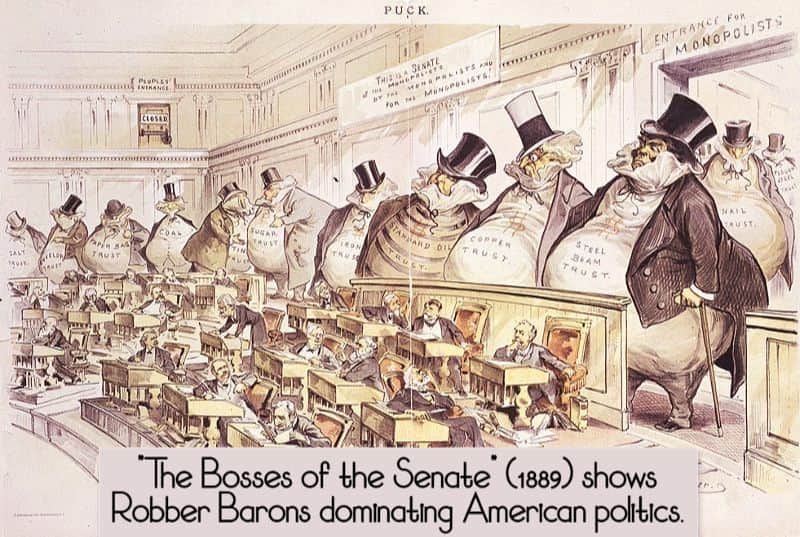
Both Carnegie and Rockefeller gave away the majority of their wealth. Both were also men of their era — shaped by beliefs about poverty, race, and social fitness that modern eyes find troubling, and whose labour practices produced the very inequality their philanthropy partially addressed. Carnegie's steel mills ran twelve-hour shifts at poverty wages, and his handling of the 1892 Homestead Strike — in which Pinkerton detectives violently broke up a steelworkers' union — remains a documented contradiction of everything the Gospel of Wealth claimed to stand for.
The history of philanthropy has never been clean. The same fortunes that built libraries were built on the backs of workers who needed no library but did need shorter hours and higher wages. That tension — between the good that institutional giving produces and the conditions under which the money was accumulated — is not a modern critique. It was raised at the time, loudly, by the labour movement that Carnegie fought and the press that Rockefeller despised.
What All of It Actually Means
The through-line from Prometheus stealing fire for humanity to Carnegie building libraries for people who looked like the boy he used to be is not a story about generosity. It is a story about obligation.
Every civilisation that developed the concept — Greek, Roman, Egyptian, Jewish, Islamic, Chinese, Buddhist, Indigenous American — arrived at the same structural understanding: wealth does not exist in isolation. It is produced by the conditions, labour, infrastructure, and social fabric that a community creates together. The person who accumulates it disproportionately has benefited from something that belongs to everyone. The question is never whether to give back. The question is how, how much, and in what form.
Carnegie's genius — and his lasting contribution, separate from his contradictions — was to make this argument in the language of the people who needed to hear it most: the new industrialist class that was accumulating wealth on a scale the world had never seen and had no existing moral framework for processing. He told them that the wealth was not really theirs. That they were trustees. That the measure of a life was not what you kept but what you built for others while you were alive to see it built.
He kept a drawer of thank-you notes from the people his giving had reached. He labelled it "Gratitude and Sweet Words." The richest man in America, at the end of his life, was keeping a drawer of letters from ordinary people who had used a library he built. That is the oldest version of wealth there is — not what you accumulate, but what you set in motion for people you will never meet.
The Point
The idea that wealth carries obligation is not new, not progressive, and not radical. It is older than any religion currently practiced, articulated independently by civilisations that never communicated with each other, and encoded in the legal structures of ancient Rome and the sacred texts of ancient Egypt alike. What Carnegie did in 1889 was not invent this idea. He repackaged it in the language of industrial capitalism and pointed it at the people who most needed to hear it. The man who dies rich dies disgraced. Prometheus stole fire from the gods and gave it to humanity. The gods chained him to a rock for eternity. He is still, two and a half thousand years later, the word we use for someone who loves humanity enough to pay a price for it.
Read next: The Atlanta acting school that defied segregation, and how Kendra Scott built a brand from $500.
Sources
- Carnegie Corporation of New York — The Gospel of Wealth — carnegie.org
- Wikipedia — Andrew Carnegie — en.wikipedia.org
- Britannica — Philanthropy — britannica.com
- University of Kent Special Collections — The History of Philanthropy — blogs.kent.ac.uk
- SOFII — Philanthropy in ancient times: some early examples from the Mediterranean — sofii.org
- Andrew Carnegie — Wealth (The Gospel of Wealth), North American Review, June 1889 — original text via Swarthmore College
- Science Abbey — Philanthropy: From Ancient Charity to Integrated Humanist Giving — scienceabbey.com
- EBSCO Research Starters — Analysis: Andrew Carnegie: "The Gospel of Wealth" — ebsco.com
- Indiana University Press — Philanthropy Background: Giving and Volunteering in America — iu.pressbooks.pub