This article contains affiliate links. We may earn a small commission at no extra cost to you.
She had the answer. It was sitting in a lab at MIT, ready to be deployed.
While American soldiers were dying of thirst in the Pacific Ocean — adrift on life rafts, surrounded by water they couldn't drink — a Hungarian-American scientist had already solved the problem. A small inflatable device. Powered by nothing but sunlight. Capable of turning seawater into drinking water on a life raft.
The device existed. The prototype worked. And one man at MIT kept renegotiating the manufacturing contracts until the war was over.
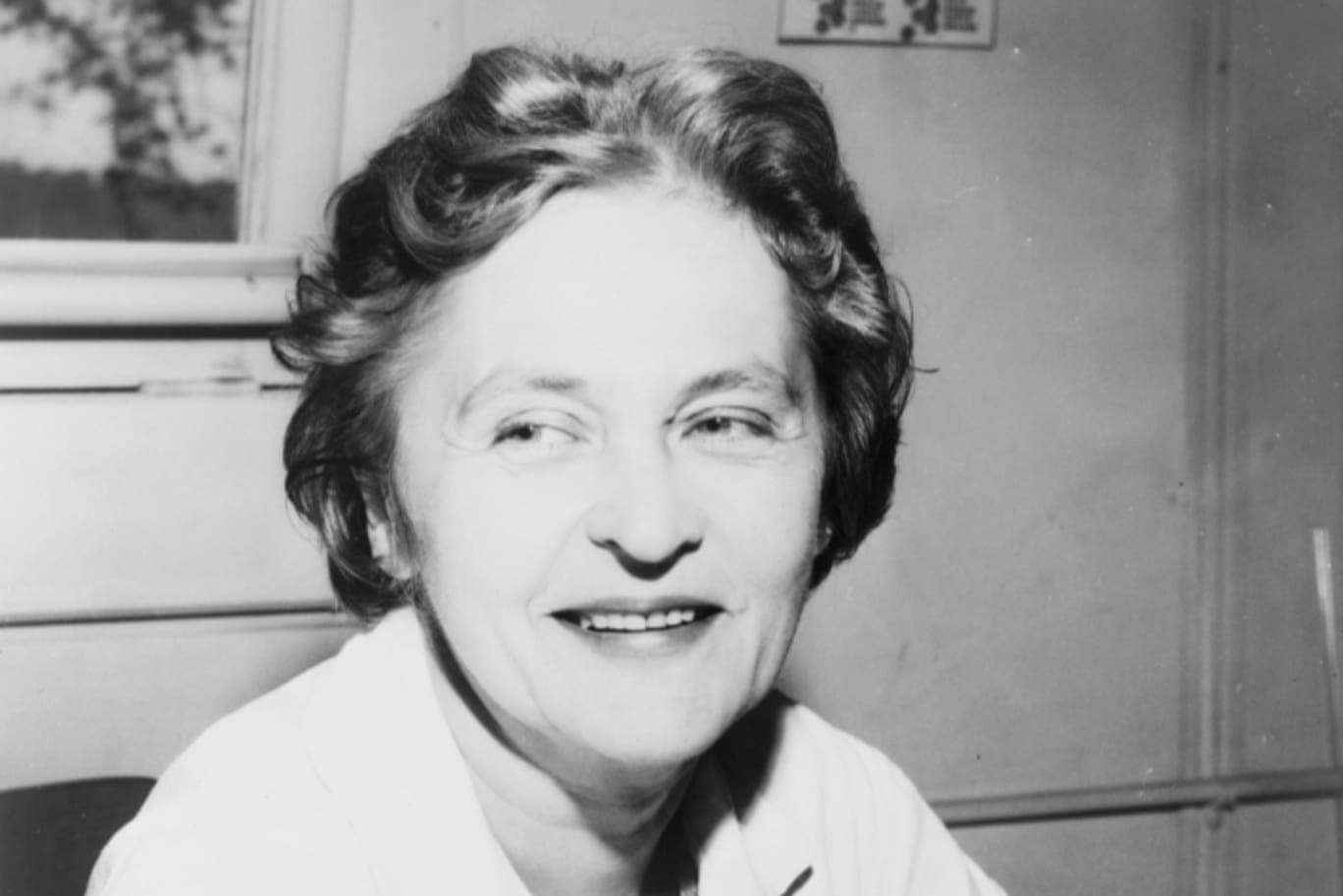
Her name was María Telkes. And most people have never heard of her.
Born in Budapest. Built for the Sun.
Telkes was born in Budapest, Hungary, in 1900. She became interested in solar energy as a teenager, and by 1924 had earned a PhD in physical chemistry from the University of Budapest.
This was not a woman drifting into science. She was driven into it by genuine obsession.
In her first year at university, she read an influential book called "Energy Sources of the Future." She said that book influenced her decision to emigrate to the United States, since most solar energy work was being done there at the time.
She arrived in America in 1925. Within a decade, she was doing research at the Cleveland Clinic. Within two decades, she was at MIT.
And then the war started.
The Problem Nobody Could Solve
Hundreds of American service members were being shot down in the Pacific theater each week. Adrift in the ocean, they would die of dehydration before rescue could arrive.
The ocean was everywhere. But the ocean would kill you.
The U.S. government wanted a small, portable device that could turn saltwater into something drinkable. They turned to Telkes. She was already at MIT, already working on solar energy applications, already thinking about exactly this kind of problem.
The government asked. She delivered.
There, she developed a solar-powered water desalination machine, completing a prototype in 1942.
The solution was elegant. Brutally simple. Almost obvious in hindsight.
Her inflatable solar-powered desalination kit worked like this: the sun's heat shone through the kit's balloon-like plastic film, evaporating the water inside. When the water condensed again, its salts were left behind, making the remaining water potable.
No electricity. No fuel. No machinery. Just sunlight and physics.
It was ready in 1942. The war would drag on until 1945.
Why This Still Matters Today
We are living through a global water crisis.
According to UNICEF, 783 million people — nearly one in ten on Earth — lack access to clean drinking water. They spend a collective 200 million hours every day walking to collect it. They drink water that makes them sick. Their children die from what water carries.
The technology María Telkes built in 1942 is still in use. Still saving lives. Still turning seawater into drinking water using nothing but the sun.
The solar still she deployed for the US Virgin Islands is still operational today. Her principles underpin modern solar desalination research happening right now at universities, at startups, in research labs across the world trying to solve the water crisis she understood 80 years ago.
A Climate Answer, Eight Decades Early
And we are living through a climate crisis.
The solar thermal storage systems Telkes pioneered — storing solar energy chemically in phase-changing materials so it can be released as heat after dark — are now considered one of the most promising technologies for decarbonizing home heating. The approach she was developing in the 1940s is being rediscovered, refined, and deployed as a breakthrough solution for the 21st century.
She asked her question in 1951: "Sunlight will be used as a source of energy sooner or later anyway. Why wait?"
We waited. We are still waiting. And the urgency she felt then is now a planetary emergency.
The question of why she was sidelined, delayed, and ultimately fired is also still relevant. Because the pattern — a woman builds something, a man slows it down, institutions credit the wrong people — did not end with Telkes. It happens in labs and boardrooms and patent offices today. The names change. The structure doesn't.
Twenty Patents, Zero Textbooks
She died in 1995 with more than 20 patents and over 100 published papers. She was inducted into the National Inventors Hall of Fame. She received the Society of Women Engineers Achievement Award, the Charles Greeley Abbot Award, and a lifetime achievement award from the National Academy of Sciences.
She is not in the textbooks.
Ask ten scientists today who invented solar thermal storage. Ask ten engineers who built the first solar-heated home. Ask ten people — anyone — who María Telkes was.
Most of them won't know.
The Point
María Telkes solved a problem that was killing soldiers. She built the first solar house in history. She pioneered the technology now being rushed into production to fight climate change. She was delayed, sidelined, and fired. She kept building anyway. She died at 94 with 20 patents and 100+ published papers, largely unknown to the public. The problem was never her work. It was never her ideas. It was the room she was in — and who got to decide what happened next. Say her name. Teach her work. And the next time someone tells you an idea won't work, ask yourself who's doing the delaying, and why.
Sources
- Wikipedia — Mária Telkes — en.wikipedia.org/wiki/M%C3%A1ria_Telkes
- PBS American Experience — The Marvelously Inventive Life of Mária Telkes — pbs.org (March 2023)
- Lemelson-MIT Program — Maria Telkes — lemelson.mit.edu
- National Inventors Hall of Fame — Maria Telkes: Solar Power Storage — invent.org
- Scientific American / Lost Women of Science — María Telkes: The Biophysicist Who Harnessed Solar Power — scientificamerican.com (Feb 2024)
- Society of Women Engineers — Member Spotlight: Maria Telkes — alltogether.swe.org
- University of Houston — The Engines of Our Ingenuity: Maria Telkes — engines.egr.uh.edu