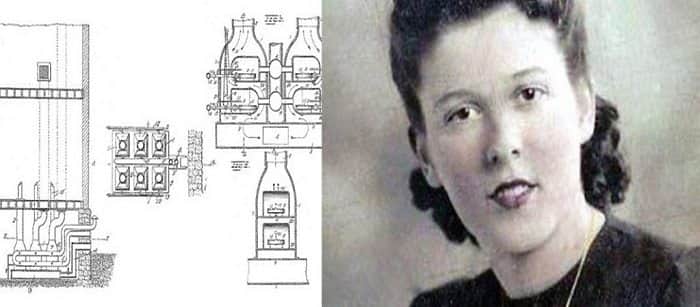
Margaret A. Wilcox, the Technology Inside Every Vehicle on Earth, and the History That Almost Erased Her Completely
Margaret A. Wilcox was a mechanical engineer in a century that wouldn't even let her sign her own work. She invented a system that now exists in every vehicle on Earth. And most people have never even heard her name.
— You Stand On Her Shoulders
Right now, in cars and trucks and trains and airplanes across every continent, a piece of technology is running quietly that keeps people warm, keeps windshields clear, keeps temperature-sensitive cargo alive across thousands of miles of road and rail and sky. It was invented by a woman in Chicago in the 1800s. She was not allowed to put her name on the patent. History did not record her story. And for over a century, the world used her idea every single day without knowing who she was.
Her name was Margaret A. Wilcox. She died in 1912. In 2020 — 108 years later — she was finally named one of the top ten women patent holders in history. Almost no one has ever heard of her. That is not an accident. It is a pattern.
The Woman No One Recorded
Margaret A. Wilcox was born in 1838 in Chicago, Illinois. Little is known about her early life, which was common for many women of her era, whose personal histories were often overshadowed by their male counterparts. This is how the historical record treats women like Wilcox — not with erasure exactly, but with indifference. Their births are noted. Their deaths are noted. The decades in between, the thinking and experimenting and solving and building, are left largely blank.
Wilcox showed an early interest in mechanical engineering despite the social conventions of her era, which often restricted women's roles to domestic domains. At this time, it was rare to be a mechanical engineer in general, and even more difficult for a woman to be one. Chicago in the 1800s was a city of extraordinary industrial energy — railroads, manufacturing, the roar of a city building itself from scratch. It was also a city of exclusively male professional networks. Women were not admitted to engineering apprenticeships. Women were not accepted into technical degree programs. Women were not supposed to be in the workshop at all.
Into the Workshop Anyway
Into the Workshop Anyway
Margaret Wilcox went to the workshop anyway. She was known to be a mechanical engineer, a rare field of practice for women at the time, especially in view of the limited higher education options. Margaret Wilcox was a creative and experimental innovator with an entrepreneurial spirit. She sought to improve various aspects of life through her patented inventions. Her goal, from the beginning, was simple and practical: she wanted to build things that made people's lives easier. She was very good at it.
The Problem She Solved
By the time she was in her 20s, Wilcox had begun focusing on what to do about the downright frigid temperatures inside railway cars during the colder months in the Chicago area. Chicago winters are brutal in the modern era, with central heating and insulated clothing and heated platforms. In the 1800s, they were something close to an ordeal. Railway passengers sat in metal cars with minimal insulation, travelling for hours through freezing temperatures, with nothing between them and the cold but whatever layers they had worn that morning.
Prior to the implementation of Wilcox's heating system, motorists were forced to dress in substantial, burdensome winter clothing. Additionally, motorists would utilize portable heating devices such as lanterns and gas lamps, which were inconvenient and hazardous given the possibility of ignition. Open flames in a moving wooden railway car. This was the solution that existed before Margaret Wilcox looked at the problem and had a better idea.
She figured that, since engines create a lot of heat, she could run a channel of air through the engine and then send it back into the rail cars. The concept was elegant in its simplicity: the engine was already producing enormous amounts of heat as a byproduct of combustion. That heat was being wasted — vented uselessly into the air. What if you redirected it? What if you ran pipes through the engine and circulated the resulting warmth into the passenger compartment? It was a pretty genius concept, one that hadn't been considered before.
"What if you could take the residual heat from the engine and redirect it back into the passenger cabin? She designed a system to channel warm air from internal combustion engines into the compartments where people sat. It was simple. It was brilliant."
The Patent She Couldn't Sign
Here is where the story becomes something more than an inventor's biography. Margaret Wilcox did not just solve an engineering problem. She solved it in a legal and cultural environment that was specifically designed to prevent women from owning the solutions they created.
Women inventors had few opportunities for formal education, faced social pressure to remain homemakers, were often prohibited from owning property in their own names, and had no recourse if their husbands were to steal their patents and profit off their inventions. Many women inventors had to apply for patents under their husbands' names. This was not a cultural suggestion. It was, in many states and contexts, the law. A woman's intellectual property, like her physical property, belonged in practice to the men in her life.
Some of her earlier inventions were patented under her husband's name because it wasn't always legal for women to hold a patent. Think about what that means concretely. Wilcox had an idea. She developed it. She built it. She proved it worked. And then she handed it to her husband to sign because the law said her name was not sufficient. Her mind was not sufficient. Her signature did not count.
The Patent She Finally Owned
By 1893, the legal landscape had shifted enough — through the Married Women's Property Acts enacted across U.S. states in the mid-to-late 1800s — that Wilcox could file under her own name. On November 28, 1893, U.S. Patent No. 509,415 was granted. The specification reads: "Be it known that I, Margaret A. Wilcox, a citizen of the United States of America, residing at Chicago, Cook county, and State of Illinois, have invented certain new and useful Improvements in Car-Heaters."
The design ran a combustion chamber suspended beneath the car, with circulating pipes for conducting hot water to the desired points within the car. The fire-pot of this combustion chamber was designed to burn smokeless fuel — specifically fuel oil — which was fed from a tank with a regulating valve or cock by which the supply could be regulated or shut off when desired. This is recognizably the ancestor of every modern vehicle heating system — the same fundamental principle of redirecting engine heat through a controlled system into the passenger space.
Recognized at the World's Fair
Recognized at the World's Fair
The same year she received her car heater patent, Wilcox's invention was applauded at the 1893 World's Columbian Exposition in Chicago, where the Board of Lady Managers' Patents Committee recognized her combined cooking and hot-water-heating stove. She was building, inventing, solving — at the same exposition where the world was celebrating human ingenuity, a woman whose work would outlast all of it was quietly showing what she could do.
The Flaw That Almost Buried Her Legacy
The early version of Wilcox's heater had one significant problem: there was no way to regulate the temperature. Riders were just subjected to an onslaught of hot engine air that would progressively get hotter the longer they rode. So, you could either have icy fingers or burning ones. The concept was correct. The engineering was sound. The implementation needed refinement. In other words — it needed exactly what every great invention needs before it changes the world: more time and more work.
In the short term, Wilcox's train-based invention was not commercially successful due to concerns about how safe it really was and the fact that the cars would continue getting hotter without any ready-made means to modulate and lower the temperature. Critics dismissed it as rudimentary. The market ignored it. And then Wilcox died in Los Angeles in 1912, having never seen her invention adopted at scale.
The Inventor Dies, the Idea Survives
The Inventor Dies, the Idea Survives
What happened next is the kind of thing that happens, over and over, in the history of women inventors. The inventor dies. The idea survives. And the credit migrates.
"Within a decade after Wilcox died in Los Angeles in 1912, an ever-growing number of automobile manufacturers began adopting her design to generate heat inside their vehicles."
— Transportation History
Ford, General Motors, and the Idea They Built Empires On
Ford incorporated Wilcox's engine-heated concept into a luxury add-on for its Model A in the late 1920s. It is believed that the first recorded automobile that successfully implemented an interior heating system based on Wilcox's innovation was Ford's Model A in 1929. Wilcox had been dead for seventeen years.
Wilcox's invention would later propel engineers at General Motors to develop a modern heater core in 1930, which relied on a radiator to transmit hot coolant from the engine to enable the heat to be dispersed by a fan throughout the cabin. Subsequent companies solved the zero-to-inferno overheating issue of Wilcox's design by using an engine's hot liquid coolant to heat a tube of filtered air, which could first be mixed with cooler air from outside to achieve the driver's desired temperature and then fanned through vents on the dashboard. This method is also more efficient when it comes to keeping the engine cool, as some of its heat gets transferred away to the heater.
This is, in its essentials, how your car heater works today. The principle — redirect engine heat, control its flow, distribute it through the cabin — is Wilcox's principle. The engineers who refined it were working inside a framework she created. And the world that benefits from it, warming up on cold mornings and driving safely through winter without frozen windshields, does so without knowing her name.
Beyond the Heater
The car heater was not Wilcox's only invention, or even her only significant one. In 1890, she patented a combined clothes and dishwasher — a single machine designed to handle two of the most labor-intensive domestic tasks simultaneously, reducing the time and physical effort women spent on household work. Two years later she patented a combined cooking and water-heating stove that could simultaneously prepare food and heat an entire home via a radiator system.
Out of her nine patented inventions, her rail car/automobile heater system became one of her more renowned inventions. But look at the pattern of what she was building: efficient use of heat, reduction of wasted energy, practical improvements to daily life. She was not dabbling. She was pursuing a coherent engineering vision across decades, solving problems in transportation and in domestic life with the same disciplined logic.
A Legacy Larger Than Comfort
A Legacy Larger Than Comfort
Her brilliance is under-recognized, as Margaret A. Wilcox's work not only changed the driving and train experience, but also marked a significant achievement for women engineers, showing resilience despite the social barriers of her time. She also contributed something even larger than comfort: her car heating technology was the forerunner of modern in-vehicle climate control systems, which are now ubiquitous in cars, trucks, trains, and airplanes. Her efforts are now seen as crucial to the development of vehicle comfort, improving not only passenger convenience but also the worldwide supply chain by being essential in the transfer of commodities that are sensitive to temperature. Refrigerated trucks. Temperature-controlled pharmaceutical transport. Fresh produce crossing continents. The entire architecture of climate-controlled logistics traces a line back to a woman in Chicago who watched passengers shiver.
108 Years Late
In 2020, Inventors Digest named Margaret Wilcox's 1893 car heater patent one of the top ten patents ever filed by women. She had been dead for 108 years. The technology she invented had been in every vehicle on Earth for most of the previous century. Billions of people had used it without knowing who created it. And in 2020, a magazine finally said her name.
This is how recognition works for women like Wilcox. It comes late, if it comes at all. It comes after the industry has been built on the idea, after the patents have expired, after the inventors who refined and commercialized the work have received their credit and their wealth. It comes after death. And when it comes, it is a footnote — a top ten list, a Women's History Month article, a social media post — rather than the foundational chapter in the story of transportation that it actually is.
The next time you start your car on a cold morning and reach for the heater — the next time you sit in a warm train carriage while winter rages outside — you are using something Margaret A. Wilcox built. She was not allowed to sign her own name on it. The law decided her signature did not count. History decided her story did not need to be told. She built it anyway. And it outlasted everything that tried to erase her.
A Final Word
Margaret A. Wilcox's story is not a curiosity from a distant, more primitive era. It is a template — the same template used to minimize, exclude, and uncredit women's contributions in engineering, science, medicine, and technology for centuries. The law has changed. The pattern has not fully. Every time you use technology without knowing who built it, ask the question: who built it? Sometimes the answer will change what you thought you knew about history. Say her name. Margaret A. Wilcox. She kept you warm.