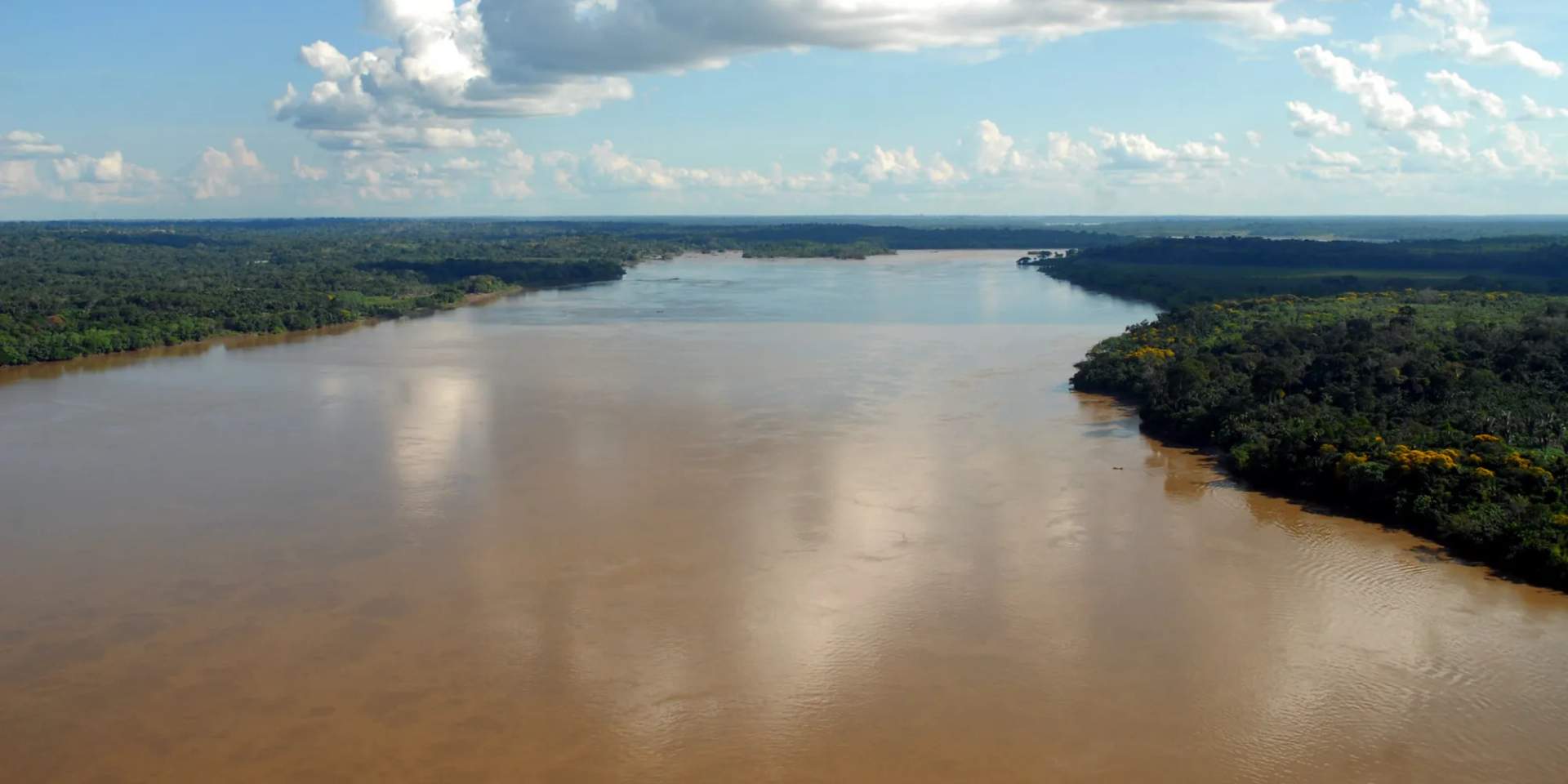
In 2005, a Swedish-born businessman who ran the ski and tennis brand Head bought a timber company in the Brazilian Amazon. Then he stopped it from cutting trees. The company was Gethal Amazonas, a plywood maker, and with it came roughly 160,000 hectares of forest, about 400,000 acres, along and near the Madeira River. The buyer was Johan Eliasch, and his logic was blunt: if the people who own a forest are paid to cut it down, the cheapest way to save it is to become the owner.
That part of the story is true, and well documented. What usually gets left out is everything that came after: the 1,000 workers he says he laid off, the Brazilian officials who saw a foreign tycoon buying up the Amazon, a 450 million reais fine in 2008 over the company's past logging, and the little-noticed end of that case five years later. Put together, it's one of the better real-world tests of an idea that still comes up every time the Amazon burns, the hope that private money can simply buy the rainforest out of danger.
The deal, explained
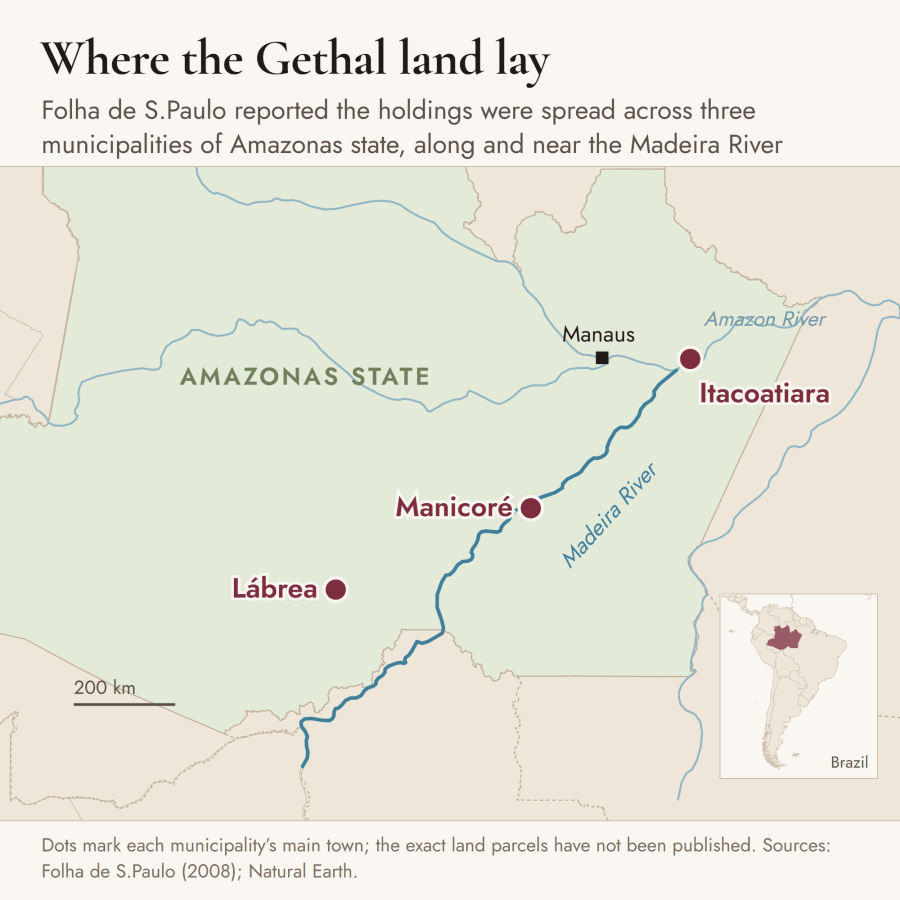
Here's the short version. Gethal was not a small operation. When Eliasch spoke to Folha de S.Paulo in 2006, he described himself as the owner of 160,000 hectares that he had bought in 2005 from GMO Renewable Resources, the forestry arm of the Boston investment firm GMO. The land sat in three municipalities of Amazonas state: Itacoatiara, Manicoré and Lábrea.
The purchase became public in March 2006, and the Guardian, interviewing Eliasch that April, compared the area to Greater London. He wouldn't say what he paid. The paper reported a rumoured £8 million; a figure of $14 million that later circulated online has never been confirmed by him or by any document we could find. He did offer one price that explains the whole plan: forest land there, he said, sold for about $30 an acre.
His argument was about incentives. Under the Kyoto Protocol, he told the Guardian, a forest owner could make money twice by felling the trees, once from the logs and again from carbon credits for replanting. He called that "perverse." Buying old-growth forest and locking it up, in his view, was a faster and cheaper climate policy than most of what governments were trying.
The cost nobody puts in the headline
Closing a logging company means closing a workplace. Eliasch was open about it.
I closed the forestry operation down and laid off 1,000 people.
— Johan Eliasch, speaking to the Guardian, April 2006
Asked if they were all Brazilians, he said yes, "to protect the forest." He then framed the problem himself: most people in Amazonas are poor, they need jobs, and cutting trees is one of the few jobs on offer. (His figure of eight million people in the state was loose; Brazil's 2010 census counted about 3.5 million in Amazonas. The point about poverty and timber jobs still holds.) When the interviewer asked if the laid-off workers might simply log illegally, he admitted that his security staff couldn't fully stop that.
The Wall Street Journal later reported that former workers at the plant had trouble finding new jobs, while Eliasch said they received generous severance. Personally, I think this is the most honest part of the story, and the part the cheerful retellings skip. A private buyer can stop a chainsaw on paper. He can't replace the wage that was paying for someone's rent in Itacoatiara.
There's another detail the "company cutting down the rainforest" framing misses. Gethal said its logging had been certified under Forest Stewardship Council rules since 2000. FSC certification is meant for managed forests, where trees are taken selectively rather than the land being cleared, so the company was not razing 400,000 acres. It was harvesting timber from a large forest estate. Eliasch's move turned a working timber concession into a reserve.
Why Brazil was not grateful
From Brasília, the deal looked different. Brazil has long been sensitive about foreign designs on the Amazon, and Eliasch was not a quiet buyer. In 2006 he co-founded Cool Earth, a British charity that raised money to protect rainforest, and in September 2007 Prime Minister Gordon Brown named him his special representative on deforestation and clean energy. A wealthy European, advising the British government, owning a slice of the Amazon: critics in Brazil called it green colonialism, and a 2007 Guardian report described Brazilians as angry at foreigners buying up chunks of the forest.
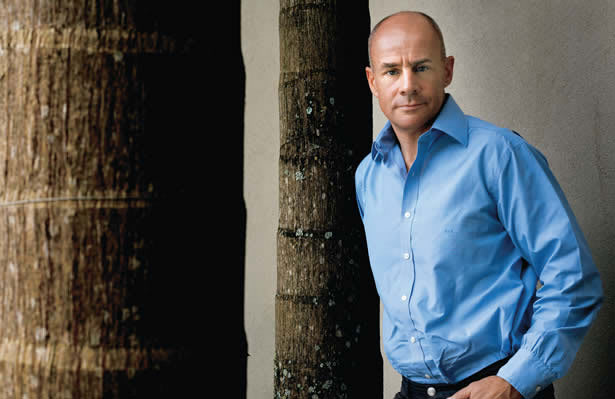
Then came 2008. That May, Brazil's O Globo reported that police were looking into Eliasch's interests in the country and quoted him as having said the whole Amazon could be bought for $50 billion. People close to him called the story fabricated; according to the Telegraph, what he had actually said in a 2006 speech was that hurricanes had cost insurers $75 billion and that saving the rainforest might cost $25 billion.
In June 2008, Ibama, Brazil's federal environment agency, fined Gethal 450 million reais, about £137 million at the time. Folha de S.Paulo reported that the fines covered the trade and transport of 699,809 cubic metres of timber, roughly 230,000 trees, from the Manicoré area without following Brazil's environmental rules, and an agreement with Ibama the company had allegedly broken. The paper said the case had been open since 2007 and was sped up at the request of the environment minister, Carlos Minc, amid the row over foreign land purchases. Incra, the federal land agency, said it would check the titles; its Amazonas chief prosecutor said Gethal in fact held 57 properties totalling 121,200 hectares, well short of 160,000.
Gethal denied wrongdoing. The company said the logging had been certified and that the alleged breaches came before Eliasch took over.
Key dates
- 2005A company owned by Eliasch buys Gethal Amazonas from GMO Renewable Resources; the logging operation is shut down.
- Mar–Apr 2006The purchase becomes public. Eliasch tells the Guardian he laid off 1,000 workers.
- 2006Eliasch co-founds the rainforest charity Cool Earth.
- Sep 2007Gordon Brown names him special representative on deforestation and clean energy.
- Jun 2008Ibama fines Gethal 450 million reais over past timber trading; Incra says it will review the land titles.
- Oct 2008The Eliasch Review on financing forest protection is published by the UK government.
- 2013Ibama closes the case and the fines are cancelled, according to Eliasch's representatives.
- Jun 2021Eliasch is elected president of the International Ski and Snowboard Federation.
How the case ended
The fine made headlines across Europe. Its end did not. According to a statement published by Eliasch's representatives, Ibama closed its investigation in 2013 after concluding there was no basis for legal or administrative action, and the fines were cancelled. They describe the issue as reporting requirements under Gethal's previous owners, not illegal deforestation. That is his side's account, but it has outside support: in April 2020 the Swiss newspaper Blick published a correction and apology after describing the 2008 fine as a conviction, stating that the proceedings against Eliasch were dropped in 2013. We could not find a public Ibama document confirming the details.
The bigger idea, and its limits
Eliasch's Amazon purchase fed directly into his government work. The Eliasch Review, published by the UK government in October 2008, argued that rich countries should help pay forest nations to keep trees standing. It estimated that halving emissions from the forest sector by 2030 could cost between $17 billion and $33 billion a year if forests were brought into global carbon trading. That thinking became part of the international push known as REDD, short for reducing emissions from deforestation and forest degradation.
Notice the shift in scale. One man bought one forest; the review was about whole countries being paid. My own read of the Gethal story is simple. Buying a forest works as a demonstration. It can't work as a system, because the Amazon is not for sale in any meaningful sense: it's a home to millions of people, governed by a country that decides who owns what, and a single owner can't police 160,000 hectares by himself, as Eliasch admitted in 2006. Cool Earth works differently: Eliasch's lawyers told the Guardian in 2021 that the charity sponsors forest owned or used by local people so it isn't sold to loggers and ranchers, rather than buying land itself.
Eliasch is now far richer than he was then. The Guardian valued him at £355 million in 2006; the Sunday Times Rich List put his fortune at about £4 billion in 2025, and since 2021 he has run world skiing as FIS president. Little has been published about the Gethal land since the 2013 decision.
Read next: the Waorani won their Amazon oil case, then Block 22 came back · the costumed pilots who taught whooping cranes to migrate
Sources (11)
- The Guardian, The man who bought a forest (Aida Edemariam, 4 April 2006)
- Folha de S.Paulo, Ibama multa madeireira de milionário sueco em R$ 450 mi no Amazonas (6 June 2008)
- The Telegraph, Johan Eliasch, Gordon Brown consultant, fined for illegal Amazon logging (7 June 2008, archived)
- UOL Notícias, Em nota, madeireira Gethal nega práticas ilegais na Amazônia (7 June 2008)
- Blick, Fairness bei BLICK (correction, 9 April 2020)
- Eliasch's representatives, Cancellation of fines by IBAMA, 2013
- The Guardian, Sale of the sanctuary (24 October 2007) and The great green land grab (13 February 2008, with 2021 update)
- Snopes, Did Swedish millionaire Johan Eliasch buy 400K acres of Amazon rainforest? (2021), summarising Wall Street Journal and New York Times reporting
- UK Government, Climate Change: Financing Global Forests (the Eliasch Review) (2008)
- Reuters, UK's Brown names opposition donor as green adviser (7 September 2007)
- Images: cover, Wilson Dias / Agência Brasil, CC BY 3.0 BR; portrait, Julia Moraes / Ag. ISTOÉ, CC BY-SA 4.0; map, The Verified Post