How Two Brazilian ICU Nurses Turned a Latex Glove Into the Most Powerful Medicine of the Pandemic
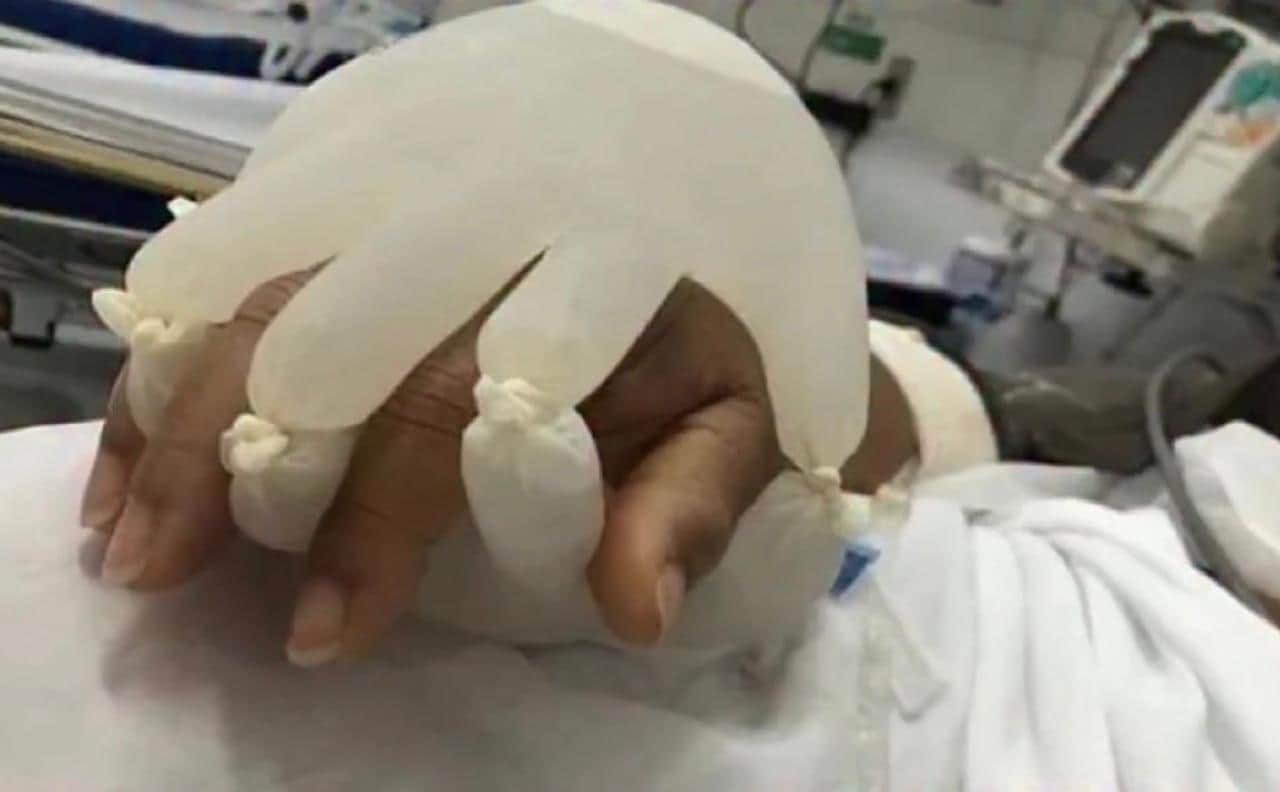
The patient feels comforted as if someone were holding hands with them.
— Vanessa Formenton, ICU Nurse
In April 2021, at an Emergency Care Unit in São Carlos, Brazil, two ICU nurses faced the same devastating reality that healthcare workers around the world had been living with for over a year: their patients were dying alone. No family. No friends. No human touch. Just the cold beeping of machines and the hum of oxygen tanks.
Semei Araújo Cunha and Vanessa Formenton refused to accept that this was simply the cost of survival. With nothing more than a pair of latex gloves and warm water from a hospital shower, they created something the world would come to call the Mãozinha do Amor — the Little Hand of Love.
The Invention
The method is beautifully simple. Two surgical gloves are filled with warm water, tied off like water balloons, and placed around the hands of intubated, unconscious patients — one on each side, gently cradling the hand between them. The warmth mimics the sensation of human skin. The shape mimics the feel of a hand being held.
Nurse Semei Araújo first encountered the idea in a video online and immediately put it into practice at the Santa Felicia Emergency Care Unit. She had watched patients lie alone, cold, and unreachable — intubated and unconscious, cut off from every form of human connection.
"We decided to do it as a form of affection, cuddling, humanization," Cunha said, "as if someone was taking her hand, and also to soften the extremities that were very cold."
"It is very sad and heartbreaking for everyone. Inpatients, intubated, without contact with family, without contact with anyone. They don't have that cuddle anymore, they don't have affection. The patient becomes vulnerable."
More Than Comfort — A Medical Breakthrough
What makes the Mãozinha do Amor a masterclass in empathetic engineering is that it wasn't just emotionally powerful — it was clinically effective. The warmth of the water-filled gloves served a critical medical purpose that went far beyond psychological comfort.
The Pulse Oximeter Problem
Intubated COVID-19 patients frequently develop cold extremities due to poor circulation. This presents a serious diagnostic problem: pulse oximeters, the devices clipped to a patient's finger to measure blood oxygen levels, are notoriously inaccurate when the skin is cold. Cold hands cause falsely low oxygen readings — readings that can trigger unnecessary interventions or, worse, mask true deterioration.
By warming the hands, the gloves restored circulation, normalized skin color, and allowed pulse oximeters to function accurately. As Semei noted, the effect was immediate: as soon as the warm gloves were placed between the patient's cold hands, skin color would return to normal.
The World That Made This Necessary
To understand the Mãozinha do Amor, you have to understand the world it was born into. Brazil in early 2021 was in the grip of one of the worst COVID-19 surges on the planet. The country was recording over 4,000 deaths per day — approaching the darkest single-day records seen anywhere in the world.
A System at Breaking Point
Hospitals were overwhelmed. ICUs were beyond capacity. Three out of four private hospitals reported having a week or less of critical supplies — oxygen, anesthesia, drugs for intubation. Public healthcare was buckling under the weight of a pandemic that had been mismanaged at the highest levels.
And at the center of it all were patients — alone, frightened, intubated, unable to speak, unable to reach for anyone. Families waited at home, connected only by phone screens and unanswered prayers. For many, those gloves were the last thing that felt like a human being.
"My biggest trauma from this whole pandemic is one of my dying patients only feeling my gloved hand holding theirs as they passed. It wrecked me for months."
— A nurse, responding to the viral photo online
Going Viral — For the Right Reasons
When Semei posted a photo of the gloves on social media, it spread with a speed that matched the virus itself — but carried the opposite charge. The image was shared by ABC News, CNN Philippines, and media outlets across dozens of countries. It was called "the Hand of God" by some. Others simply wept.
Hospitals across São Carlos, then across Brazil, then around the world began adopting the technique. What started as one nurse's act of improvised compassion became standard practice in ICUs facing the same impossible situation: patients who needed to be touched, and protocols that prevented it.
In a media landscape dominated by numbers — case counts, death tolls, vaccine percentages — the image of a warm glove cradling a stranger's hand cut through everything. It reminded a grieving world what healthcare is actually for.
What This Teaches Us About Medicine
The Mãozinha do Amor is a masterclass in what medicine can be when it remembers its own humanity. It required no budget approval, no clinical trial, no hospital committee. It required only two things: basic supplies, and nurses who refused to treat their patients as cases rather than people.
Why Touch Is Medicine
The innovation also speaks to a broader truth about healthcare that is often buried under technology and protocol: the therapeutic value of human connection is not soft or secondary. It is physiological. Isolation causes stress. Stress impairs healing. Warmth and touch — even simulated — activate the body's calming responses, reduce cortisol, and support recovery.
By using basic hospital supplies to provide both physiological stability and the psychological feeling that the patient wasn't fighting alone, Semei and Vanessa proved something that medicine has known for centuries but too often forgets: humanity is the best medicine.
"I made this glove with hot water to improve my patient's infusion, and I hope she feels like someone is with her, holding her hand."
— Nurse Lidiane de Souza Melo
A Legacy Beyond the Pandemic
The pandemic has receded, but the lessons of the Mãozinha do Amor should not. Every day, patients lie in ICUs around the world — not just COVID patients, but stroke victims, accident survivors, cancer patients — who are isolated, frightened, and touch-starved. Every day, nurses and doctors make invisible choices about whether to treat the body or the whole person.
Semei and Vanessa made their choice with two gloves and some warm water. It cost nothing. It changed everything.
The best innovations in medicine are not always the most expensive. Sometimes they are the most human.
A Final Word
To every nurse, doctor, and healthcare worker who has held a stranger's hand in their darkest hour — with or without a glove — thank you. You are the reason people survive not just physically, but humanly.