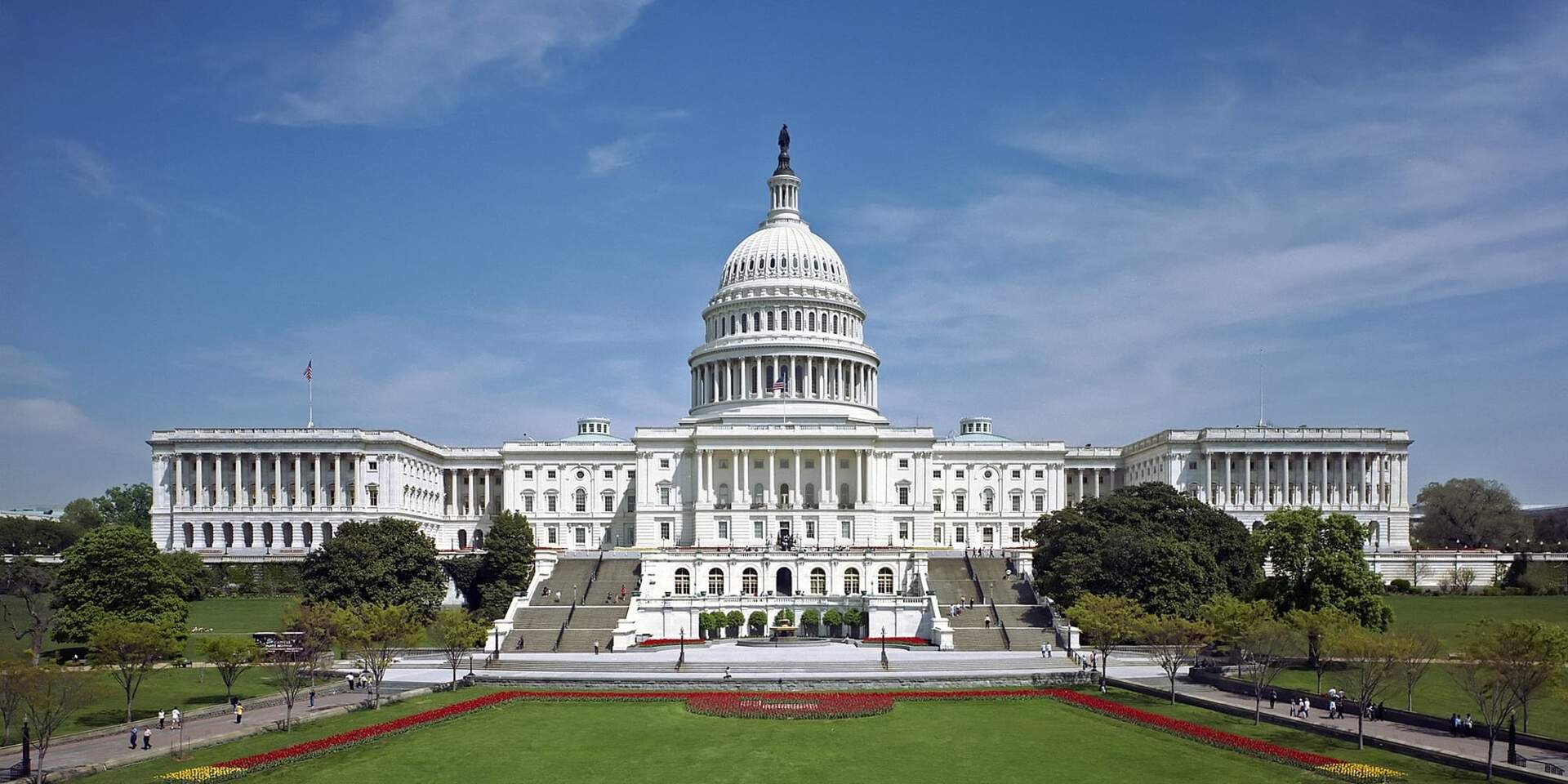
Two years ago Republicans held the White House, the House and the Senate. On November 3, 2026, voters took two of those away. Democrats won control of both chambers of Congress, and they did it partly in places nobody expected: Texas, Kansas and South Carolina all elected Democratic senators for the first time in decades. The Associated Press read the result as a rebuke of President Donald Trump, driven by high prices, the war with Iran and worries about corruption.
The same night, in New Mexico, Deb Haaland beat Republican Gregg Hull by about 57 percent to 43 in unofficial returns and became the first Native American woman ever elected governor of a U.S. state. Trump, of course, keeps his job (and his veto) until January 2029. So what actually changes when a president loses Congress halfway through his term? Quite a lot. Less, though, than the victory parties might suggest.
Our video explainer on the 2026 midterms: how the vote works and what a Democratic Congress can and can't do. Watch on YouTube
Where the count stands
Counting isn't finished, and it won't be for a while. As of Sunday, November 8, Ballotpedia's tally gave Democrats 248 House seats and Republicans 150, with 37 races still uncalled. A party needs 218 for a majority. Before the election Republicans held the chamber 219 to 215 (Ballotpedia assigns the two vacant seats to the parties that last held them), which means Democrats have already gained more than 30 seats. MS NOW projects they will finish with at least 255.
The Senate swing is the bigger shock. Democrats only needed a net gain of four seats; they hold at least 54 of the 100, against 44 for the Republicans, and NBC News counts seven Republican seats flipped. Among them are North Carolina, where former governor Roy Cooper won, Ohio, Iowa, and that unlikely trio of Texas, Kansas and South Carolina. Kansas last sent a Democrat to the Senate in 1932, according to the New York Times.
The midterms by the numbers
Two Senate races are still too close to call, and either could push the Democratic majority to 56. In Mississippi, Democrat Scott Colom led Senator Cindy Hyde-Smith by 2,574 votes on Saturday with about 97 percent of the expected vote counted, according to AP figures reported by MS NOW. If he holds on, he'll be the state's first Black U.S. senator since Reconstruction. Hyde-Smith has said she is "not backing down." In Alaska, former congresswoman Mary Peltola led Senator Dan Sullivan by a few hundred votes midweek; if no candidate passes 50 percent, the state runs its ranked-choice tabulation on November 18.
Deb Haaland's first
Haaland is a citizen of Laguna Pueblo, and her résumé already had a habit of collecting firsts. The AP called her race at 10:40 p.m. Eastern. At her watch party at the Pueblo of Laguna's Route 66 Casino, west of Albuquerque, she told supporters that Native Americans are still here despite the federal government's past efforts to strip them of their languages and cultures.
Tonight, in our nation's 250th year, I stand before you as the first Native American woman elected governor in U.S. history.
— Deb Haaland, victory speech, November 3, 2026 (via AP)
That claim holds up. Until now, Oklahoma was the only state that had elected a tribal citizen as governor at all: Democrat Johnston Murray in the 1950s and the current Republican governor, Kevin Stitt. Both are men.
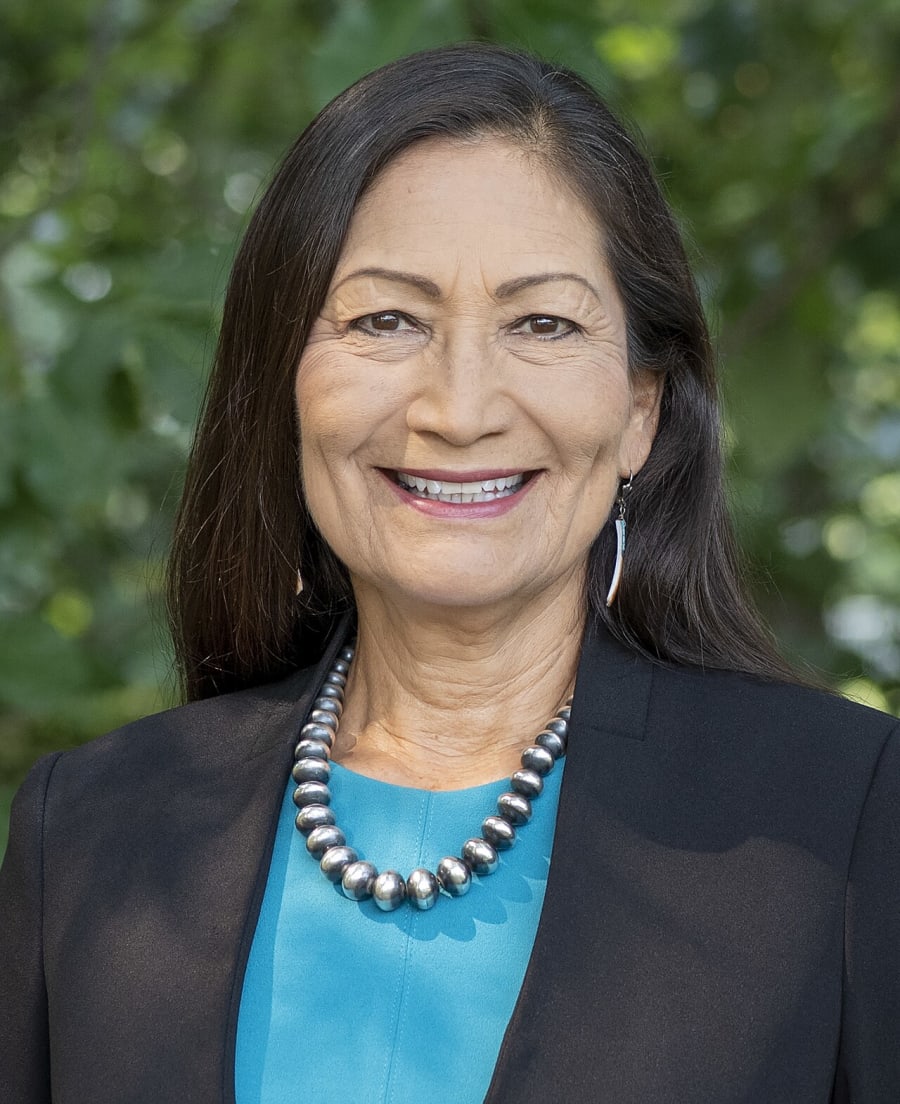
Deb Haaland's firsts
- 2015: first Native American woman to chair a state political party, the Democratic Party of New Mexico
- 2018: one of the first two Native American women elected to Congress, alongside Sharice Davids of Kansas
- 2021: first Native American to lead a Cabinet department, as Joe Biden's secretary of the interior
- 2026: first Native American woman elected governor of a U.S. state
One small correction to how that third line usually gets told: Haaland was the first Native American Cabinet secretary, but not the first Native person in a Cabinet. Charles Curtis, a citizen of the Kaw Nation, sat there first as Herbert Hoover's vice president.
The race itself wasn't close. An October survey by Research & Polling Inc. had Haaland up seven points; she won by roughly fourteen. Hull, a three-term former mayor of Rio Rancho, had run a long-shot campaign built on a promise of no negative campaigning. Haaland had beaten Bernalillo County District Attorney Sam Bregman easily in the June primary, and her campaign finance reports were sometimes so long (thousands of pages of small donors) that they crashed the New Mexico Secretary of State's website, Source NM reported.
She takes office on January 1, 2027, replacing Michelle Lujan Grisham, who is term-limited. Haaland will be New Mexico's third woman governor in a row, and she'll arrive with a Democratic legislature. Among her campaign pledges was an executive order on day one placing a statewide moratorium on new large-scale data center projects until lawmakers pass rules for them. Personally, I'd watch that promise more closely than any of the speeches: it's the first concrete test of how she'll govern, and it puts her at odds with a booming industry.
What a Democratic Congress can do
The new Congress is sworn in on January 3, 2027. House Democratic leader Hakeem Jeffries is in line to become speaker, the first Black person to hold the job. On the Republican side, Speaker Mike Johnson told aides he won't seek to lead his party in the minority, and Steve Scalise and Jim Jordan quickly announced bids for minority leader.
Laws are the obvious place to look, but they're the weakest new power. The strongest is oversight. Committee chairs can hold hearings, demand documents and issue subpoenas, and Democrats have made clear they plan to use all of it. "Lawyer up," warned Representative Robert Garcia of California, who is set to chair the House Oversight Committee. Senate Democrats have already sent document-preservation letters ahead of expected investigations, CNN reported.
The Senate majority adds a second lever. The Senate confirms judges, Cabinet secretaries and ambassadors, so a Democratic majority can stall or reject Trump's nominees for the rest of his term, including any Supreme Court pick. And because every spending bill now has to pass two Democratic chambers, each funding deadline turns into a negotiation the White House can't win by itself.
Jeffries has also promised a burst of bills in the House's first 100 hours, focused on the cost of living: restoring expired Affordable Care Act subsidies, reversing nearly $1 trillion in Medicaid cuts, rolling back tariffs and pressing to end the Iran conflict, according to AFP. Several of those can pass both chambers. Becoming law is another matter.
What it can't do
What Democrats gain
Committee gavels and subpoena power, a say over every spending bill, and a Senate majority that can block judges and Cabinet picks.
What Trump keeps
The veto, which takes two-thirds of each chamber to override; the Senate's 60-vote rule for most bills; executive orders; and the presidency until January 2029.
Trump can veto anything Congress sends him, and overriding a veto needs two-thirds of both the House and the Senate. Democrats are nowhere near that. In the Senate, most legislation also needs 60 votes to end debate, so Republicans can still block bills even in the minority.
Then there's impeachment, which is what plenty of Democratic voters will ask about first. A simple House majority can impeach a president, but removing one takes 67 senators, a number no party will have. Jeffries has not said whether he supports impeaching Trump or Pete Hegseth, who runs the Pentagon, ABC News (Australia) reported, though a resolution against Hegseth has already been introduced by outgoing Republican Thomas Massie. Some Democrats, Garcia among them, have said they'd rather spend the two years reversing Trump's agenda than on an impeachment that dies in the Senate. I think that's the more realistic read of the math. A big win creates its own pressure to overreach, and a party that spends 2027 on a doomed trial gives Republicans a ready-made message for 2028.
The weeks before January
Here's the odd part: Republicans still run Congress for almost two more months. The outgoing House and Senate return on November 9 for a lame-duck session, and government funding expires on December 11. If new spending bills don't pass by then, the government shuts down again, which would be the fourth shutdown of Trump's second term. Any deal that runs past January 3 lands on the new Democratic majorities, who could reopen the terms.
What happens next
- Nov 9The outgoing Congress returns for a lame-duck session; Republicans still hold both chambers.
- Nov 18Alaska runs its ranked-choice tabulation if no Senate candidate tops 50 percent.
- Dec 11Government funding runs out unless Congress passes new spending bills.
- Jan 1, 2027Deb Haaland is sworn in as governor of New Mexico.
- Jan 3, 2027The new Congress is sworn in and Democrats take control of the House and Senate.
- Jan 20, 2029Trump's second term ends.
Before any of that, the last few seats have to be counted. In DeSoto County, Mississippi, officials were still checking more than 2,000 ballots one by one on Saturday night, each one deciding a little of how large the new Senate majority will be.
Read next: how the Waorani won their Amazon oil case, and why Block 22 came back · Denmark's compensation for Greenland's IUD scandal · what's actually known about stillborn calves near a Texas data center
Sources (19)
- Associated Press, Democrats win US House and Senate, taking full control of Congress (Nov 2026)
- Associated Press via WSMV, Democrat Deb Haaland to become first Native American female governor in US history (4 Nov 2026)
- Ballotpedia, Election results, 2026: U.S. Congress (accessed 8 Nov 2026)
- NBC News, 2026 Senate results
- New York Times, Mississippi and Alaska Senate races remain too close to call (5 Nov 2026), and New Mexico governor results
- MS NOW, Democrat Scott Colom's lead widens in Mississippi Senate race (7 Nov 2026)
- Action News 5, Mississippi U.S. Senate race remains too close to call (8 Nov 2026)
- PBS News / AP, Scott Colom and Black Mississippians stand on the cusp of Senate history
- NCSL, 2026 State Legislative Elections: The Results and What They Mean (4 Nov 2026)
- The Daily Lobo, NM elects first Native American woman governor in U.S. history
- Source NM via KUNM, AP declares Democrat Deb Haaland as first female, Native American governor in US (3 Nov 2026)
- ICT, New Mexico elects first Native woman governor
- Native News Online via Yahoo News, Deb Haaland Makes History as First Native American Woman Elected Governor of New Mexico
- KRQE, Political analyst speaks on New Mexico's election results (6 Nov 2026)
- AFP via CP24, Democratic takeover of US Congress: what happens next (4 Nov 2026)
- CNN, Closely watched Senate races still uncalled as Dems stack wins in House (5 Nov 2026)
- ABC News (Australia), US midterm elections have given Democrats control of Congress. What now? (4 Nov 2026)
- The Online Citizen, What Democratic control of Congress means for Trump (4 Nov 2026)
- Images: cover, Architect of the Capitol, public domain; Haaland portrait, U.S. Department of the Interior, public domain