Some of them were 12 or 13 years old. They were called out of school, taken to a doctor, and fitted with a contraceptive coil. Many weren't told what was being done to them. Some only found out years later, when a doctor discovered a device they never knew was there.
The viral post says Denmark will compensate thousands of Inuit women and girls in Greenland who were forced to have IUDs inserted without their consent. That's accurate, and the story has already moved further than the post suggests. Denmark passed the compensation law in August 2026, and the first women were paid in September.
Here is what happened, what Denmark has admitted, and what the women are actually getting.
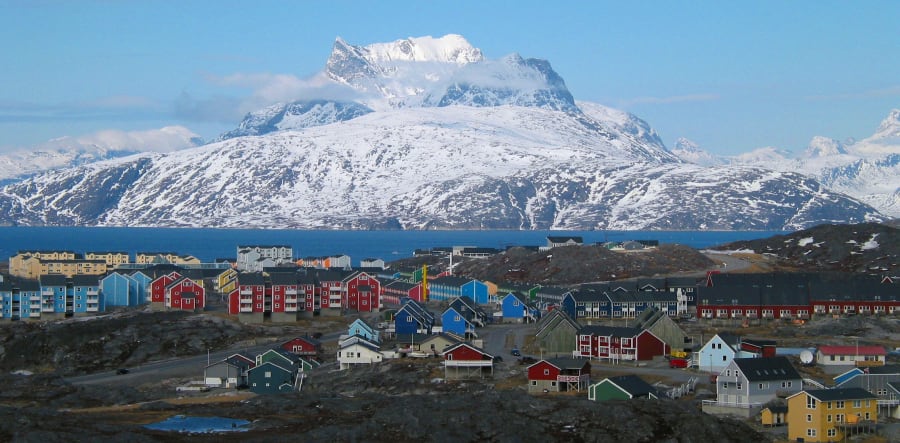
What became known as the "spiral case"
Greenland was a Danish colony until 1953, and Denmark kept control of its health system until 1992. In the 1960s, as better healthcare and living conditions sent Greenland's population climbing, Danish health authorities began fitting large numbers of Greenlandic women and girls with intrauterine devices, called "spirals" in Danish because of their coiled shape.
The scale was enormous for such a small population. An independent investigation commissioned by the Danish and Greenlandic governments and published in September 2025 found that by the end of 1970, at least 4,070 Greenlandic women and girls had an IUD, roughly every second woman born in Greenland. It couldn't say how many of those were fitted without consent; after 1970 the way the statistics were kept changed, and the total number of IUDs inserted is unknown.
What the investigation could document was the testimony. Some 354 women came forward to describe their experiences, including girls 12 years old and younger. Many said they were never properly told what was being done or asked for their consent. Some have described years of pain, complications and lost fertility.
The activist and trauma therapist Naja Lyberth told the BBC she was about 13 when a coil was fitted in 1975. Like many women, she said she had blocked the memory until she confronted it as an adult. The practice did not stop neatly in 1992, either: some women have reported involuntary contraception after Greenland took over its own health system, and Greenland has set up its own compensation scheme for those later cases.
The apology
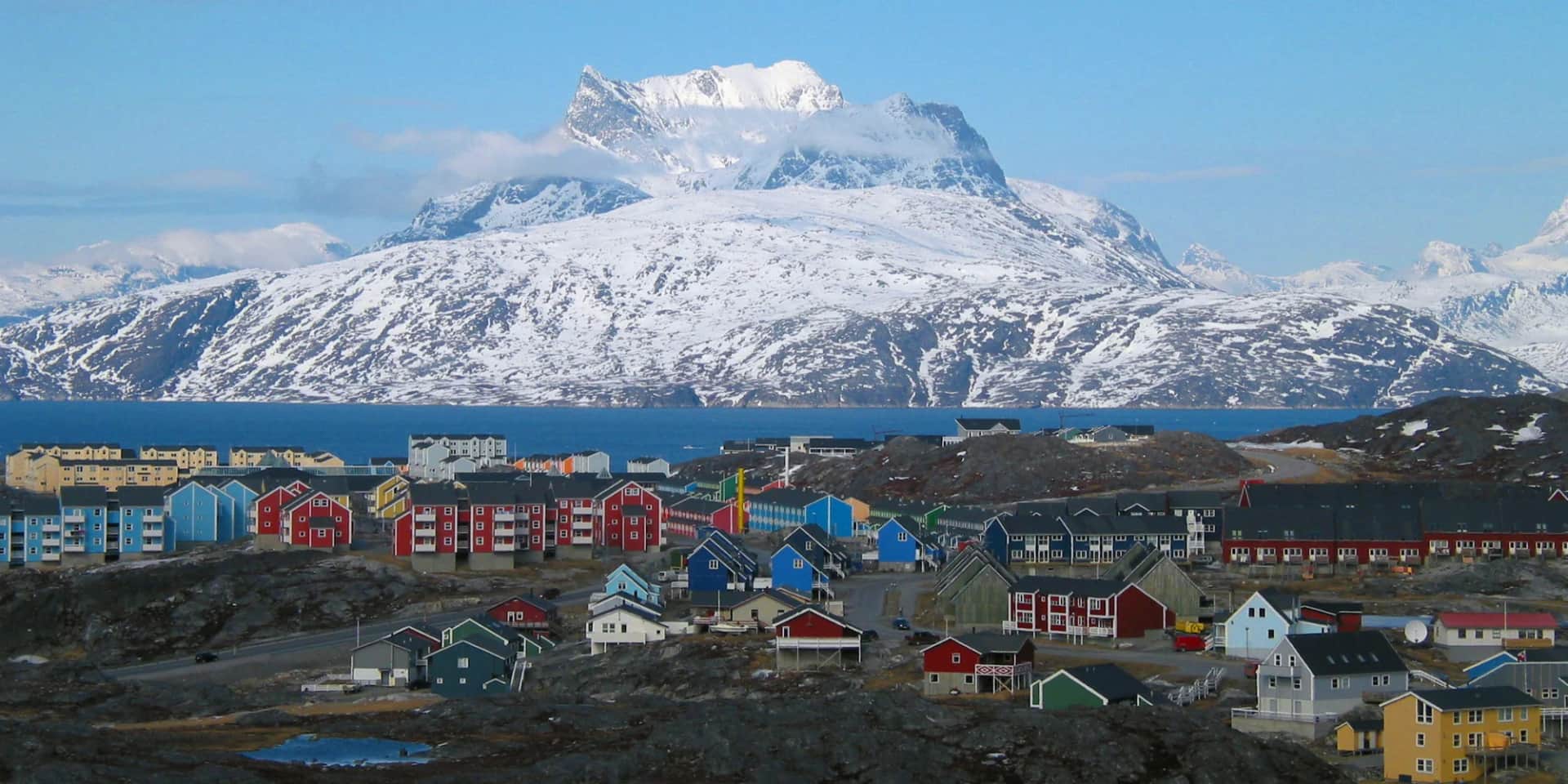
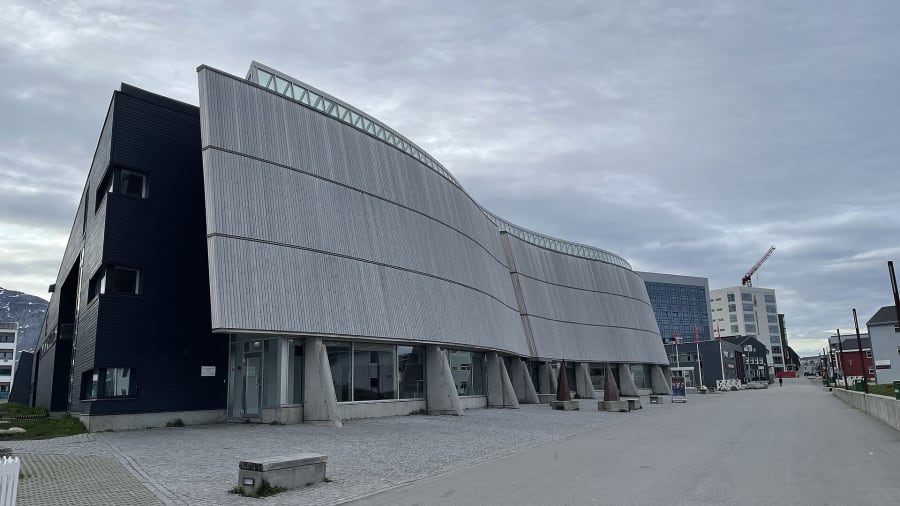
For years, Danish governments avoided a formal reckoning. That changed in 2025. In late August, Prime Minister Mette Frederiksen issued a written apology on behalf of Denmark, and on September 24 she traveled to Nuuk to deliver it in person alongside Greenland's premier, Jens-Frederik Nielsen, at the Katuaq cultural center.
Sorry for the wrongdoing that was done to you because you were Greenlanders.
— Danish Prime Minister Mette Frederiksen, Nuuk, September 24, 2025
The money: who gets what
An apology without redress had been criticized as hollow, and a group of 143 women had already sued the Danish state, demanding 300,000 Danish kroner each for violating their human rights. In December 2025 the government and a broad majority in parliament agreed to give every eligible woman exactly that amount.
The law was passed by the Danish parliament on August 27, 2026. Here is how it works:
How the compensation scheme works
- Each eligible woman receives a fixed, tax-free payment of 300,000 Danish kroner (about $46,000).
- It covers contraception given without consent between 1960 and 1991, including IUDs, the Depo-Provera injection and contraceptive implants.
- Women must have lived in Greenland during that period, declare on their honor that it happened, and make their account plausible.
- Claims are handled by the Danish Patient Compensation Association (Patienterstatningen); applications can be made in Danish or Greenlandic.
- The deadline to apply is September 1, 2028. The payment does not reduce pensions or other benefits.
- Women in the existing lawsuit can settle on the same terms.
Applications opened on July 1, 2026, even before the law formally took effect on September 1. On September 4, Denmark's broadcaster DR reported that the first four women had been awarded compensation, and that at least 342 had applied so far. Officials expect that number to grow considerably. Teams are traveling to towns in Greenland and to Greenlandic community houses in Denmark to help women apply.
The compensation, by the numbers
The question compensation doesn't settle
Money was never the whole demand. Some Greenlanders and campaigners have argued that a policy designed to limit the birth rate of an Indigenous people amounted to genocide. In August 2026, two expert reports on that question were published. As reported by the BBC and AP, the experts found that the rights of Greenlandic women had been violated, but said they could not conclude that genocide had occurred on the basis of the contraceptive practices alone, while leaving open that a court might reach a different finding using wider evidence. Greenland's government said the debate was not over and announced a reconciliation commission.
Other critics, including human rights scholars writing in the Georgetown Journal of International Affairs, argue that payments to individual women can't repair the wider, collective harm to Inuit families and communities. Those debates will continue. But for women who spent decades being disbelieved, a state that once fitted them with coils without asking is now, finally, writing them checks and saying sorry in their own capital.
The spiral case: key dates
- 1953Greenland ceases to be a Danish colony, but Denmark keeps control of its health system.
- 1960s–1970Mass IUD campaign; by the end of 1970 at least 4,070 Greenlandic women and girls have an IUD.
- 1992Greenland takes over its own health system.
- 2022Denmark and Greenland announce an independent investigation as women come forward.
- Sept 2025Investigation published with testimony from 354 women; Frederiksen apologizes in person in Nuuk.
- Dec 2025Political agreement on 300,000 kroner per woman.
- Aug 27, 2026Danish parliament passes the compensation law.
- Sept 4, 2026The first four women are paid compensation.
- Sept 1, 2028Deadline for applications.
Read next: A top Tokyo medical school rigged its exams for a decade to keep women out · How Gina Martin made upskirting a crime in 18 months · The Navajo First Laugh Ceremony
Sources
- Folketinget, L 11, Lov om godtgørelsesordning for kvinder omfattet af antikonceptionssagen (spiralsagen) i Grønland i perioden 1960-1991, as adopted August 27, 2026.
- Statens Institut for Folkesundhed and Ilisimatusarfik (University of Greenland), Uvildig udredning af antikonceptionspraksis i Kalaallit Nunaat i perioden 1960-1991 (September 2025).
- DR, "Nu får de første kvinder godtgørelse i spiralsagen" (Sept. 4, 2026) and "Folketinget vedtager godtgørelse til grønlandske kvinder i spiralsag" (Aug. 27, 2026).
- AP via PBS News, "Denmark to compensate thousands of Indigenous women and girls in Greenland over forced contraception" (Dec. 2025).
- The Guardian, "Greenlandic women claim victory in legal fight with Denmark over forced IUD scandal" (Dec. 11, 2025).
- Courthouse News Service, "Denmark, Greenland chart new course with forced contraception apology" (Sept. 2025).
- Georgetown Journal of International Affairs, "The Greenlandic Forced Contraception Cases: Apologies, Compensation and Beyond".
- Justice Info, "Denmark's apology to Greenlandic women" (2025).
- BBC News, "'Doctors fitted a contraceptive coil without my consent'" (Dec. 2022) and "Greenland says findings on genocide allegation not final" (Aug. 2026).
- Images: Nuuk, Oliver Schauf, Wikimedia Commons, public domain. Katuaq, ThatGuyOnline, Wikimedia Commons, CC BY-SA 4.0.