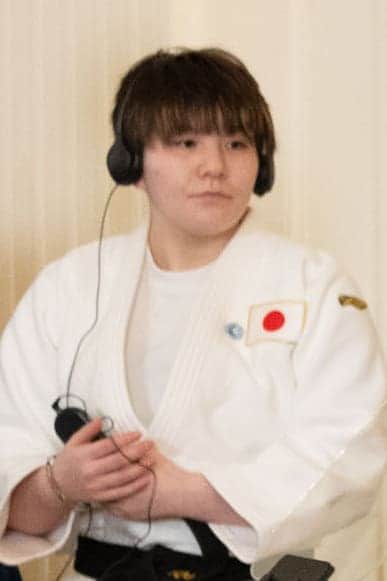
She joined Japan’s Self-Defence Forces because she watched them save her town.
She was a child in Miyagi when the 2011 earthquake and tsunami came. She saw soldiers pull survivors out of the wreckage, and she decided that was what she wanted to be. She enlisted to defend her country.
Instead, her own colleagues harassed her for over a year. In 2021, three of them pinned her down while dozens of others watched and laughed. She reported it up the chain of command. Two investigations were opened. Both were dropped for lack of evidence. Every man who had watched refused to testify. Television stations wouldn’t touch the story.
So she picked up a camera and posted it on YouTube herself.
Her name is Rina Gonoi. She was twenty-four when she brought Japan’s military to its knees.
Related: how a Tokyo medical school rigged its exams to keep women out.
The Reason She Enlisted
To understand why she refused to let this go, you have to understand why she joined in the first place. It was not a career decision. It was a debt.
The Wave That Took Her Town
In March 2011, the Tōhoku earthquake and the tsunami that followed killed close to twenty thousand people and erased entire coastal communities. Gonoi was a child in Miyagi Prefecture, one of the worst-hit areas. She did not watch it on television. She lived in it.
The Soldiers Who Came to Help
What she remembered afterwards was not the water. It was the Self-Defence Forces personnel who arrived to search the rubble, move the survivors, and hold a shattered region together. To a child who had just lost her world, they were the people who showed up.
A Promise She Kept
She decided then that she would become one of them. Years later she did exactly that, enlisting in the Ground Self-Defence Force. She was not drifting into a job. She was repaying something. That detail matters, because it explains what happened when the institution she had idolised turned on her.
What Happened Inside the Unit
The organisation she had spent her childhood admiring did not treat her as a soldier. It treated her as a target.
A Year of Harassment
The abuse was not a single incident. By her account it was routine — sustained, casual, and constant, carried out by the men she worked beside every day for more than a year. It was the sort of behaviour that only survives in a culture where everyone assumes nobody will ever say anything.
2021
Then came the incident that made silence impossible. Three of her male colleagues pinned her down and assaulted her. It did not happen in a hidden corner. It happened in front of dozens of other members of the unit.
The Men Who Watched
They watched. They laughed. Not one of them intervened. This is the part of the story that turns an assault into an institutional failure: the abuse required three men, but the cover-up required everyone else.
The System That Closed Ranks
She did what soldiers are told to do. She used the process. The process was the second injury.
Reporting Up the Chain
Gonoi reported what had happened through the chain of command — the official route, exactly as designed. Two investigations were launched.
Two Investigations, Both Dropped
Both were closed for lack of evidence. An assault carried out in front of dozens of witnesses was ruled unproven. The reason was simple and damning: without testimony, there was no case.
Nobody Would Testify
Every male colleague who had stood there and watched refused to testify. The evidence existed. It was standing in the room. It simply would not speak. She then took the story to the media, and the television stations that might have carried it looked away too.
Walking Away
She left the Self-Defence Forces. The institution she had joined out of gratitude had harmed her, disbelieved her, and closed ranks around the men who did it. By every conventional measure, that was the end. She had lost.
The Video That Broke It Open
She had no lawyer, no platform, and no institutional power. What she had was a camera and a refusal to disappear quietly.
When the Media Wouldn’t Listen
Locked out of the official process and ignored by broadcasters, Gonoi posted her account on YouTube herself — her name, her face, her story, with none of the protection anonymity would have offered. In a culture where speaking out carries enormous personal cost, she chose to be identifiable.
100,000 Signatures
The video went viral. A petition demanding a proper investigation gathered roughly 100,000 signatures. The story the system had buried twice was suddenly something the public would not let go of.
The Ministry Responds
Faced with a case it could no longer quietly close, the Ministry of Defence reopened it. The thing that changed the outcome was not new evidence. It was that the public was finally watching.
What the Investigation Found
Once they actually looked, the findings went far beyond one woman and one unit.
The Apology
The Ministry of Defence issued a public apology to Gonoi — an extraordinary admission for an institution built on hierarchy and reputation. Five personnel were dismissed.
The Thousand Complaints Nobody Counted
The wider investigation it triggered uncovered over a thousand additional harassment complaints across the Self-Defence Forces. Her case was not an aberration. It was one visible instance of something the institution had been absorbing quietly for years.
The Convictions
In December 2023, three former soldiers were convicted over the assault. Reporting indicates the Japanese government later settled her civil case, closing the legal chapter of a fight that began with a report nobody acted on.
What the Story Is Really About
It would be easy to read this as a story about three men. It isn’t. It is a story about everyone else.
Recognition
Gonoi was named on the BBC’s list of 100 most influential women in the world, and appeared on Time magazine’s Next 100 list. The recognition is deserved, though it sits oddly beside the fact that she had to destroy her own military career to earn it.
The Precedent
The men who assaulted her needed three people. The silence that nearly protected them needed dozens — the colleagues who watched, the officers who closed the files, the broadcasters who passed. What broke it was one person who would not accept the answer she was given, and who was willing to put her name and face to it when every institution around her preferred she didn’t. A soldier who joined because strangers once showed up for her town ended up showing up for everyone the system had quietly failed.
Read next: How Gina Martin made upskirting a crime.
Sources
BBC News — reporting on Rina Gonoi and the Japan Self-Defence Forces harassment case
BBC 100 Women (2023). Rina Gonoi named among the 100 most influential women in the world.
Time. Rina Gonoi, TIME100 Next list.
Japan Ministry of Defence. Public apology and findings of the Self-Defence Forces harassment investigation (add exact source URLs).