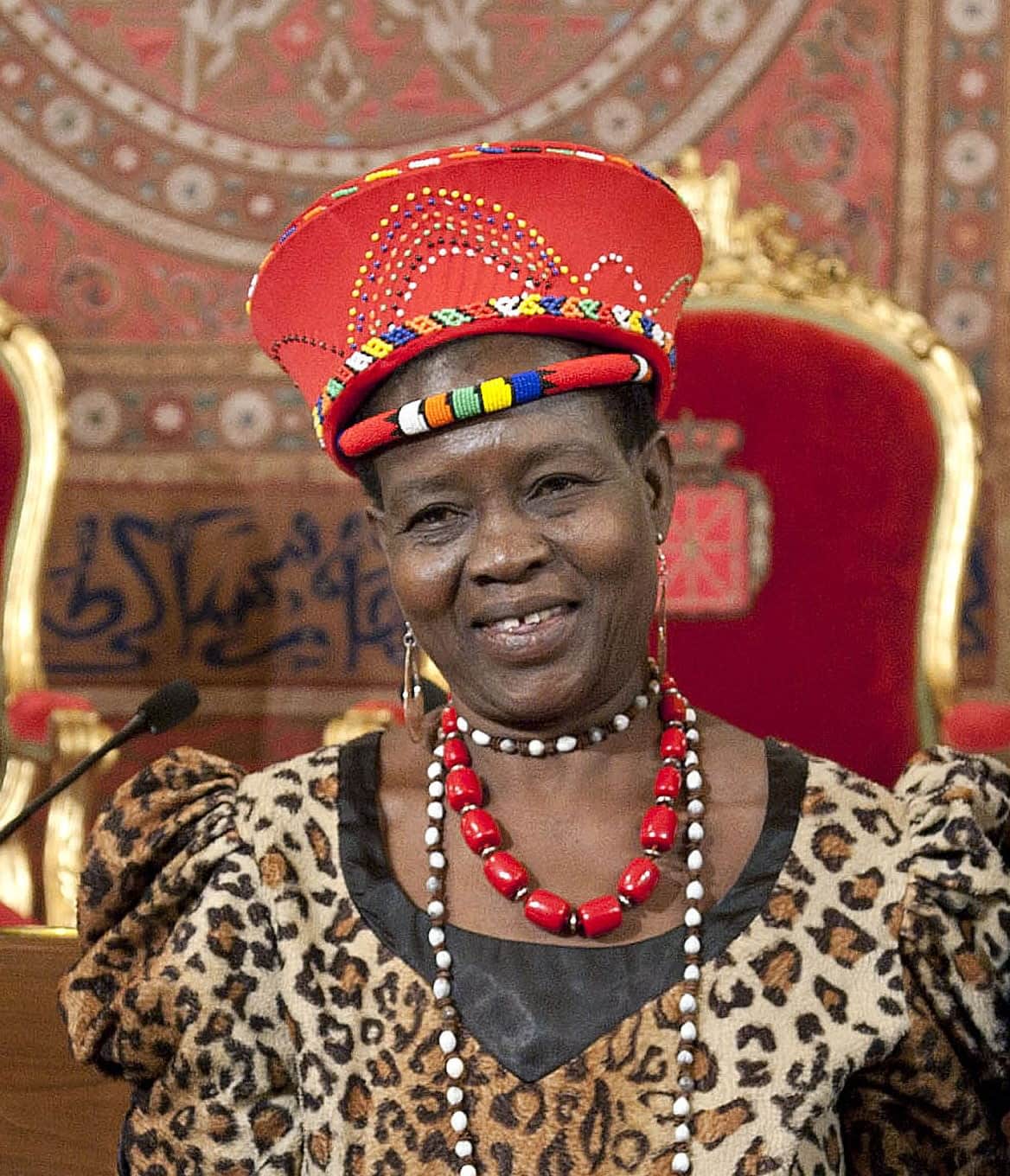
Correction, October 8, 2026: an earlier version of this article described Senior Chief Theresa Kachindamoto as if she were still in office. She died on August 13, 2025. The figure of 850 annulled marriages dates from 2016; by the time of her death the total was more than 3,500, according to the United Nations in Malawi. We also corrected the date of Malawi’s marriage law and replaced a quotation we could not verify. She is often described online as Malawi’s first female Ngoni chief; we could not confirm that, though female senior chiefs are rare in Malawi. Passages below that use the present tense describe her work during her lifetime.
Every year, approximately 12 million girls worldwide are married before the age of 18. In Sub-Saharan Africa, that number is not declining fast enough to meet a single major international development target set for this decade.
Governments have held summits. NGOs have run campaigns. International bodies have passed resolutions.
In Malawi, one woman skipped all of that.
When Theresa Kachindamoto became senior chief of Dedza District in 2003, she did not convene a committee or launch an awareness initiative. She walked into her community with the authority of her office and began dissolving child marriages, one by one, village by village, girl by girl. Within a few years she had annulled more than 850 of them, and by the time she died in 2025 the total had passed 3,500.
No summit produced that number. She did.
“Educate a girl and you educate the whole area. You educate the world.” ~Senior Chief Theresa Kachindamoto
Breaking the Ceiling — Malawi's First Female Ngoni Chief
In the Ngoni tradition of Malawi, chieftaincy has long been a male-dominated institution. The Ngoni people, a Bantu ethnic group with ties to the Zulu Kingdom in southern Africa, have upheld patrilineal leadership for generations. Chiefs were always men, and this wasn’t just a choice; it was seen as the natural way of things.
However, everything shifted when Malawi appointed its first female Ngoni chief, and the community she was set to lead was about to discover the kind of leader she was ready to become.
Who the Ngoni People Are
The Ngoni are one of the prominent ethnic groups in Malawi, with a rich history that dates back to the Mfecane — a time of significant conflict and migration throughout southern Africa in the early 1800s, largely influenced by the rise of the Zulu Kingdom. Over the years, Ngoni warriors moved northward, eventually making their home in areas that are now Malawi, Zambia, and Tanzania. They brought with them a unique military culture, a defined social hierarchy, and a governance system centered around male hereditary chieftaincy.
Grasping this history is crucial because it highlights the significance of appointing a woman to lead a Ngoni community. This wasn’t just a simple administrative change; it represented a profound shift away from a governance tradition that had been established over centuries.
The Appointment and What It Signaled
The specifics of how appointments are made can differ depending on the source, as the selection of a Ngoni chief involves clan elders and traditional customs that often fly under the radar. What we do know for sure is the outcome — and the immediate impact it had.
In communities where traditional leadership holds real power — not just a ceremonial role, but actual authority over land disputes, family issues, and how the community behaves — the identity of the chief plays a crucial role in shaping the community's priorities. When a new chief steps in, it’s not just about having a new face in charge; it’s about steering the community in a new direction.
Malawi's first female Ngoni chief wasted no time in making her vision known. Child marriage, which had long been accepted in her community, was no longer going to be tolerated.
The Problem She Inherited — Child Marriage in Malawi
To truly grasp the significance of what this chief has accomplished, it's essential to recognize the challenging environment she stepped into.
Malawi faces one of the highest rates of child marriage in the world. According to UNICEF, around 42% of girls in Malawi are wed before they turn eighteen, which puts the country among the top ten globally for child marriage rates. Shockingly, about 9% of girls are married off before they even reach the age of fifteen.
These figures aren't just numbers; they tell the heartbreaking stories of girls who are taken out of school, thrust into homes where they have no say, forced into motherhood before their bodies are ready, and trapped in cycles of poverty that their own children are likely to face as well.
Why Child Marriage Persists in Rural Malawi
Child marriage in Malawi is fueled by a mix of economic challenges, cultural customs, and a lack of viable alternatives. In many communities, girls are often seen mainly as future wives instead of potential workers or leaders. This mindset leads to early marriage being viewed as a form of protection — it supposedly shields a girl from the dangers of poverty while also providing her family with a bride price that can alleviate some immediate financial strain.
However, this reasoning is flawed and ultimately counterproductive. Girls who marry young are more likely to drop out of school, face health issues from early pregnancies, raise their children in poverty, and have daughters who end up marrying young as well. This cycle won’t break on its own; it needs intervention, and the most successful efforts come from those that have real authority within the community.
Simply passing laws hasn’t solved the problem. In 2015, Malawi’s parliament set 18 as the minimum age for marriage, and a 2017 constitutional amendment closed a loophole that had allowed younger marriages with parental consent, but the practice persists in areas where traditional leaders hold more influence than national legislation.
What Traditional Authority Can Do That Law Cannot
This is the key point that the chief's story brings to light with remarkable clarity. In rural Malawian communities, the chief isn’t just a figurehead. The chief plays a vital role in mediating disputes, distributing land, and establishing the social norms that shape everyday life. When a chief declares something unacceptable, the community pays attention in a way that’s different from how they might react to a distant government issuing legislation that often goes unenforced in their area.
The chief’s power to dissolve a marriage isn’t backed by Malawian national law; rather, it stems from traditional authority. This authority holds significant weight because it functions within the social framework that the community already acknowledges and respects.
That’s why her outcomes are what they are.
850 Marriages — How She Is Actually Doing It
The figure 850 certainly raises questions. Ending a child marriage isn’t just a matter of paperwork; it’s a deep social intervention. This process requires engaging with families, overcoming pushback, and making sure the girl involved has a safe place to go and a support system to rely on.
It’s just as crucial to grasp how the chief is reaching these numbers as it is to focus on the numbers themselves.
The Process of Dissolution
When the chief learns about a child marriage happening in her area—whether it's from community members, her own observations, or even the girl herself—she takes immediate action. This means calling in the families involved, asserting her authority, and officially ending the marriage.
This isn’t just a casual suggestion. In communities like hers, the traditional authority of a chief comes with serious implications for those who don’t comply—think social repercussions, impacts on community reputation, and sometimes even practical issues related to land and resources that the chief oversees. When she puts an end to a marriage, everyone knows that the chief has made her decision, and that’s the final word on the matter.
Returning Girls to School
Dissolving a marriage is just the first step. A girl who has been taken out of a marriage needs something more immediate — and in this chief's view, that something is education. She has dedicated herself to making sure that girls whose marriages she ends are sent back to school, rather than being placed back into the same home environment that made early marriage seem like a reasonable choice in the first place.
This focus on reintegrating girls into school is what truly sets her approach apart from a simple reactive measure. She’s not just putting an end to marriages; she’s actively changing the paths of these girls — offering them a future that makes the idea of returning to early marriage far less appealing.
Community Resistance and How She Handles It
Not every family takes the news of a divorce lying down. In communities where a bride price has been paid and family ties have been woven around a marriage, the chief stepping in can really shake things up, both economically and socially, for those families involved.
She’s definitely faced her share of pushback. But that resistance hasn’t swayed the outcome. The sheer number of dissolutions she’s overseen — 850 in just three years, which breaks down to about one every day and a half — shows that she’s made this a top priority in her leadership. It’s not just a sporadic response when it’s convenient; it’s a steadfast commitment.
This consistency sends a clear message to the community: child marriage isn’t something she’ll just tackle occasionally. It’s an issue she’s determined to dismantle, piece by piece, without relent.
What the World Can Learn — Community-Led Change vs. Institutional Approaches
The chief's results stand in stark contrast to the ongoing efforts by institutions to eliminate child marriage. It's not that these organizations haven't tried; rather, what she has accomplished in just three years within a single community highlights the significant gaps in progress that have persisted despite decades of work and billions of dollars poured into international development initiatives.
The Institutional Track Record
For decades, eliminating child marriage has been a key focus for international development organizations. It's a significant part of the UN Sustainable Development Goals, particularly SDG 5.3, which aims to end child marriage worldwide by 2030. UNICEF, UN Women, the World Bank, and numerous international NGOs are actively working on programs to tackle this issue across Sub-Saharan Africa.
The good news is that we've seen some positive changes. The rate of child marriage has dropped from about one in four young women a decade earlier to about one in five, according to UNICEF. That’s definitely progress! However, if we’re being honest, it’s still not enough—both in terms of speed and the real impact it has on the communities where this practice is most deeply rooted.
The areas where child marriage remains most common are often the same ones where institutional support is lacking and traditional authority holds significant sway. The story of the chief highlights that this isn’t just a coincidence; it points to a deeper structural issue that shows where we really need to focus our efforts for effective intervention.
Why Community Authority Works
The chief's method is effective because it aligns with the legitimacy framework that the community already embraces. She doesn’t have to persuade families that an outside authority, which they might be skeptical of, has the right to interfere in their choices. She is their chief, and her authority is one they inherently trust.
However, this doesn’t imply that traditional authority is always a catalyst for progress; in many cases, it can be quite the opposite. The long-standing issue of child marriage within traditional leadership structures is a clear example of this. What it does suggest is that when traditional authority is harnessed for progressive purposes, it can be more effective than external institutional interventions, as it doesn’t require the community to accept a legitimacy they haven’t recognized before.
The takeaway for international development isn’t that institutions should pull back. Instead, it’s about investing more thoughtfully in identifying and supporting traditional leaders—especially women—who are already aligned with the goals these institutions aim to achieve.
The Female Leadership Dimension
It wouldn’t be right to talk about the chief’s work without highlighting how her gender plays a crucial role in its success.
As the first female Ngoni chief, she’s leveraging her position to advocate for girls. The powerful symbolism of this situation—a woman stepping into a role that has long been denied to women, and using that role to broaden the horizons for girls—is central to her influence.
In her community, girls aren’t just being rescued from child marriages; they’re growing up under a chief who reflects their identity, who wields authority that was once out of reach for people like them, and who actively uses that power to support them. This visibility carries a significance that goes beyond the impressive 850 figure, but is just as impactful.
Legacy and What Needs to Happen Next
Dissolving 850 child marriages is an impressive achievement, but it’s just the beginning of a much larger story.
The chief's efforts are part of a bigger picture in Malawi—a place where child marriage still affects many communities outside her control. While there are laws to combat this issue, the enforcement can be hit or miss, and the economic challenges that lead to early marriages haven’t really changed. What she has shown is that change is possible. Whether this change becomes common practice, however, relies on factors that go beyond the reach of any one chief.
The Replication Question
The key question her work brings to light is whether it can be replicated. Can we take this model — a traditional leader with real community authority who prioritizes the elimination of child marriage and enforces it consistently — and scale it across Malawi and even further?
The answer isn’t straightforward. It hinges on whether there are traditional leaders ready to step up and adopt the same stance she has. It also relies on having the right support systems in place — legal, financial, and logistical — that bolster rather than hinder those leaders. Plus, it requires the international development community to see community-based traditional authority as a valid and effective way to deliver results, rather than viewing it as a barrier to more institutional methods.
While none of these conditions are out of reach, it’s important to note that none of them are fully realized at this moment.
What the Malawian Government Needs to Do
Malawi's government has laid down a solid legal foundation. The Marriage, Divorce and Family Relations Act of 2015 set the minimum marriage age at 18, and a 2017 constitutional amendment removed the remaining exception for parental consent. However, the real challenge lies in consistent enforcement, especially in rural areas where there's a significant disconnect between national laws and local customs.
The work of local chiefs shows that bridging this gap is achievable when traditional and legal authorities work together. The government needs to foster an environment where this collaboration is the standard, not the exception. This can be done by formally recognizing and supporting chiefs who uphold child marriage laws, providing legal aid and resources for girls who need to reintegrate into schools after their marriages are annulled, and implementing economic support programs that tackle the poverty issues that often lead families to view early marriage as a viable option.
The Girls Behind the Number
In an article focused on data and policy analysis, it’s all too easy to overlook the real meaning behind the number 850 at a personal level.
Each of those 850 dissolutions tells the story of a girl who was on a particular path — one that could have led to early pregnancy, dropping out of school, and a limited future — but instead, she was given a new direction. Some of these girls are currently in school, and a few will actually finish secondary education, which would have seemed nearly impossible if their marriages had continued. Some might even become the first in their families to attend university. And who knows? In twenty years, some of them could be chiefs themselves.
That last possibility — girls whose marriages were ended by Malawi's first female chief stepping into leadership roles — isn’t a sure thing. But it’s definitely more achievable now than it was before she took office. The ripple effect of these more promising outcomes, multiplied across 850 girls and the different futures they will create for their own daughters, is how real generational change unfolds.
Not through grand summits or lofty resolutions. But in communities, one choice at a time, made by leaders who have both the authority and the determination to act.
Related on The Verified Post: Gina Martin, who changed England and Wales' law on upskirting in 18 months.
Read next: The healthcare crisis facing women in Afghanistan.
Sources
- United Nations in Malawi, “UN Malawi statement on the passing of Senior Chief Theresa Kachindamoto” (August 21, 2025).
- Malawi Voice, “Malawi’s Anti-Child Marriage Champion, Senior Chief Kachindamoto, Dies” (August 13, 2025).
- Hannah McNeish, “Malawi’s fearsome chief, terminator of child marriages,” Al Jazeera (May 16, 2016).
- Abigail Haworth, “Chief Theresa Kachindamoto Is Working to End Child Marriage in Malawi,” Marie Claire (March 2018).
- Girls Not Brides, “In memoriam: honouring the legacy of Senior Chief Theresa Kachindamoto” (August 28, 2025).
- UNICEF, child marriage data for Malawi and global trends (data.unicef.org).