How Beijing's Most Ambitious Social Engineering Project Became the Slow-Motion Collapse of the World's Largest Nation
China's births have fallen to a level comparable to that of 1738 — when the country's total population was only about 150 million.
— The Japan Times, January 2026
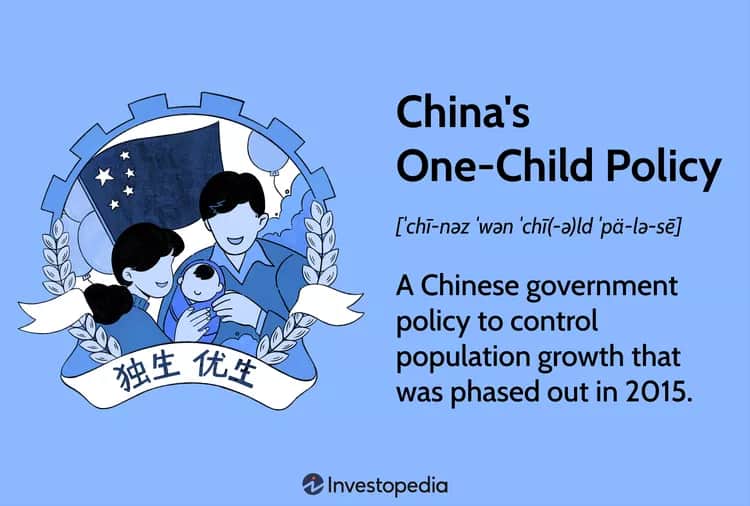
In 1980, the Chinese Communist Party made a decision that would reshape the most populous nation on Earth. Facing what it believed was an unsustainable surge in population, Beijing rolled out a policy that would govern the most intimate decisions of 1.4 billion people for the next 35 years: one child per family. Violators faced fines, job losses, forced sterilizations, and in some cases forced abortions carried out by state officials.
The policy worked. In fact it worked so catastrophically well that China is now facing a demographic collapse of a kind the modern world has never seen — a crisis not of too many people, but of too few, arriving too fast, in a country that built its entire economic model on the assumption that young, cheap labor would never run out.
The Policy and What It Did
In 1979, China designed its one-child policy, which was rolled out nationally from 1980 to curb population growth by limiting couples to having just one child. The fears driving it were real: China's population had exploded after the founding of the People's Republic, and leaders believed that unchecked growth would overwhelm the country's capacity to feed and employ its people. The solution they chose was blunt, sweeping, and enforced with the full machinery of a one-party state.
Enforcement Without Mercy
Enforcement Without Mercy
Enforcement differed widely by province and between urban and rural areas. Many couples were allowed to have another baby if their first was a girl. Other couples paid a fine for having more than one. In its harshest implementations, the policy meant compulsory sterilization and forced abortions — procedures carried out on women who had exceeded their quota, sometimes in the final months of pregnancy. The human cost of these enforcements has never been fully accounted for.
The TFR — total fertility rate — fell from above 6.0 in the early 1960s to 5.52 in 1971 and further to 2.74 in 1980. It declined further through the 1990s, dropping below 2.0 in the early part of that decade. What nobody anticipated was that the decline, once set in motion, would not stop when the policy was lifted. It would accelerate.
"The aggressive policy succeeded far too well, with birth rates dropping a staggering 17 percent between 2024 and 2025 to the lowest level since 1949."
— Futurism, January 2026
The Numbers in 2025
The data released in January 2026 is stark. In 2025, China's population decreased by 3.39 million, with 7.92 million births outpaced by 11.31 million deaths. That is the fourth consecutive year of population decline. The number of births per 1,000 people plunged to 5.6 — the fewest recorded since the founding of the People's Republic of China in 1949. About 7.9 million babies were born in China last year, significantly fewer than the 9.5 million born in 2024.
Births at 1738 Levels
Births at 1738 Levels
China has just announced that births in 2025 plunged to 7.92 million — almost half of what was projected when the one-child policy was repealed in 2016. In fact, China's births have fallen to a level comparable to that of 1738, when the country's total population was only about 150 million. Today China has 1.4 billion people. It is producing the same number of babies as a pre-industrial nation of 150 million.
China has experienced a population decline since 2022, and its total fertility rate has dropped to about 1.0 in 2025. This is despite the lifting of the one-child policy in 2015 and the pivot to the two-child policy and three-child policy in 2016 and 2021 respectively. A fertility rate of 1.0 means each generation is roughly half the size of the one before it. The replacement rate needed to maintain a stable population is 2.1. China is not close.
The Inverted Pyramid
The shape of China's population problem is sometimes described as an inverted pyramid. Normally, a healthy population has more young people at the base and fewer elderly at the top — a stable structure where the working-age majority supports the retired minority. What China has now is the reverse: a rapidly shrinking base of young workers, a vast and growing cohort of elderly citizens, and a pension and healthcare system that was designed for a very different demographic reality.
China's demographic dilemma is characterized by a rapidly aging population, a declining birth rate, and a shrinking workforce. As of 2022, China's fertility rate dropped to an estimated 1.09 births per woman, far below the replacement level of 2.1, and similar to Japan's or South Korea's. However, China's GDP per capita of around USD 23,000 is still much lower than in these two relatively high-income countries. Most developed nations had reached higher GDP levels before experiencing fast population decline. The fear is that China will grow old before it grows rich.
The number of women aged 20 to 34 — the group responsible for 85% of Chinese births — is expected to drop from 105 million in 2025 to 58 million by 2050. This is not a problem that can be solved by policy alone. Even if every woman of childbearing age in China decided tomorrow to have two children, the pool of women capable of having children will be nearly halved within a generation. The math is unforgiving.
"With China's economic woes, young people may want to wait and see — and that's not good news for raising fertility."
— Wang Feng, Professor of Sociology, University of California
Factories Over Families
The CCP's demographic gamble was always embedded in its economic strategy. The one-child policy was not conceived in isolation — it was conceived as a companion to China's industrialization drive. Fewer mouths to feed meant more resources for factories. A smaller, younger population meant more workers relative to dependents. The calculation was: suppress births now, accumulate capital, build industry, and by the time the demographic bill comes due, China will be rich enough and technologically advanced enough to manage it.
The bet was on robots, artificial intelligence, and the "Made in China 2025" industrial strategy — the idea that automation would replace the human labor that demographics could no longer supply. It was an audacious wager: sacrifice a generation of children for a generation of machines. But the machines have not arrived fast enough, the economy has slowed, and the demographic bill is due now.
Despite its economy growing by five percent last year, over 11 million people died while only 7.92 million babies were born. The number of working-age people is dropping as the population continues to age, further taxing healthcare systems and pension funds. GDP growth is projected to be choked by 1 to 2 percentage points annually as the demographic drag deepens. What the CCP built was not the world's factory. It built a factory that is slowly running out of workers.
The Cultural Scars
Perhaps the most underappreciated dimension of China's demographic crisis is what the one-child policy did to culture — to the way an entire society thinks about family, about children, about what a life is supposed to look like. Thirty-five years of enforced singleton births created what demographers call the "little emperor" generation: only children raised with concentrated parental investment, in societies structured around the assumption that one child is normal, sufficient, and desirable.
The long-term effects of the one-child policy include concentrated investment by the "inverted family" in the only child that drives up society-wide childrearing costs. When the policy ended, Chinese parents did not simply decide to have more children. They had been raised in a world where one child was the norm, and where the cost — financial, emotional, logistical — of raising even one child had inflated to match a system designed around only-child households. Having two or three children did not just feel culturally unusual. It felt economically impossible.
"Young people in China are trapped in a post-hypergrowth economy, with much increased cost of living combined with slowing income growth," said Wang Feng, a leading demographer. Young Chinese women have been outnumbering men in pursuit of higher education, and female participation in the labor force stands at one of the highest rates in the world. Yet women "still live in a deeply patriarchal society, with meager political and social representation." The result is a generation of educated, economically pressured women who see little reason — and face significant career costs — for having children.
"Exhorting people to give birth for the country is delusional."
— Dr. James Raymo, Professor of Sociology, Princeton University
Beijing's Beijing's $26 Billion Desperation6 Billion Desperation
The CCP is not standing still. Faced with data that grows grimmer every January, Beijing has pivoted from suppressing births to desperately incentivizing them — a reversal so complete it would be comedic if the stakes were not so high. Specific policies have included lengthening of paid maternity leave, cash payments to mothers in some regions who have their second and third children, government-provided children's clothing and toys, increased child allowances, reduced taxes, and government-subsidized fertility and pregnancy treatment.
Reversing the Reproductive Machine
Reversing the Reproductive Machine
The government also removed an exemption to allow tax on the sale of condoms and other contraceptives. Local family-planning committees — the same apparatus that spent three decades enforcing the one-child limit — are now deployed to call women and check on their menstrual cycles in an effort to encourage conception. The machinery of reproductive control has simply reversed direction. As women around the world opt to give birth later in life and have fewer children or abandon motherhood altogether, "this positive trend of gender equality and reproductive autonomy is being framed by countries like China as a problem that needs to be fixed."
The most recent measure is China's first nationwide child subsidy of CNY 3,600 per child per year, until age three. To put that in context: the average yearly cost of raising a child in China is CNY 26,944. The subsidy covers roughly 13% of that cost. Demographers are nearly unanimous: it will not be enough. The top-down, sometimes heavy-handed approach that emphasizes monetary incentives is having little impact — and could even be backfiring, as it reminds the public of the interventionist government that created this crisis in the first place.
Japan's Lost Decades — On Steroids
The comparison to Japan is instructive and alarming. Japan's demographic decline — its "lost decades" of stagnant growth, aging workforce, and cratering birth rates — has been studied as a cautionary tale for the world. China's trajectory is similar in shape but vastly different in scale and speed. Japan is a wealthy, developed nation that aged slowly. China is aging fast, at a lower income level, with a population ten times larger and a political system far less equipped to acknowledge error or absorb social disruption.
"The empirical evidence from other countries so far is that monetary incentives have almost no effect in raising fertility," said Wang Feng. South Korea, Japan, Singapore — every East Asian nation that has tried to reverse its demographic decline through cash payments and parental subsidies has found that the cultural and economic forces driving low fertility are stronger than any government check. China has every reason to believe it will be different. It has very little evidence to support that belief.
"Once women achieve the freedom to make their own reproductive choices, they cannot be encouraged or coerced to reverse that freedom for nationalistic goals." This is the wall Beijing is running into. It spent 35 years using coercive state power to stop people having children. Now it is using state power to try to make people have children. And it is discovering that the second task is infinitely harder than the first.
"A hot new app is trending in China that takes the form of a countdown timer that has to be reset regularly by single people — so that their friends and family will know if they die alone."
— Futurism, reporting on cultural shifts in a depopulating China
What Happens Next
The demographic math from here is largely settled, whatever Beijing does. In 2050, the number of people over 60 is expected to increase to 430 million. The pension system will strain under a weight it was never designed to bear. The healthcare system will face demand it cannot meet. The military — which draws from the pool of young men — will shrink in absolute numbers even as China's geopolitical ambitions expand. And the economy will face the compound pressure of a shrinking workforce, rising elder care costs, and declining domestic consumption.
China is experiencing one of the fastest transitions to an aged society in recorded history. Demographer Yi Fuxian has estimated that China's population may fall as low as 330 million by 2100 — less than a quarter of its current size. Whether or not that extreme projection proves accurate, the direction of travel is not in dispute. China built its century of dominance on a foundation of human capital it has now consumed. The question is not whether the bill will arrive. It is whether China will be stable enough to pay it.
The one-child policy was described, at the time, as one of the most significant achievements in population management in human history. Four hundred million births prevented. A Malthusian catastrophe averted. The CCP's technocrats congratulated themselves for decades on the scale of what they had accomplished. What they had actually accomplished was detonating a demographic bomb with a 35-year fuse — and now they are standing in the rubble, handing out $500 childcare vouchers, wondering why no one is having babies.
A Final Word
The story of China's one-child policy is ultimately a story about what happens when governments treat human beings as demographic variables to be optimized rather than people to be trusted. The CCP decided how many children its citizens should have. Its citizens, given the first real freedom to choose, have chosen fewer. That is not a failure of incentives. It is an answer. The tragedy is that nobody in Beijing seems willing to hear it.