He waited seven years.
He wrote her passionate letters. He broke with the most powerful religious institution on earth. He dissolved a 24-year marriage. He remade the entire religious structure of England. He did all of it, he said, for her.
Less than three years after they married, Anne Boleyn was arrested, charged with adultery and treason on almost certainly fabricated evidence, and beheaded at the Tower of London. Henry VIII was betrothed to his next wife the following day. They married eleven days after the execution.
History has spent five centuries asking whether Henry loved Anne. That might be the wrong question. The more useful one is this: what is the difference between the kind of intensity that moves mountains to possess someone — and love?
Psychology has an answer. It is not a comfortable one.
The Story as It's Usually Told
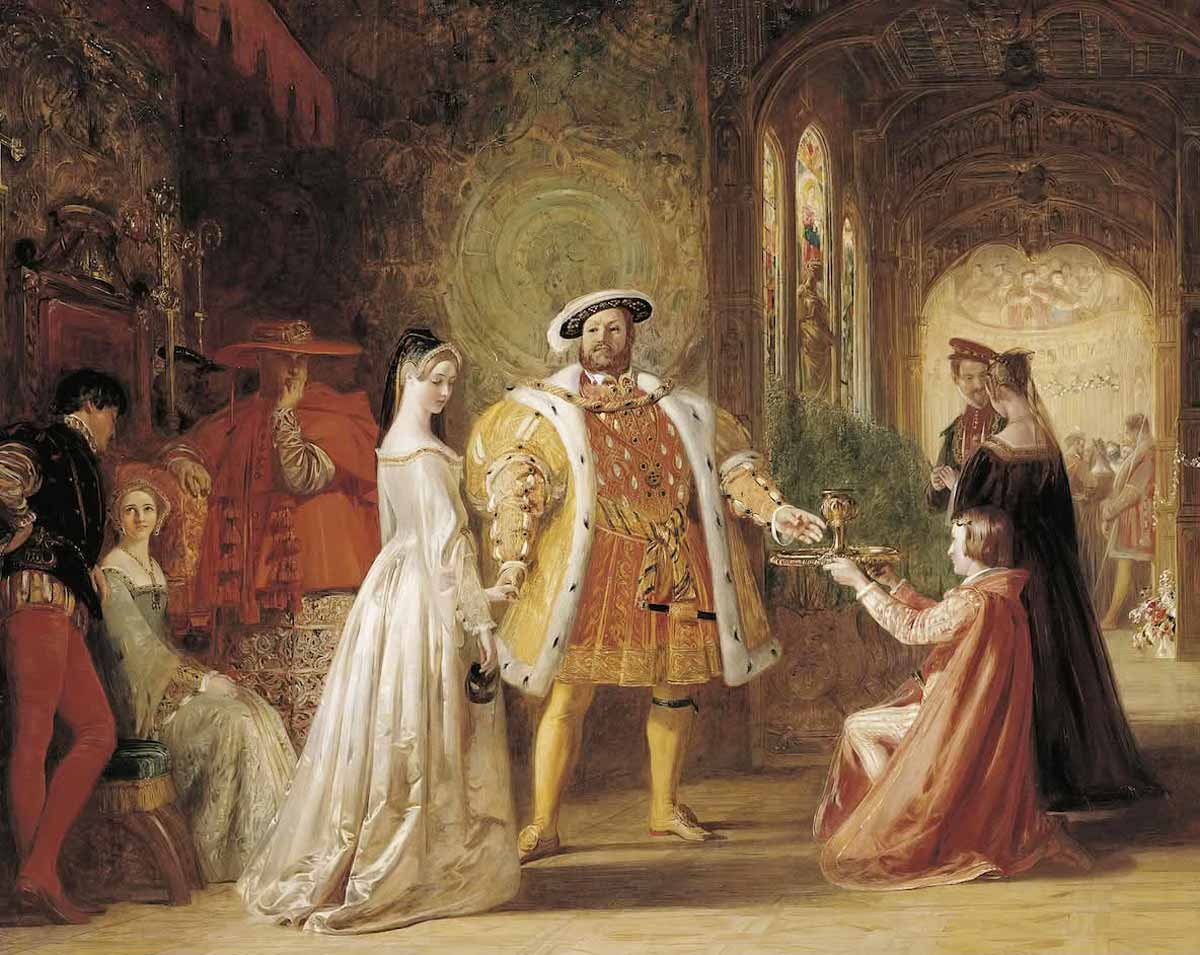
Anne Boleyn returned to the English court around 1522, educated in France, fluent, accomplished, and notably resistant to the patterns of courtly life that had already consumed her sister Mary — who became Henry's mistress. When Henry turned his attention to Anne, she refused to follow the same path. She would not be a mistress. She insisted on marriage or nothing.
By 1526, Henry was consumed. He began writing letters — seventeen survive, preserved in the Vatican archives, full of ardor and urgency. "I beseech you earnestly to let me know your whole intention as to the love between us two," he wrote. He pursued through diplomatic channels, through Cardinal Wolsey, through the Pope. When the Pope — under pressure from Catherine of Aragon's nephew, Holy Roman Emperor Charles V — refused to grant an annulment, Henry began dismantling the Church's authority in England entirely.
They married in January 1533. Anne was already pregnant. The English Reformation — one of the most consequential events in Western history — had been set in motion, in significant part, because a king could not bear to be told no.
They had a daughter, Elizabeth — the future Elizabeth I. Then miscarriages. Then a stillbirth. The court documented Henry's attention drifting toward Jane Seymour, one of Anne's own ladies-in-waiting. In May 1536, Thomas Cromwell moved against Anne. She was accused of adultery with five men, including her own brother. The evidence was paper-thin. She was found guilty anyway.
The qualities that had captivated Henry during the courtship — her forthrightness, her intelligence, her refusal to be managed — became less attractive once he was married to her. The forthrightness that had driven seven years of pursuit became insubordination once she was his.
The forthrightness, fiery temper and intelligence which had so enamoured Henry as a mistress were not the qualities he wanted in a wife.
— History Hit, on the fall of Anne Boleyn
What Psychology Actually Says About This
There is a term for what Henry VIII displayed during those seven years: limerence. Psychologist Dorothy Tennov coined it to describe a state of intense romantic obsession characterized by intrusive thoughts, idealization of the other person, and extreme mood fluctuation based entirely on whether the other person's feelings seem reciprocated.
Researchers have compared early-stage limerence to addiction — the same neurological reward-and-withdrawal patterns, the same compulsive return to the source, the same escalating behaviors when reciprocation is uncertain. Anne's refusal to become Henry's mistress did not cool his pursuit. It intensified it. That pattern — obsession escalating in direct proportion to resistance — is a documented feature of obsessive relational dynamics, not romantic love.
A 2023 study published in the journal Personal Relationships found that the need for significance — the desire to feel important, valued, and recognized — is a primary driver of obsessive pursuit behavior in relationships. It is not connection being sought. It is status. It is winning.
Researchers describe an "Obsessive Relational Progression" that moves through four recognizable phases: attraction with immediate controlling behaviors, anxiety after commitment is secured, escalating obsession, and finally destruction. The partner who was unattainable during the pursuit becomes threatening once obtained — because the obsessed person cannot manage the gap between the idealized fantasy and the actual human being standing in front of them.
Henry wanted Anne for seven years. He had her for thirty-six months before he had her killed.
The Stories We Were Told About Pursuit
The Henry and Anne story is not unusual in how it has been framed. It is just unusually well documented.
The romantic narrative that surrounds it — a man so devoted he challenged God's own representative on earth — is exactly the kind of story that gets called love when it ends in a wedding and called obsession when it ends in a courtroom. The outcome changes the label. The behavior itself looks identical either way.
Popular culture has romanticized obsessive pursuit for centuries. The man who won't give up. The relentless suitor. The grand gesture. The love that breaks all rules. These narratives teach, particularly to women and girls, that resistance is a test to be overcome rather than a boundary to be respected. That a man who refuses to accept no is devoted. That intensity equals depth.
Psychology research consistently finds the opposite. Key warning signs of obsessive rather than healthy love include the inability to accept rejection or limits, intense emotional reactions to perceived threats to the relationship, and extreme highs and lows based entirely on the other person's behavior. These are not signs of devotion. They are signs of a dynamic that, in its milder forms, produces controlling relationships and, in its more extreme forms, produces what researchers now document as an eight-stage progression toward intimate partner violence.
Henry VIII, by any clinical measure, exhibited almost every feature of obsessive relational pursuit. The court record confirms it in detail. And when Anne finally became his — when the fantasy collided with the reality of an intelligent, opinionated woman who challenged him — the relationship destroyed her.
Obsessive love seeks to possess and control. Healthy love seeks to understand and support. Obsessive love respects no limits. Healthy love is built on them. Obsessive love intensifies when met with resistance. Healthy love does not require resistance to stay interested.
What Most People Don't Know About This
The charges against Anne — adultery with five men including her own brother, conspiracy against the king's life — were almost certainly fabricated by Thomas Cromwell, who had political reasons to remove her. Historians examining the court records have found no credible evidence for any of them. One of the accused confessed under what was almost certainly torture. The others maintained their innocence to their deaths.
What is also rarely discussed: on the day Anne Boleyn was executed, Henry VIII was waiting on Tower Hill to hear the cannon fire that would announce her death. Contemporary accounts say that upon hearing it, he turned his horse and rode to Hampton Court for a game of tennis.
He then ordered all paintings of Anne removed and destroyed, had her name chiselled out of the stonework of Hampton Court, and declared their marriage illegitimate — removing their daughter Elizabeth from the line of succession.
That daughter, of course, became Elizabeth I — one of the most consequential monarchs in English history. History's footnote to the seven-year pursuit is that the child born of it would outlast almost everyone who had engineered her mother's death and transform the country her father had already upended.
What most people also don't know is that Anne Boleyn herself seemed to understand Henry better than he understood himself. Historians note that she had seen both his charm and his ruthlessness. She had watched him discard Catherine of Aragon. She knew what he was capable of. She pushed back anyway — argued, challenged, confronted him — possibly because she understood that softness had not saved the women before her either.
It did not save her. But the woman who raised her daughter — who made sure Elizabeth was educated, who placed reformers around her, who insisted on her rights even from prison — had already done what she came to do.
What Actual Love Tends to Look Like
Psychology research on healthy relationships identifies a set of characteristics that look almost nothing like the Henry-and-Anne story.
Genuine love, researchers consistently find, is not characterized by escalating intensity that must overcome resistance. It does not require the other person to be unavailable in order to remain interested. It does not idealize the partner into a fantasy that the actual human being cannot sustain. It does not evaporate the moment the chase ends and the real person emerges.
Healthy love tends to involve a different kind of intensity — quieter, more consistent, less dramatic. It is interested in the other person's actual inner life rather than the version that exists in the pursuer's imagination. It tolerates the other person having opinions, moods, failures, and limits without reading those things as betrayals. It remains steady when the honeymoon stage ends and real life begins.
It does not become more dangerous when the other person changes or fails to meet expectations.
The infatuation stage of a healthy relationship typically involves some of the same intensity associated with obsessive love. That intensity, over time, either matures into commitment, friendship, and genuine respect — or it doesn't. What replaces the intensity is the indicator. Healthy love deepens as the idealization fades. Obsessive love collapses — or turns dangerous — when it does.
Henry VIII defied an entire church. He then played tennis the morning his wife was executed for crimes she almost certainly did not commit.
Whatever that was, it was not love.
The Point
Intensity is not evidence of love. Persistence is not evidence of devotion. A man who will move mountains to possess you is not necessarily a man who will love you once you are his. History is full of stories that were called great romances because they were dramatic, because they changed things, because the pursuit was spectacular. Psychology asks a different question: what happened after the chase ended? What happened when the fantasy met the real person — with her opinions and her failures and her refusal to be managed? In the Henry and Anne story, the answer is documented in stone. Real love does not require the other person to be unattainable in order to remain interested. It does not disappear once the conquest is complete. It does not play tennis the morning after.
Sources
- Wikipedia — Anne Boleyn — en.wikipedia.org
- Britannica — Anne Boleyn: Biography and Facts — britannica.com
- Historic Royal Palaces — Anne Boleyn — hrp.org.uk
- History Hit — How Did Henry VIII Marry Anne Boleyn? — historyhit.com
- HISTORY — Anne Boleyn, second wife of King Henry VIII, is executed — history.com
- SevenSwords — Henry VIII and Anne Boleyn: The Love Story That Changed England — sevenswords.uk
- Wikipedia — Limerence — en.wikipedia.org
- Wikipedia — Obsessive Love — en.wikipedia.org
- MedicineNet — Confusing Love with Obsession — medicinenet.com
- TherapyTips / Personal Relationships journal (2023) — What Drives Our Romantic Obsessions? — therapytips.org
- Love Addiction Help — Pathological Obsession: When Love Turns Dangerous — loveaddictionhelp.com