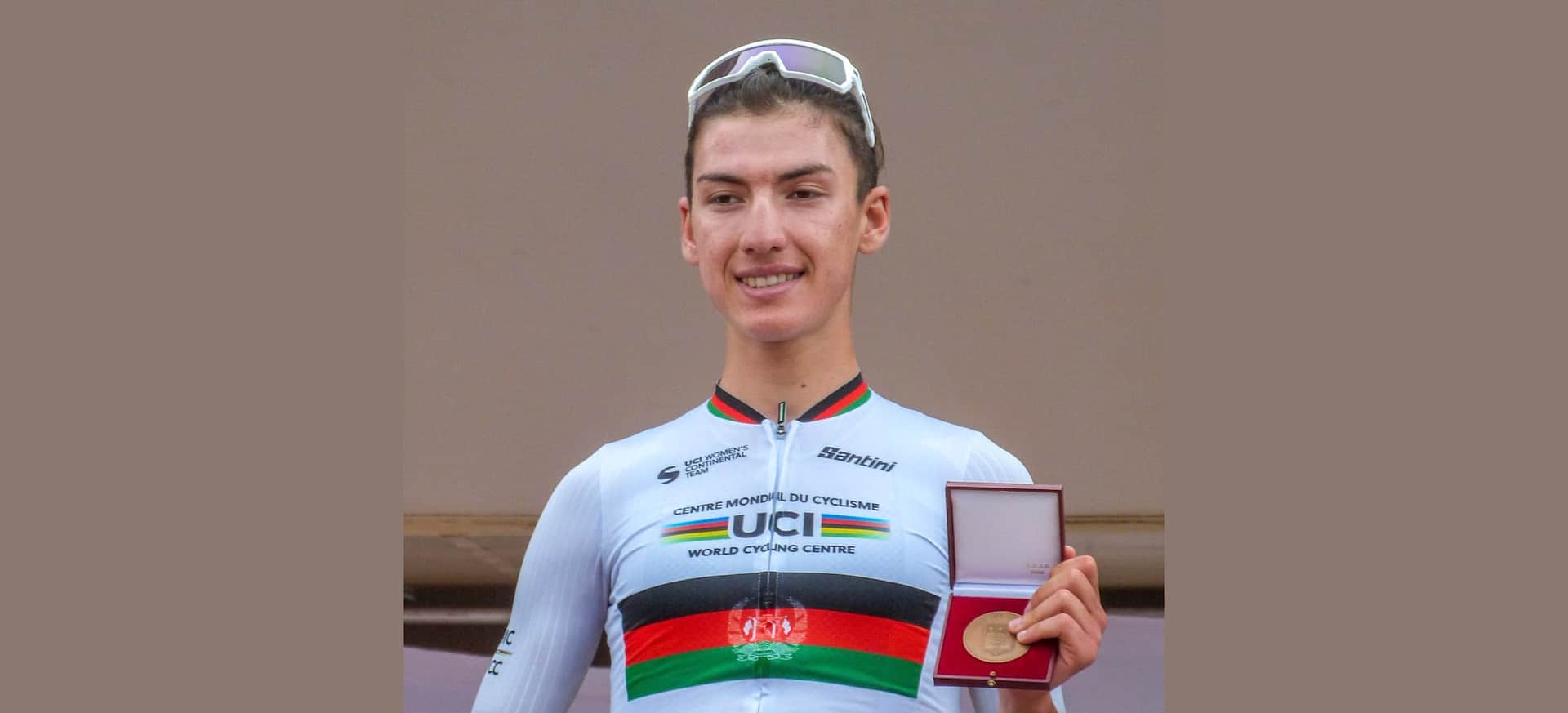
On a road course in Shinshiro, in Japan's Aichi prefecture, a 23-year-old from northern Afghanistan crossed the line second in the women's road race at the Asian Games. Fariba Hashimi's time was 2 hours, 50 minutes and 5 seconds. Only China's Guo Li finished ahead of her.
Within hours, the result had become a headline that travelled far beyond cycling: the Afghan woman who disguised herself as a man to hide from the Taliban wins silver. The medal is real, and so is the disguise. But the order of events in that sentence is slightly off, and getting it right tells you more about what she overcame, not less.
The Essentials
- Fariba Hashimi won silver in the women's road race at the Aichi-Nagoya Asian Games on September 22, 2026, behind China's Guo Li.
- She began racing in 2017 in Faryab province, hiding her identity with headscarves, masks, sunglasses and false names.
- She left Afghanistan after the Taliban returned to power in 2021 and has lived and trained in Italy since.
- She and her sister Yulduz represented Afghanistan at the Paris 2024 Olympics.
A borrowed bike in Faryab
The story starts in 2017, in Faryab, a remote and conservative province in Afghanistan's north where, as the sisters have told the BBC, it was practically unheard of to see a woman on a bicycle. Fariba was 14. Her sister Yulduz was 17. They saw an advertisement for a local race and decided to enter, despite two obvious problems: they didn't own a bike, and they didn't know how to ride one.
They borrowed a neighbour's bicycle and taught themselves in an afternoon. Then they solved the other problem, which was that nobody could know it was them. They raced in baggy clothes, large headscarves and sunglasses, under false names, partly because of the stigma attached to women in sport and partly because they hadn't told their own family. They finished first and second. Fariba later told the BBC it felt like being "a bird who could fly."
They kept entering races and kept winning, which made the secret harder to keep. Their parents eventually found out from photographs in the local press and asked Fariba to stop. She told the BBC she didn't, and kept riding in secret.
What the disguise was really for
This is the part the viral version compresses. The disguise came first, during the years Afghanistan was governed by the internationally backed republic, not the Taliban. Its purpose was protection from people in her own community. The sisters were harassed while riding. Fariba has described having stones and bottles thrown at her, and reports say drivers tried to hit them. Yulduz broke her wrist after a rickshaw driver rammed into her, according to accounts of their early years.
"I always dressed as a man to go to train, wearing two or three different masks so people would not recognise or attack me," Fariba told Reuters. After the silver medal, she told the Associated Press much the same thing: whenever she went to training, she dressed as a man and hid her face when she could.
What the viral post says
She disguised herself as a man to hide from the Taliban, then won Asian Games silver.
What she and reporters describe
She trained in disguise from 2017, before the Taliban's return, to avoid being recognised and attacked locally. When the Taliban took power in 2021, she fled the country.
None of that makes her story smaller. If anything it shows that the obstacles facing women in sport in places like Faryab existed well before August 2021. The Taliban did not invent them. What the Taliban did was make them official, and total.
2021: the escape
By 2020, the sisters were good enough to be invited into Afghanistan's national women's cycling team. A year later, the Taliban swept back into power and began dismantling the rights Afghan women had gained over two decades. Girls were barred from secondary school, and women were pushed out of much of public life, including organised sport.
The sisters contacted Alessandra Cappellotto, the Italian who won the women's world road race title in 1997 and now works to support women in cycling. With her help, Fariba, Yulduz and three of their teammates, Nooria Mohammadi, Zahra Rezayee and Arezo Sarwari, got seats on an evacuation flight from Kabul organised by the Italian government. They settled in Italy's Veneto region, a long way from the dusty, uneven roads where they had learned to ride.
Their first step, as they told the BBC, was a cycling proficiency course of the kind Italian schoolchildren take, because they had never ridden among cars. They learned Italian, joined the Italian team Valcar, and began racing.
From exile to the elite level
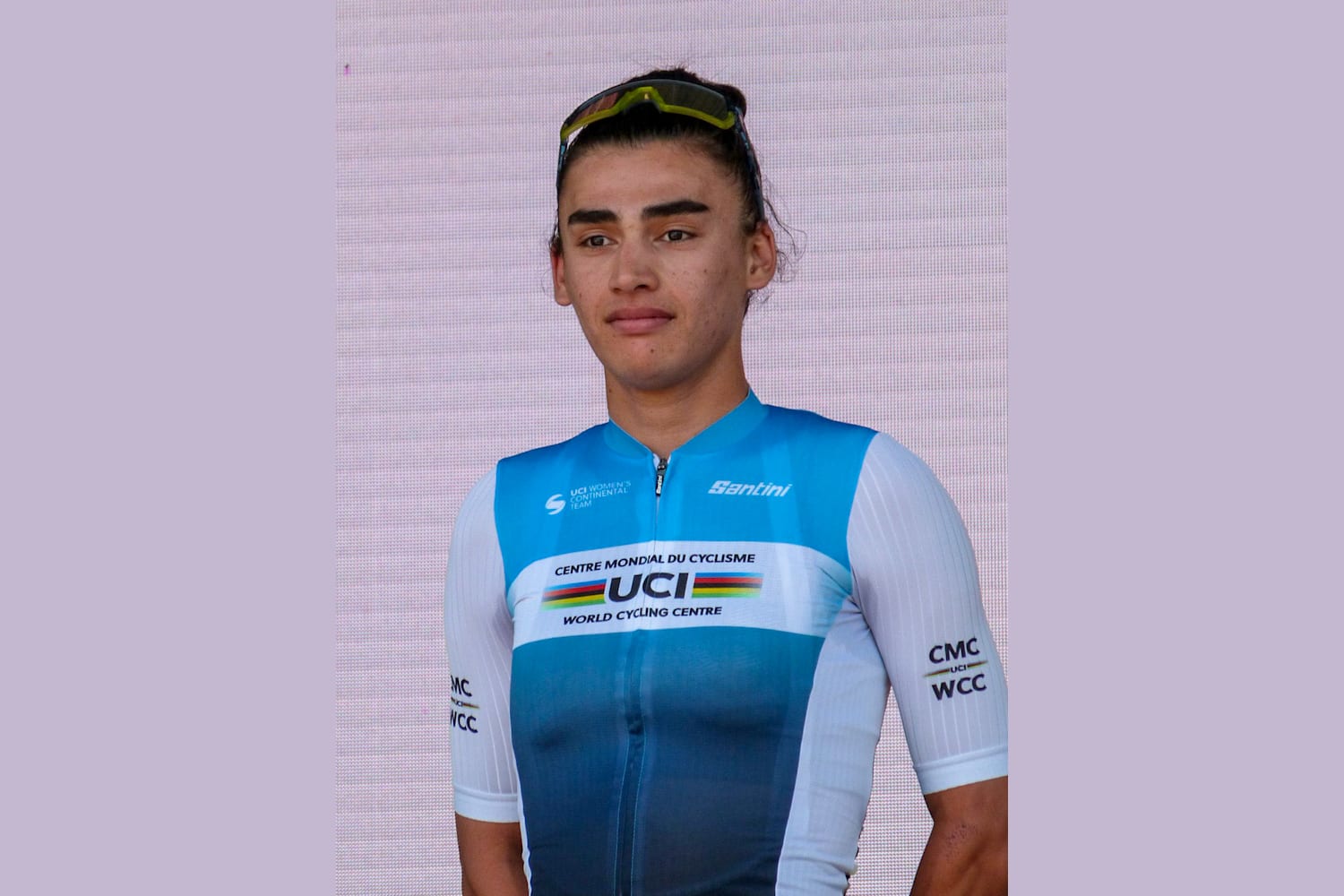
In October 2022, the Afghan women's national road race championship was held in Aigle, Switzerland, because it could not be held at home. Every rider in the field had left Afghanistan. Fariba won in a sprint against her own sister, with Zahra Rezayee third. The result earned her a contract with a development team at the sport's top tier.
The milestones came quickly after that. At the 2023 world championships in Glasgow, the sisters became the first women to represent Afghanistan at the event since the Taliban's return. In 2024, the International Olympic Committee arranged a gender-equal Afghan team of three women and three men for the Paris Olympics, and both sisters rode. Later that year, Fariba won the queen stage of the Tour de l'Ardèche in France, which Olympics.com describes as the first UCI race victory by an Afghan woman.
From Faryab to the podium
- 2017Fariba (14) and Yulduz (17) enter a local race in Faryab in disguise on a borrowed bike, and finish first and second.
- 2020The sisters are invited into Afghanistan's national women's cycling team.
- August 2021The Taliban return to power. The sisters leave on an Italian government evacuation flight.
- October 2022Fariba wins the Afghan women's national road race championship, held in exile in Aigle, Switzerland.
- 2023The sisters ride the world championships in Glasgow, the first Afghan women to do so since 2021.
- 2024Both compete at the Paris Olympics. Fariba wins a stage of the Tour de l'Ardèche.
- September 22, 2026Silver in the women's road race at the Aichi-Nagoya Asian Games.
A silver medal without a mechanic
The Asian Games result came two days after she finished seventh in the individual time trial. And she won it with very little support. "I'm here without a mechanic, without any preparation," she told AFP. The national federation had sent one person, who drove the team car. "I was the mechanic for myself. I was washing the bike myself," she said, and thanked the Japanese team, whose staff fixed her bike.
Her first words after the race were simpler. "I can't explain my feelings now," she said. Then she talked about where she came from.
I was born inside a country where the women who dream are getting attacked, and I'm really happy that I have fought against that.
Fariba Hashimi, speaking to AFP after the road race
She was blunt about the regime that forced her out. "They took away our freedom, they took away everything from us," she told AFP, adding that she hoped the medal showed the resilience of Afghan women and that the next generation could "represent their country without any fear."
What the medal costs
The distance between Faryab and a podium in Japan is measured in more than kilometres. Fariba has spoken repeatedly about being separated from her mother and siblings, whom she said during the Games she had not seen "for such a long time." In interviews during the Games she said she never imagined becoming a refugee, and described the stones thrown at her as something that gave her the strength to keep fighting.
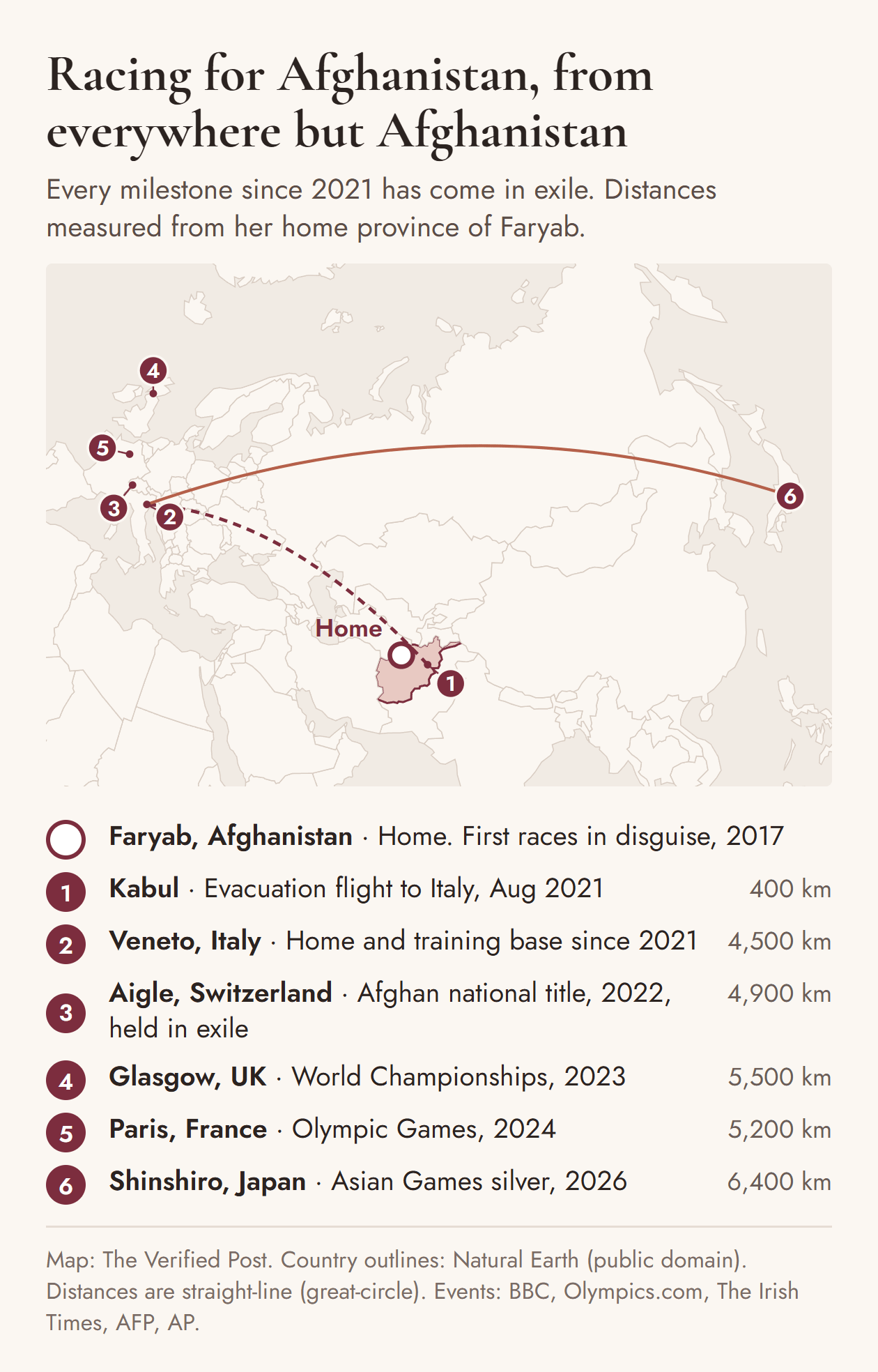
The women she hopes to inspire are still living under the restrictions she escaped. For girls in Afghanistan today, secondary education remains off limits, and so does the kind of sport that carried Fariba out of the country. Those restrictions reach well beyond sport, into daily life and even medical care, as the healthcare crisis facing Afghan women shows.
Her next target is the 2028 Olympics in Los Angeles. "I never want to give up," she said in Japan. Nine years after learning to ride on a neighbour's bicycle behind a mask and a false name, she races under her own name, in her country's colours, on one of the biggest stages in Asian sport.
Sources
- AFP report carried by Al Jazeera, The Guardian, The Economic Times and The Times of India, 22 September 2026.
- Associated Press (Stephen Wade), "Afghan female cyclist wins silver at Asian Games after disguising herself as a man to train," 23 September 2026.
- BBC Sport, "Fariba Hashimi: Afghanistan cyclist who dressed as man to avoid Taliban wins Asian Games silver medal," 22 September 2026.
- Olympics.com, "Fariba Hashimi: From fleeing Afghanistan to an Asian Games 2026 podium," 22 September 2026.
- The Independent and The Telegraph, 22 September 2026.
- BBC Sport, "Yulduz and Fariba Hashimi: Escaping the Taliban, chasing a dream," March 2023.
- BBC News, "Paris 2024: Cycling sisters defy Taliban to achieve Olympic dream," July 2024.
- The Irish Times, "The cycling sisters defying the Taliban to compete in the Paris Olympics," July 2024.