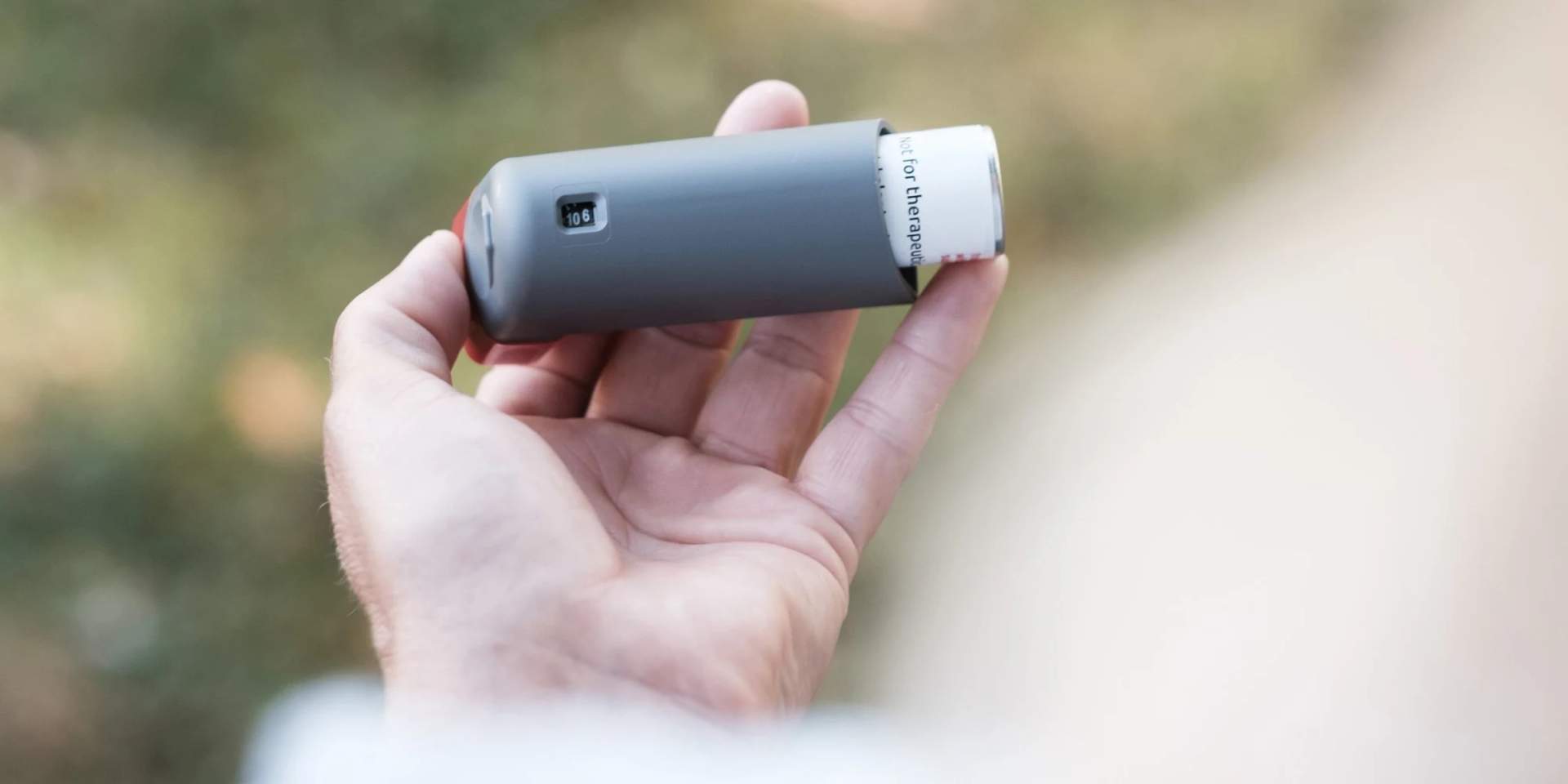
On January 10, 2024, Cole Schmidtknecht walked into a Walgreens in Appleton, Wisconsin, to refill the inhaler he took every day for his asthma. The pharmacist told him it was no longer covered by his insurance. The price was $539.19. Before that, his parents say, it had never cost him more than about $66.86.
He was 22 and had lived with asthma since he was a baby. He left without it. Five days later he had a severe attack on the way to hospital, and on January 21 his parents agreed to take him off life support. The broad story people keep sharing is true. A few of the details attached to it are not, or can't be confirmed, and the part that gets lost is how ordinary the paperwork behind it was.
What happened at the pharmacy
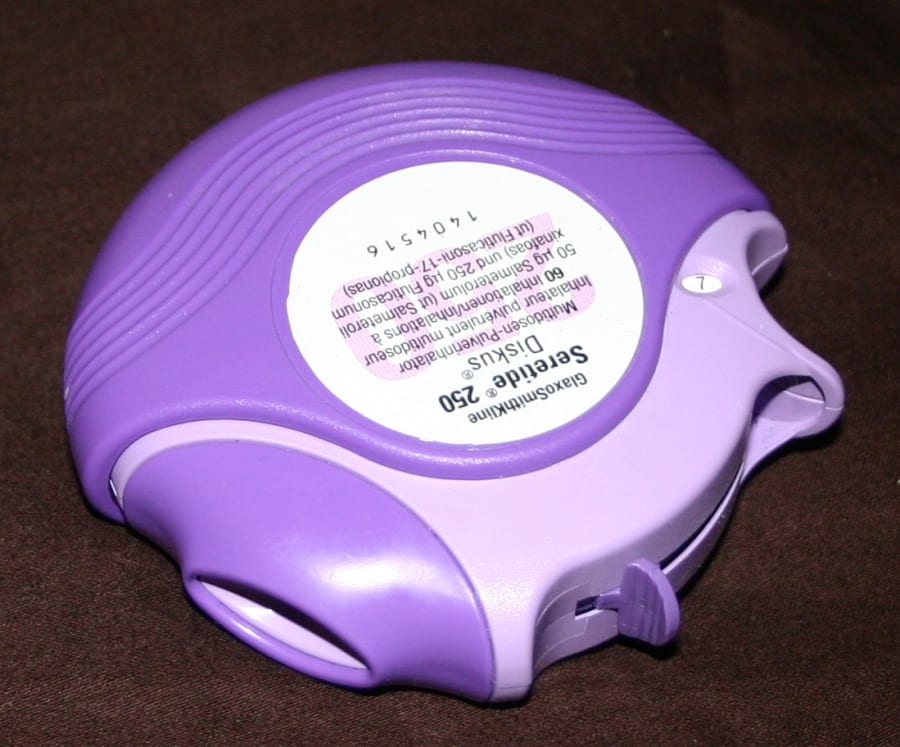
The inhaler was Advair Diskus, a purple disc-shaped device made by GSK that combines a steroid (fluticasone) with a long-acting drug that keeps the airways open (salmeterol). It is a controller medicine. You take it daily so that attacks don't start, which is different from a rescue inhaler like albuterol, the one you reach for once you're already struggling to breathe.
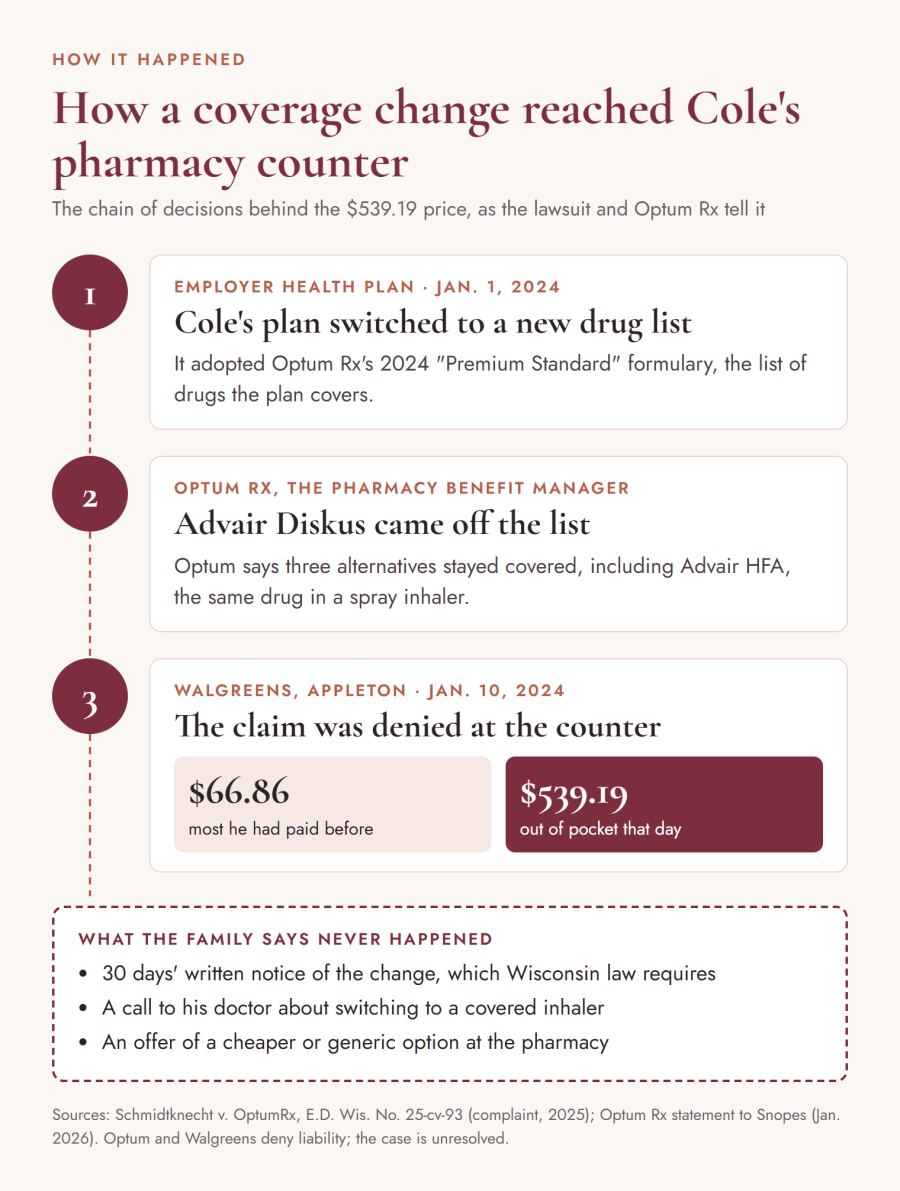
His employer's health plan had switched on January 1 to a new 2024 drug list from Optum Rx, the pharmacy benefit manager owned by UnitedHealth Group. Advair Diskus was not on it. That is the whole mechanism behind the "price jumped overnight" line: GSK didn't raise the price, the plan stopped paying for it, and Cole was suddenly looking at something close to the full retail cost.
According to the federal lawsuit his parents later filed, the Walgreens staff told him there were no cheaper alternatives or generic versions available, didn't ask Optum Rx for an exception, and didn't contact his doctor. He did leave with something. Optum Rx says he bought generic albuterol that day for a $5 copay. The family's lawyer, Michael Trunk, has said that was his rescue inhaler, not a substitute for the daily one.
Dr. David Bernstein, an immunologist at the University of Cincinnati, told NBC News that a rescue inhaler on its own isn't strong enough to keep someone out of the emergency room in a severe attack. Cole's father, Bil Schmidtknecht, told NBC that the rescue inhaler was found empty next to Cole's bed.
The five days, and the six after them
Over the next five days, the complaint says, Cole kept struggling to breathe and relied only on his rescue inhaler. On January 15 his roommate drove him to ThedaCare Regional Medical Center in Appleton. Cole stopped responding and lost his pulse in the car, about two minutes before they got there. Emergency staff gave him two rounds of epinephrine and more than four minutes of CPR. He never woke up.
He spent six days on a ventilator in intensive care. On January 21, after doctors told his parents he was beyond help, they agreed to withdraw life support. The immediate cause of death on his death certificate is status asthmaticus, an asthma attack that doesn't respond to the usual treatment.
From the pharmacy to the courtroom
- Jan. 1, 2024Cole's employer plan adopts Optum Rx's 2024 drug list, which drops Advair Diskus.
- Jan. 10, 2024At a Walgreens in Appleton he is quoted $539.19 for the inhaler and leaves without it.
- Jan. 15, 2024Severe asthma attack. He is unresponsive and pulseless on arrival at the ER.
- Jan. 21, 2024Life support is withdrawn after six days in intensive care. He was 22.
- Dec. 4, 2024Rep. Jake Auchincloss tells his story on the House floor.
- Jan. 21, 2025His parents sue Optum Rx and Walgreens in federal court in Milwaukee, a year to the day after his death.
- July 25, 2025Judge Byron Conway denies Optum Rx's motion to dismiss the case.
- Feb. 11, 2026Wisconsin lawmakers hold a four-hour hearing on Cole's Act.
The parts of the story that don't hold up
The version that spreads online usually ends with two sentences: he paid his rent instead, and five days later he was found dead. Neither is quite right.
He wasn't found dead after five days. Day five is the day of the attack. He died on day eleven, in intensive care.
The rent detail is harder. It first appeared in public on December 4, 2024, when Rep. Jake Auchincloss of Massachusetts told the House that Cole had been forced to choose between his medication and his rent, and chose rent. The family repeated the line themselves when Cole's Act was introduced in Wisconsin in 2025. But in January 2026, when Snopes asked about it, Bil Schmidtknecht said the family couldn't actually confirm it, and that the rent scenario had been used to illustrate the kind of trade-off patients face.
I do not want that framed as a confirmed fact.
— Bil Schmidtknecht, Cole's father, on the claim that Cole paid rent instead, to Snopes (Jan. 2026)
So a grieving father asked, on the record, for the most shareable line in his son's story to be dropped because he couldn't prove it. The documented part is bad enough on its own: a young man with lifelong asthma was quoted a price he couldn't pay for the medicine that kept him out of the hospital, and he went without it.
What gets shared
His inhaler's price jumped from $66 to $539 overnight. He paid his rent instead. Five days later he was found dead.
What the record shows
His plan dropped coverage on Jan. 1, so he faced $539.19 on Jan. 10. His family can't confirm the rent detail. He collapsed on Jan. 15 and died in hospital on Jan. 21.
What Optum Rx and Walgreens say
Both companies have expressed sympathy, and both deny they are responsible. Optum Rx told Snopes that Cole's employer plan chose to adopt its updated formulary on January 1, and that the new list included three covered alternatives, among them Advair HFA, which contains the same medicines in a spray inhaler instead of a powder. It says its system sent Walgreens an electronic message listing those options, each with a $5 copay.
Optum also says the claim was rejected for a second reason: Cole was trying to fill a 180-day supply when the plan's maximum was 90 days. And it says its records and Walgreens' show he hadn't filled Advair Diskus, or any other daily asthma medicine, for about two years before the change. The family hasn't publicly answered that point, and it hasn't been tested in court.
Walgreens has said it can't discuss the case because of patient privacy. In general, it told NBC News, pharmacy staff "may work with the plan, patient, and/or prescriber" when a drug isn't covered. In its court filing it says it met the standard of care.
The lawsuit, and why a judge let it go ahead
Shanon and Bil Schmidtknecht, who live in Poynette, filed their wrongful death suit in federal court on January 21, 2025. Its central claim is about warning. Wisconsin law requires a plan or its pharmacy benefit manager to give patients written notice at least 30 days before a drug is dropped from a formulary or moved to a more expensive tier. The family says Cole got none, so he never had a chance to ask for an exception or get his doctor to switch him before he ran out.
Optum Rx tried to have the case thrown out, arguing that ERISA, the federal law covering employer health plans, overrides state claims like this one. Judge Byron Conway disagreed in July 2025. "The paths may be narrow," he wrote, but a wrongful death claim built on a failure to give notice isn't automatically blocked. The case is now in the evidence-gathering stage, with discovery scheduled to close in March 2027, and the Post-Crescent reports a trial won't come before spring 2027.
None of this has been decided. What the court said is that the family's theory is plausible enough to be heard, nothing more.
The middlemen almost nobody had heard of
Pharmacy benefit managers sit between insurers, drugmakers and pharmacies, and decide which drugs a plan covers. Three of them, CVS Caremark, Cigna's Express Scripts and Optum Rx, handle about 80% of US prescriptions. Part of their income comes from rebates: drugmakers compete to get their product onto the list, and the one that pays the bigger rebate often wins. Gerard Anderson, a health policy professor at Johns Hopkins, told NBC News that the terms of those deals are treated as trade secrets.
Bil Schmidtknecht's view of that system is blunt. "It's not broken," he told NBC. "It's designed to work this way."
Cheaper versions of Cole's drug did exist. The FDA approved the first generic version of Advair Diskus in January 2019, and an FDA analysis found the average generic unit cost about a third of the brand. Within months of Cole's death, the inhaler makers moved too: AstraZeneca and Boehringer Ingelheim capped out-of-pocket costs for eligible patients at $35 a month from June 1, 2024, and GSK, which makes Advair, promised the same for its inhalers by January 2025. The caps came after a Senate investigation led by Bernie Sanders, not because of Cole, and they apply only to eligible patients.
Cole's Act
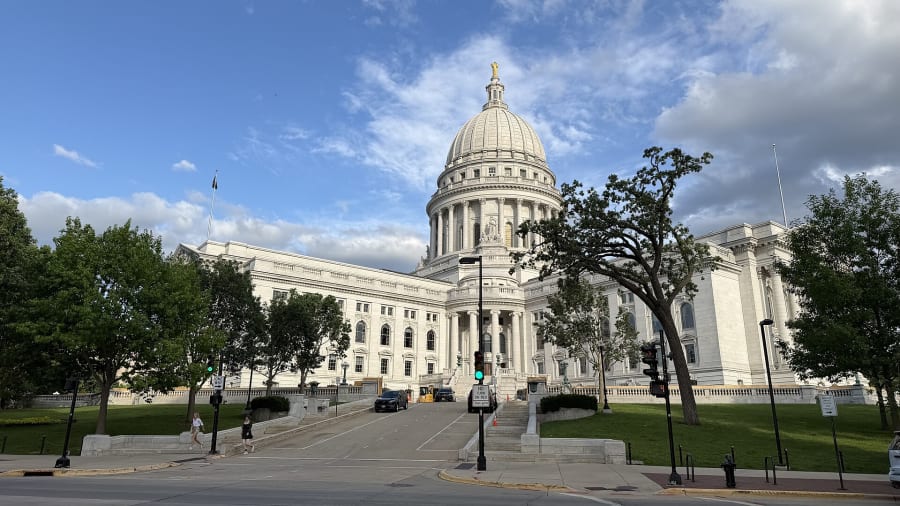
In 2025 two Wisconsin Republicans, Senate President Mary Felzkowski and Rep. Todd Novak, renamed their pharmacy benefit manager bill Cole's Act. It would require 90 days' notice before a drug's coverage changes and stop plans from dropping a drug in the middle of a plan year, along with a long list of rules on how these companies pay pharmacies. It passed a Senate committee unanimously and drew a hearing of more than four hours in February 2026, where Cole's mother testified. Industry representatives argued against it. The bill never reached a full vote before the session ended.
Cole's story has kept travelling anyway. It was read into the Congressional Record, featured in an NBC News series, and in September 2026 John Oliver used it on Last Week Tonight. His parents had a tattoo like Cole's inked on their wrists, a small smiley face they look at when it gets too much.
If a prescription suddenly costs far more
- Ask the pharmacist why. A rejected claim usually comes back with a reason, such as a drug that is no longer on the list or a supply limit.
- Ask which drugs on your plan's list do the same job, and whether the pharmacy can contact your doctor to switch the prescription.
- Ask your plan for a formulary exception. Your doctor can often request one, and some plans allow urgent reviews.
- Check the manufacturer's savings program. GSK, AstraZeneca and Boehringer Ingelheim cap many inhalers at $35 a month for eligible patients.
- Never stop a daily controller medicine without talking to a doctor. A rescue inhaler is not a replacement for it.
The lawsuit will decide who, if anyone, is legally responsible. The facts that aren't in dispute are already enough: Cole's coverage changed on New Year's Day, he found out at the counter ten days later, and on the 21st he was dead.
Read next: how Bernie Sanders lost a 99-1 vote on drug prices, and what came after; why Americans flew to China for a cancer drug the FDA had already approved; the girl in insulin's 1922 before-and-after photos.
Sources (15)
- Schmidtknecht v. OptumRx Inc., No. 1:25-cv-00093 (E.D. Wis.), docket and complaint, CourtListener
- Order denying OptumRx's motion to dismiss, July 25, 2025, Justia
- Unpacking claim Wisconsin man died from asthma attack because he paid rent instead of buying inhaler, Snopes, Jan. 27, 2026
- Parents sue over son's asthma death days after inhaler price soared without warning, NBC News, June 2, 2025
- Fox Valley family sues over son's fatal asthma attack after medication cost increased 700 percent, Wisconsin Public Radio, Jan. 31, 2025
- Wisconsin couple sues Walgreens, Optum Rx, saying son died after sudden $500 price spike, Associated Press via CBS Chicago, Feb. 2025
- Wisconsin man dies after inhaler cost jumps $500, according to family's lawsuit, ABC News, Feb. 2025
- Congressional Record, Vol. 170, No. 179, Dec. 4, 2024
- Pharmacy benefit manager reform bill gets hearing as Wisconsin legislative session nears end, WBAY, Feb. 11, 2026
- Cole's Act to support rural pharmacies, Mid-West Farm Report, Jan. 2, 2026
- Failed PBM Senate bill was final straw in decision to close two local pharmacies, Vilas County News-Review
- John Oliver mentions Appleton man who died after he couldn't afford inhaler, The Post-Crescent, Sept. 21, 2026
- Post-approval impact of generic fluticasone propionate/salmeterol inhalation powder (RLD: Advair Diskus), US Food and Drug Administration
- Drug companies step forward with voluntary price caps on inhalers, Allergy & Asthma Network, 2024
- Images: cover, a hand holding an inhaler (illustrative, not Cole's), photo by Cnordic Nordic via Pexels; Diskus inhaler by Erik Bruchez via Wikimedia Commons (public domain); Wisconsin State Capitol by Aude via Wikimedia Commons (CC BY-SA 4.0); diagram by The Verified Post.