The tip came almost as a throwaway line. A doctor looking at Debbie Doppelt's case told her son that it was a shame she wasn't Chinese, because then she could simply walk into a pharmacy in China and buy the drug she needed.
Max Doppelt took that literally. A few months later he was on a plane home from Shanghai with 26 boxes of a lung cancer medicine called sunvozertinib packed in his luggage. They cost him about $10,000.
That trip, first reported by KFF Health News and The Washington Post on October 20, is the story behind a post now circulating on X claiming that Americans are flying to China to buy cancer medication. The trip happened. But the reason for it, and where things stand now, are more interesting than the post lets on.
A mother out of options
Debbie Doppelt is a 60-year-old New York jeweler who has never smoked. A small cough that wouldn't go away led to a lung cancer diagnosis in late 2023. Her tumors carry a mutation called an EGFR exon 20 insertion, an unusual form of the disease that mostly turns up in non-smokers.
Chemotherapy, immunotherapy and surgery held it back for a while. Then, in December 2024, scans found ten tiny tumors in her brain.
The options in Manhattan, home to some of the best cancer hospitals in the country, ran out quickly. An approved drug called amivantamab targets her mutation, but Max worried about its side effects, and several doctors told him it might not reach tumors in the brain. She tried to join a trial of another drug at Memorial Sloan Kettering, and in January 2025 was ruled ineligible because of slight scarring on her lungs. Sunvozertinib was being tested in the United States too, but in trials where half the patients got chemotherapy alone. Her cancer had already beaten chemo.
Sunvozertinib, made by Shanghai-based Dizal Pharmaceutical, had been approved in China in 2023. Within hours of that doctor's remark, the family had found a small supply through a contact in China. Max later flew to Shanghai himself for a refill.
Getting on the plane and bringing the medicine home felt like my life's purpose.
— Max Doppelt, to KFF Health News
Approved, but not for sale
Here is the part the viral post skips. This was not a cheap foreign knockoff, and it was not about price. The FDA granted sunvozertinib accelerated approval on July 2, 2025, for adults with advanced lung cancer carrying the exon 20 mutation whose disease had progressed after platinum chemotherapy. In the trial behind that approval, tumors shrank in 46% of patients, and those responses lasted a median of 11.1 months.
Yet for more than a year after that, American patients could not get it from a pharmacy. KFF reported that the drug still wasn't on the US market as of mid-October 2026. Neither company has publicly spelled out why the launch took so long. The drug's path to American patients only firmed up when AstraZeneca bought the worldwide rights, in a deal that closed on September 1, 2026, with $600 million paid up front and up to $900 million more tied to milestones.
Max told the South China Morning Post that the US-China trade war added to his fear. He read about tariffs and export controls every day and wondered whether, six months on, there would still be any route to get the medicine to his mother.
That gap closed on October 22, 2026, when AstraZeneca announced that the drug, sold as Zegfrovy, was available in the US through a network of specialty pharmacies. Two days after the story of the 26 boxes broke, the reason for the trips largely went away.
From Shanghai pharmacy to US pharmacy
- 2023China approves sunvozertinib for lung cancer with EGFR exon 20 insertions.
- Late 2023Debbie Doppelt is diagnosed with lung cancer after a persistent cough.
- Dec. 2024Scans show the cancer has spread to her brain.
- Jan. 2025She is ruled ineligible for a US clinical trial. The family finds a supply through a contact in China.
- July 2, 2025The FDA grants sunvozertinib accelerated approval, but it is not yet sold in the US.
- 2025Max Doppelt flies to Shanghai and returns with 26 boxes.
- Sept. 1, 2026AstraZeneca completes its deal for worldwide rights to the drug.
- Oct. 22, 2026AstraZeneca makes the drug available in the US.
How many Americans actually went
The post makes it sound like a stream of travelers. The only figure comes from Max himself, who told KFF he knows of at least 30 Americans who made the trip for this drug. Nobody has independently counted them, and he was clear that nobody was steering people there. Word simply got around.
Max has since quit his tech job and started a company that uses AI to match cancer patients with clinical trials. About 300 people have used it so far, free of charge. In his experience the drug helps roughly half the patients who take it, and it doesn't always last. One 70-year-old woman he helped bought a six-month supply in China, only to find after three months that her cancer had spread anyway.
What the post implies
Americans are flying to China to buy cancer drugs, and one man's 26 boxes saved his mother's life.
What actually happened
Some patients traveled because an FDA-approved drug wasn't sold in the US. It went on sale here on Oct. 22, 2026. The drug has kept Debbie Doppelt's cancer mostly in check, not cured it.
Is it legal to bring cancer drugs home?
Mostly no, with an important exception. The FDA's general position is that importing drugs not approved in the US, even for your own use, breaks federal law. But the agency has long used discretion for patients with serious illnesses who have no effective treatment at home, and an HHS spokesperson told KFF it is "sometimes legal" to obtain medication abroad for personal use, while warning about safety and quality risks outside the US system.
Bringing medicine home: the FDA's personal-use rules
- Importing unapproved drugs is generally illegal, even for personal use.
- The FDA may allow it for a serious condition with no effective treatment available in the US.
- The supply should be for personal use, generally no more than three months' worth.
- The patient should be able to name the US-licensed doctor responsible for their treatment.
- This is discretion, not a right. Customs can still refuse a shipment.
Where Debbie Doppelt is now
The drug has worked for her. About 19 months after she started it, her cancer was still mostly held back, with help from a few rounds of radiation and some dose changes. She has barely missed a day of work, and she describes the stretch since her diagnosis as an amazing three years, in some ways better than the three before it.
Max is not under any illusions, though. He told KFF that a spreading cancer will eventually learn to get around the drug, and that when it does, the family will need whatever the newest therapy is. He is already scrolling trial listings for the next one, including a drug China approved in 2021 that is now being tested in the US.
If that next treatment turns up in China first, he has said he will go back. With China accounting for as much as 46% of the new drugs tested worldwide in 2025, according to KFF, he may not be the last American to make that trip.
Read next: What Japan's "self-poisoning" cancer cell study really found · The girl in insulin's 1922 before-and-after photos · Ruby Bridges and the doll in the coffin: what the viral photo shows
Sources
- KFF Health News, Arthur Allen, "As Politicians Argue About China, US Patients Find Cutting-Edge Treatment There," Oct. 20, 2026 (also published by The Washington Post). kffhealthnews.org
- South China Morning Post, "China-made cancer drug to go on sale in US after Americans travel to buy it," October 2026. scmp.com
- US Food and Drug Administration, "FDA grants accelerated approval to sunvozertinib for metastatic non-small cell lung cancer with EGFR exon 20 insertion mutations," July 2, 2025. fda.gov
- AstraZeneca, "ZEGFROVY (sunvozertinib) now available in the US," Business Wire, Oct. 22, 2026. businesswire.com via Yahoo Finance
- AstraZeneca, "AstraZeneca completes global license agreement for oral EGFR inhibitor Zegfrovy for lung cancer," Sept. 1, 2026. astrazeneca.com
- US Food and Drug Administration, "Personal Importation." fda.gov
- US Food and Drug Administration, Regulatory Procedures Manual, Chapter 9: Import Operations and Actions (personal importation coverage). fda.gov
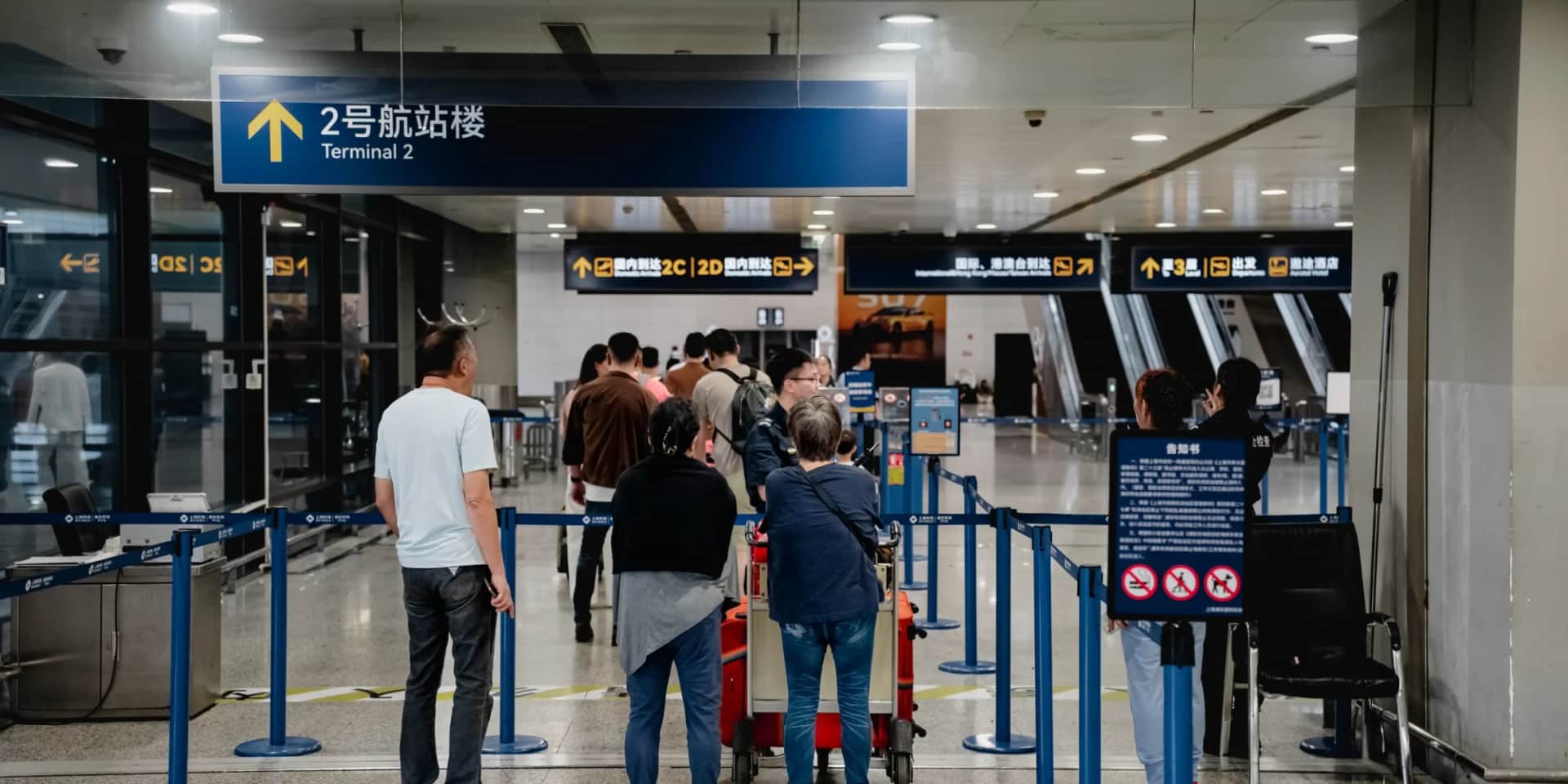
- Image: Travelers at Terminal 2, Shanghai Pudong International Airport. Photo by dongfang xiaowu via Pexels (Pexels License). Illustrative; not the people in this story.