It’s one of the most shared stories in British archaeology. Scientists took DNA from Cheddar Man, a skeleton thousands of years old found in a Somerset cave, and tested people living nearby. The match turned out to be a history teacher who lived half a mile from the cave, some 300 generations later.
That really happened, in 1997, on television. But the version going viral skips two things. A DNA “match” of this kind never meant what the headlines implied. And when scientists re-sequenced Cheddar Man’s DNA in 2018 with far better technology, the result that linked him to the teacher didn’t hold up the way people assume.
Who was Cheddar Man?
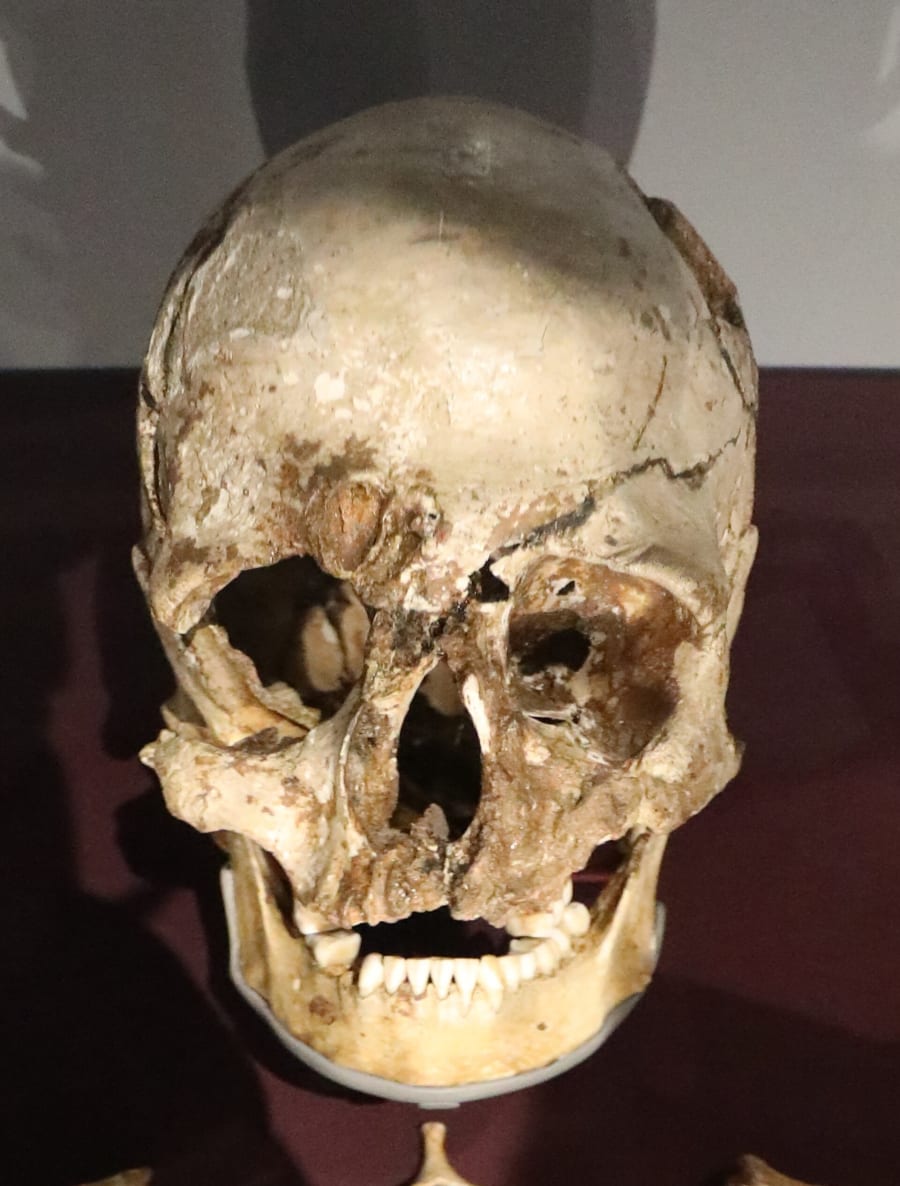
In December 1903, workmen digging a drainage trench at Gough’s Cave, in Cheddar Gorge, Somerset, uncovered a human skeleton beneath a layer of stalagmite. It turned out to be the oldest nearly complete human skeleton ever found in Britain.
Radiocarbon dating puts him at around 10,000 years old, older than the “9,000 years” in the viral post, which repeats a figure from the 1990s. He was a hunter-gatherer from the Mesolithic period, about 166 cm (5 ft 5 in) tall, and he probably died in his early twenties. His skeleton is now displayed at the Natural History Museum in London.
The 1997 match
In the late 1990s, Oxford geneticist Bryan Sykes extracted mitochondrial DNA from one of Cheddar Man’s molars, for a regional TV programme. Mitochondrial DNA is a small piece of genetic material passed down only from mothers to their children. The team then compared it with samples from local people, including pupils and staff at a Cheddar school.
The closest match was Adrian Targett, a history teacher at Kings of Wessex school, who lived about half a mile from the cave. Their sequences differed at just one position in the stretch tested, and Sykes concluded they shared a maternal ancestor. Targett found out on camera, in front of his class.
The presenter said 'We have a result,' and he turned toward me and said 'and it's you.'
— Adrian Targett, to Discover magazine (1997)
Even Sykes said the match wasn’t a huge surprise: he estimated that about 1 percent of people in Britain carry a similar sequence. The fact that one of them lived half a mile from the cave was, in his words, apparently coincidental. Targett has said he only got the job in Cheddar after applying for 50 teaching posts around the country.
What a “match” actually means
This is where the viral version overreaches. Matching mitochondrial DNA does not show that someone is another person’s direct descendant. It shows that they share a maternal ancestor somewhere back along the female line, possibly thousands of years before either of them was born. Mitochondrial DNA is also a tiny slice of a person’s genetic makeup. It says nothing about all the other ancestors in the family tree.
Personally, I think the “300 generations” line is what makes the story so irresistible, the idea of one family staying put in the same valley for ten thousand years. But the science behind it was always much looser than that. If roughly 1 in 100 Britons carry a similar sequence, a village the size of Cheddar would be expected to contain dozens of people who could have “matched” if all of them had been tested.
The 2018 twist
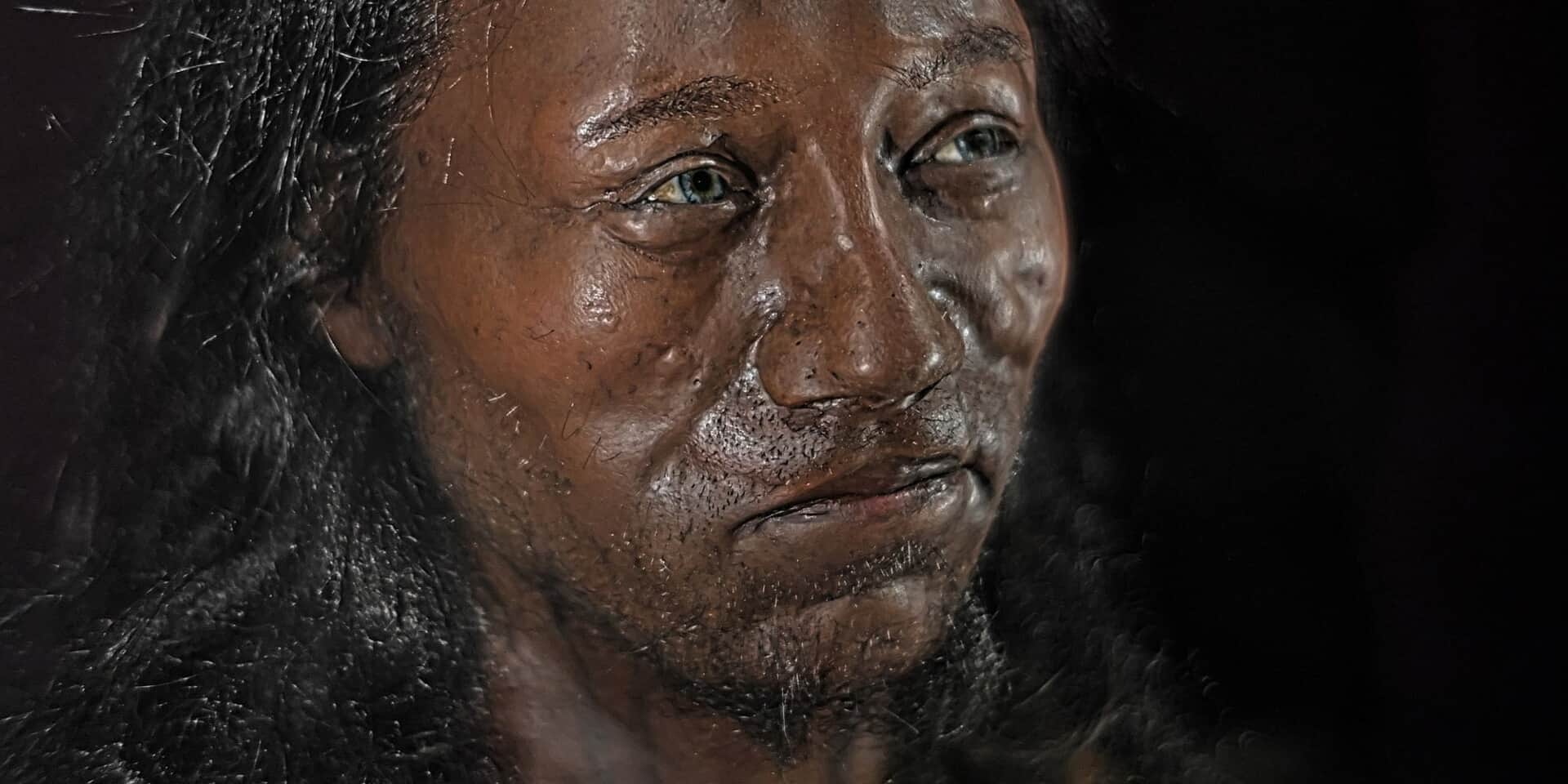
In 2018, scientists at the Natural History Museum and University College London extracted DNA from the dense petrous bone of Cheddar Man’s inner ear and sequenced his genome with modern methods. The results made headlines around the world: genetic markers suggested he most likely had blue or blue-green eyes, dark hair and dark to black skin, typical of Europe’s hunter-gatherers at the time. A reconstruction of his face, made by the Dutch artists Adrie and Alfons Kennis, now stands beside his skeleton.
The less-reported finding matters more for the teacher story. The new sequencing placed Cheddar Man’s maternal lineage in a branch called U5b1. The 1990s test had placed him in U5a, the result that had produced the close match. Scientists put the difference down to older testing technology and possible contamination. So the specific sequence that tied Cheddar Man to Targett may not have been Cheddar Man’s at all.
The 1997 test
Older PCR testing of a tooth placed Cheddar Man's maternal line in branch U5a, one letter away from a local history teacher's sequence. TV coverage presented it as a 9,000-year family link.
The 2018 genome
Modern sequencing placed him in branch U5b1 instead, with the earlier result put down to older technology and possible contamination. A shared U5 lineage only points to a very distant common maternal ancestor.
Cheddar Man, by the numbers
Are modern Britons his descendants?
Mostly, no. Ancient DNA studies show that around 6,000 years ago, farmers migrating from the Continent largely replaced Britain’s hunter-gatherers. Modern British people share about 10 percent of their genetic ancestry with the European population Cheddar Man belonged to, but the Natural History Museum is clear that they aren’t his direct descendants. Most of that hunter-gatherer ancestry arrived later, mixed in with the farmers, rather than coming down from Britain’s first people.
Tom Booth, a museum scientist who worked on the 2018 study, drew a broader lesson from the face beside the bones: you can’t assume what people looked like in the past from what people look like now.
Key dates
- c. 8300 BCCheddar Man lives and dies in what is now Somerset, in his early twenties.
- Dec 1903Workmen digging a drainage trench in Gough's Cave uncover his skeleton.
- 1997Oxford geneticist Bryan Sykes reports a maternal-line DNA match with local history teacher Adrian Targett, on regional TV.
- 2018The Natural History Museum and UCL sequence his genome; his face is reconstructed with dark skin and blue eyes.
- 2018New sequencing places his maternal lineage in branch U5b1, not the U5a reported in the 1990s.
- 2019A study confirms that early farmers largely replaced Britain's hunter-gatherers around 6,000 years ago.
So the viral post is right that a 1997 test linked Cheddar Man to a history teacher living down the road. What it leaves out is that the link was always thinner than it sounded, and that better DNA work later cast doubt on it. The real story is still remarkable: a young man buried in a Somerset cave 10,000 years ago, whose bones are now telling us things about Britain that nobody expected.
Read next: the truth behind the world’s oldest customer complaint, the ‘new organ’ that has been known since 1870, and whether ancient Egyptians really worshipped women as goddesses.
Sources
- Natural History Museum, “Cheddar Man: Mesolithic Britain’s blue-eyed boy”
- Paul Rincon, “Cheddar Man: DNA shows early Briton had dark skin,” BBC News (February 7, 2018).
- “The Year in Science: Cheddar Man DNA,” Discover (1997).
- Selina Brace et al., “Ancient genomes indicate population replacement in Early Neolithic Britain,” Nature Ecology & Evolution 3 (2019)
- “Cheddar Man,” Wikipedia (dating, discovery and the 1996 versus 2018 mitochondrial results)
- Images: Cheddar Man reconstruction by Kennis & Kennis at the Natural History Museum, photographed by Werner Ustorf, CC BY-SA 2.0 (cropped); Cheddar Man’s skull, photo by Geni, CC BY-SA 4.0 (cropped); both via Wikimedia Commons