Updated 6 October 2026. This article was first published in June 2026, while the murder trial was under way. It has been rewritten to report the verdicts and sentences, and to correct errors in the earlier version.
On the evening of 4 November 2025, cameras on the fourth landing of A wing at HMP Wakefield recorded three prisoners following a fourth into his cell, only seconds behind him. According to the prosecution, the three came back out together four minutes and 39 seconds later. The man they left behind was not found until roll call the next morning. He was lying face down on his bed, partly covered, as if asleep. He had been stabbed 25 times.
The dead man was Kyle Bevan, 33, one of the most reviled prisoners in Britain. In 2023 he had been jailed for life for murdering two-year-old Lola James, the daughter of his then partner, in Haverfordwest, Pembrokeshire. In June 2026 a jury at Leeds Crown Court convicted three fellow inmates, Mark Fellows, Lee Newell and David Taylor, of his murder. The next day all three were given whole life orders, which means none of them will ever be released.
The crime that put Kyle Bevan in prison
Bevan met Lola's mother, Sinead James, on Facebook in February 2020 and moved into the family home within days, Swansea Crown Court later heard. He used drugs heavily and had a volatile temper. Over the following months Lola suffered a series of injuries, including a bloodied nose, a grazed chin and a split lip, each covered with an excuse.
On the night of 16 to 17 July 2020, while her mother slept, Bevan subjected Lola to what the trial judge called a "sustained, deliberate and very violent attack". It began around midnight and went on until she was unconscious at about 6.30am. Around that time he searched online for advice about a two-year-old who had "taken a bang to the head and gone all limp and snoring". He waited about another hour before an ambulance was called.
Lola had 101 surface injuries and a catastrophic brain injury that doctors compared to those seen in high-speed car crashes. She died in hospital in Cardiff on 21 July 2020, aged two years and ten months.
Bevan told police the family's American bulldog had knocked her down the stairs. The jury did not believe him. He was convicted of murder on 4 April 2023, and on 25 April Mr Justice Griffiths jailed him for life with a minimum term of 28 years, warning that he might never be released. Sinead James was convicted of causing or allowing her daughter's death and jailed for six years. The judge said she had put her relationship with Bevan ahead of her children's safety, noting that she had gone back to bed after the attack began at midnight. Under the terms of her sentence she would serve half in custody and the rest on licence. A child practice review was set up to examine whether agencies could have done more to protect Lola.
He started to hurt Lola at midnight and carried on until Lola was unconscious at 6.30am.
— Mr Justice Griffiths, sentencing Kyle Bevan at Swansea Crown Court, April 2023
Inside "Monster Mansion"
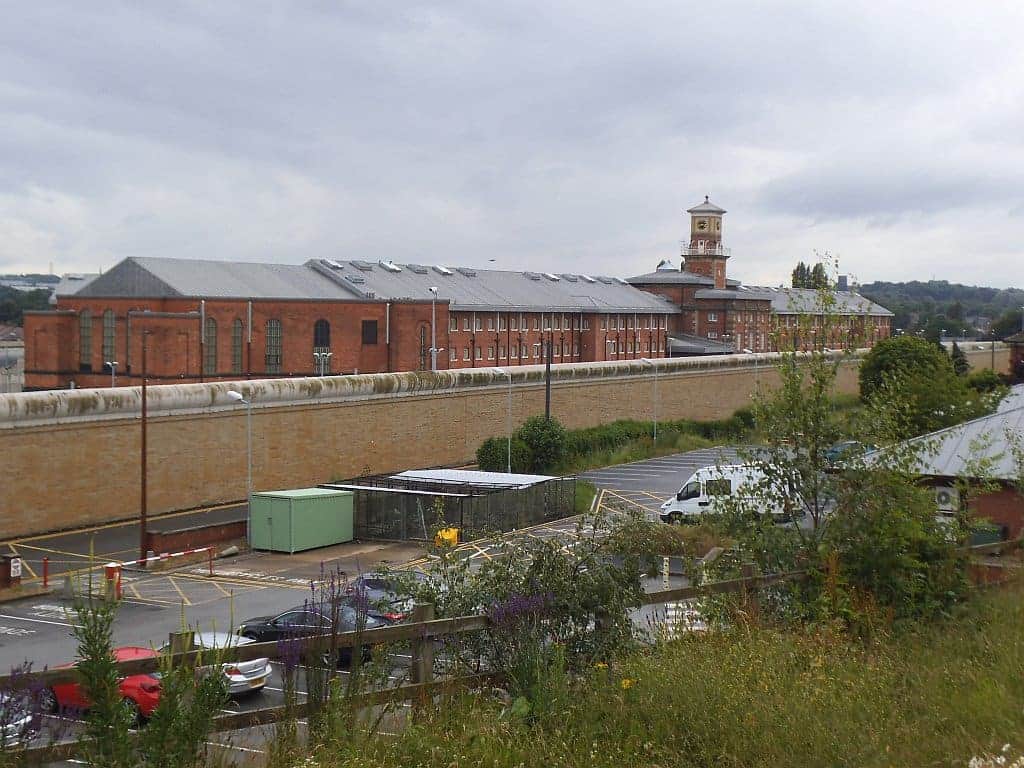
Bevan served his sentence at HMP Wakefield in West Yorkshire, a high-security jail the British press has long called "Monster Mansion" because of the notorious offenders it has held. He was classed as a vulnerable prisoner, the jury heard, a status given to inmates at particular risk from others, often because of the nature of their crimes. His cell was on the fourth landing of A wing.
The prison was already struggling. An unannounced inspection in the summer of 2025 found that violent incidents had risen by 62% and serious assaults by 72% since the previous inspection in 2022. Many prisoners told inspectors they felt unsafe, particularly older men convicted of sexual offences who increasingly shared the jail with a younger, more volatile population. Wakefield then held about 630 men, 148 of them in category A, the highest-risk group. The chief inspector, Charlie Taylor, called it "a prison under strain".
In the weeks before Bevan died there were two other serious attacks at the prison, one of which killed the former Lostprophets singer Ian Watkins, who was serving a sentence for child sex offences.
Four minutes and 39 seconds
The trial opened at Leeds Crown Court on 10 June 2026 before Mrs Justice McGowan. The prosecutor, Jason Pitter KC, told the jury that on 4 November there had been "increased interaction" between the three defendants, who moved together first to Taylor's cell and then up to the fourth landing. When Bevan went back to his cell after 5.30pm, they followed him in.
Inside, Bevan was stabbed 25 times with at least two improvised weapons. Wounds to both sides of his neck cut major blood vessels and his heart was punctured. The judge later said it was likely that at least two of the men held his arms. He had no real defensive injuries. Pitter described the killing as "a carefully co-ordinated venture" carried out "with real efficiency by people who knew what they were doing", and said the three men left "in a satisfied, job-done mood".
The forensic evidence was close to overwhelming. Bevan's blood was found on items worn by each defendant, including jogging bottoms Fellows had thrown away. One weapon, made from a folded piece of metal from the back of a television, had been thrown out of the cell and was found on the ground below with Bevan's blood on it. Further weapons were found hidden in a container of chilli sauce in Taylor's cell. A witness told the court she heard Taylor shout "nice working with you and The Iceman", the nickname used for Fellows.
None of the three gave evidence. The jury also heard about Newell's past: in 2013 he was given a whole life order for strangling another prisoner, Subhan Anwar, who had murdered his partner's two-year-old daughter, and leaving him in his bed. Pitter told jurors there was "a chilling similarity" to the way Bevan was found. On 18 June the jury took less than three hours to convict all three.
Three whole life orders
All three men had killed before. Newell, now 57, had strangled a woman in her fifties when he was 20, and was already serving a whole life order for the 2013 prison killing. Fellows, 45, was serving a whole life order imposed in 2019 for two gangland murders, of Paul Massey in 2015 and John Kinsella in 2018. Taylor, 64, had been held on remand at Wakefield for the murder of a vulnerable young woman, Alisha Apostoloff-Boyarin, and the attempted murder of a police officer.
On 19 June Mrs Justice McGowan imposed new and separate whole life orders on Fellows and Newell. She jailed Taylor for life with a minimum of 20 years for the murder of Alisha Apostoloff-Boyarin and for 30 years for the attempted murder, and then, because Bevan's killing was his second murder, gave him a whole life order as well. In her sentencing remarks she said the men had cornered Bevan in his cell, that each had taken a weapon to the scene, and that "all of you had killed before".
A whole life order is the most severe sentence available in England and Wales. Unlike an ordinary life sentence, it comes with no minimum term after which a prisoner can apply for parole, so the person sentenced will die in custody. For Fellows and Newell, who were already serving whole life orders, the new sentences change little in practice, which is part of what makes prison killings by men in their position so hard to deter. The judge's decision to impose fresh orders nonetheless puts on record that the murder of a prisoner is treated as seriously as any other.
From Lola's death to the prison killing
- Feb 2020Kyle Bevan meets Sinead James online and moves into the family home in Haverfordwest within days.
- 16–17 Jul 2020Bevan attacks two-year-old Lola James overnight; she dies in hospital in Cardiff on 21 July.
- Apr 2023Bevan is convicted of murder and jailed for life with a minimum of 28 years; Sinead James is jailed for six years.
- Sep 2025Inspectors report a 62% rise in violence at HMP Wakefield since 2022.
- 4 Nov 2025Bevan is stabbed 25 times in his cell and found dead the next morning.
- 10 Jun 2026Mark Fellows, Lee Newell and David Taylor go on trial at Leeds Crown Court.
- 18–19 Jun 2026All three are convicted of murder and given whole life orders.
What the case leaves behind
The killing put Wakefield's problems back in the spotlight. A follow-up review by the prisons inspectorate, published in June 2026, found that leaders had since reorganised the jail so that nearly all the men held there were considered vulnerable because of their offence or circumstances, moving many others out. Prisoner-on-prisoner violence fell by 68% over the six months before that visit, compared with the same period before the previous inspection.
Public reaction to Bevan's death was mixed, and many people, including in his victim's home county, argued that the attention belonged with Lola rather than the man who killed her. That instinct is right. A prison sentence is the punishment the court chooses, and no one else gets to add to it, however reviled the prisoner. The three men who did are now serving the most severe sentence the law allows. The child at the centre of all this would have turned eight in 2025.
Cases like this often begin long before the night of the crime, in warning signs that go unheeded inside a home. For more on that pattern, read our explainer on why leaving an abusive relationship is often the most dangerous moment, and our investigation into the 1997 Philadelphia fire that turned out to be a kidnapping.
Sources
- BBC News, "Lola James: Mum and boyfriend guilty over toddler's death" (4 April 2023) and "Mum and her boyfriend jailed over girl's brutal murder" (25 April 2023).
- The Guardian, "Mother and partner convicted over death of Lola James, two, in Wales" (4 April 2023) and "Three prisoners charged with murder of child killer Kyle Bevan" (7 November 2025).
- Herald.Wales, sentencing report (25 April 2023); WalesOnline, trial reports (March 2023 and 18 June 2026).
- HM Inspectorate of Prisons, report on HMP Wakefield (published 29 September 2025) and follow-up review (June 2026); BBC News, "Increased violence at HMP Wakefield, report finds" (29 September 2025).
- Manchester Evening News, Yorkshire Live, BBC News and The Independent, reports from the trial at Leeds Crown Court (10–19 June 2026).
- Judiciary of England and Wales, sentencing remarks of Mrs Justice McGowan, R v Newell, Fellows and Taylor (19 June 2026); West Yorkshire Police statement (19 June 2026).