Editor’s note, October 8, 2026: in Curry Barker’s film, the force that takes over Nikki comes from a wish made with a novelty toy, the “One-Wish Willow,” not from a demon in the religious sense. This essay uses “possession” and “demonic” in that broader, supernatural sense. We have also removed research notes that were published by mistake at the end of the article and replaced them with a list of sources.
The Alibi of the Supernatural: Cinema’s Panic Over the Violent Woman
Cinema has always played a role as a receptacle for the darkest, unacknowledged thoughts and assumptions we have. For more than a century, when the cinematic world encountered a woman who was violent, it recoiled with a curious psychodrama. In most conventional crime thrillers, men get to be violent because they are greedily selfish and because they are, as humans are, deeply flawed. They can be menacing and spiteful simply because they are men. But a woman who is vicious in film? The story tends to panic and find itself an otherworldly justification.
Obsession, in particular, demonstrates this absurd double standard so clearly it’s an unintentional testament to an uncanny convention: for a woman to reach the same level of basic, inherent violence as a typical everyday male antagonist in this culture, the movie needs all the biggest magic weapons it has: demon possession, ancestral curses, dark wizardry and sorcery.
The Human Aspect of Malice
What’s fascinating here is how little we balk when a man on screen behaves violently for reasons we can identify in our real world. In thousands of thrillers, a man becomes a killer due to the spite of a divorce, the ruin of his business, or a sheer lack of control and anger, his motives solely within himself; we don’t need external divine interventions or cosmic judgments to make sense of the human cruelty at play. This is because, in western culture, we've long been socially programmed to understand and accept that men are, and can be, malicious and selfish because it stems from an inner human capacity to be bad. His malice can and will come from himself.
But the moment the story calls for a woman to be malevolent, many writers will falter. Because society has raised us to recognize women as nurturing, or passivity, real-world female spite feels too disturbing for us to face without some mediating buffer. So the story externalizes her malicious intent, so she cannot simply be a bad person exercising her own agency but rather the agent of an unseen entity.
With the supernatural as an all-purpose solution for the female antagonist’s rage, Obsession seems to be suggesting that a woman inherently cannot be just flat-out vicious enough on her own. Literally hell needs to be consulted for a woman to finally stand on a level playing field with a mean-spirited man and a large stick of bludgeoning.
Rewriting the Narrative of Villainy
Back in 1985, Alison Bechdel’s comic strip gave us “The Rule,” otherwise known as the Bechdel Test, as a standard by which to judge the incredibly low bar women had to surpass in cinema in order to simply be treated as individuals and persons. Decades later, it seems we need to introduce a parallel standard for women antagonists: does the act of violence arise from her own entirely human choice, untainted by mania, romantic heartbreak, demonic possession, or the manipulative influence of a man?
The female villain in Obsession cannot possibly meet this standard because her every malicious act is blamed upon magic and demons-effectively removing all of her own agency from the equation. It's convenient for the filmmaker, allows the audience to get the cheap thrill of terror from a female killer but provides an invisible comfort for the viewer, that this level of violence is never what a "normal" woman will engage in. Her violence is rendered impotent by being removed from her, an uncharacteristic deed of the demon inhabiting her.
The "Monster" Trap
So we can understand why the introduction of the supernatural to violent women effectively traps characters in black and white dichotomies, reducing women to perfect angels or demon-ridden monsters with no grey space of human flaw. This impacts what the end of a movie means in terms of how we process her character. When a man is defeated, he’s punished for his individual acts of brutality; when the possessed woman is defeated, she's not truly confronted for any choice she's made but instead presented as the object of salvation and exorcism, or in essence, the victim in spite of herself. The hero triumphs by essentially cleaning house and freeing a lost soul that wasn't really in control to begin with.
And while complex female heroes who display many human emotions and behaviors (positive and negative) may be celebrated in film, there simply has to be room for women who are flawed and evil, as well as good and compassionate; and not simply just the ones that come with magic as the explanation for what their motives truly are.
Why We Can't Put Down the Magic Spell
We stick with this narrative because it's easier, comfortable, and acts as an acceptable buffer for the audience; it's more entertaining, and perhaps less unsettling, to witness a woman rip apart a room or attack a victim while spewing curses in a language no one understands because this effectively makes the source of the terror something entirely removed from our own human world. She can perform this brutality and yet still remain a safe distance away, an abstract horror. If she performed the same actions based on sheer human spite and calculated ruthlessness we’d have to acknowledge the chilling existence of real female brutality, something that’s anathema to the mainstream media.
The story of Obsession becomes proof of how a writer is willing to uphold traditional gender norms even within the context of a violent thriller and lack the imagination to craft a plot where a female character doesn't need a demon or dark magic to possess an equal capacity for violence to a man who might just be an awful, spiteful human being.
It has been said over and over again that female characters need to be given depth and complexity; why should this only pertain to the hero? When will we have women who get to be entirely and authentically human – flawed, deeply troubled, and perhaps realistically vicious – not just the sum of their circumstances or external forces? Until the female villain can exist without any need for magic spells, and is fully rendered in her own humanity, not as the monster, she'll never quite truly be there.
My Perspective on Obsession
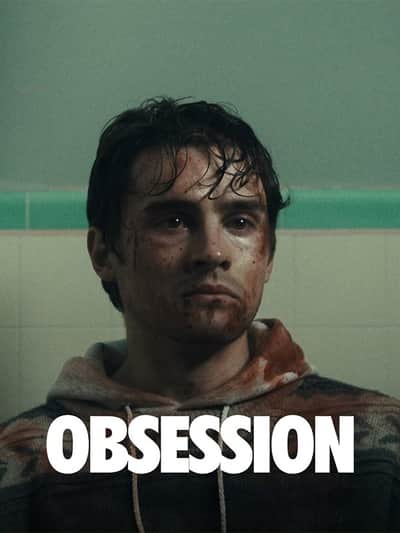
Curry Barker’s first theatrical feature is a deeply raw and honest piece of cinema. It is true. It may not be 2026s most fun horror film, but it is its most unsettling and thats what makes it powerful. Curry Barkers Obsession is one that will certainly stay with you and make you think of obsession.Curry Barker's Obsession takes a simple fairytale-esque concept and flips it on its head, leaving something profoundly unsettling. The premise itself is almost fairytale: one wish, one object, one chance to obtain your deepest desires. But the story doesn't grant Barker's characters what they want in a joyous fashion, quite the opposite. It is a movie that shows just how awful the results of wishes can be; this wish didn't fulfill the character but damned him and didn't solve his problem, but amplified it. It is about how the need of love in men can develop into obsession, which in turn develops into abuse.
What Stands Out
Barkers obsession shows its power through the use of its central symbol; this is not the hopeful story it seems to be when the man wishes on the wish granting object. The Wish Granting Willow is not used in this movie as anything but the character Bear's (Michael Johnston) trap, he gets the one thing he has wished for which is that Nikki (Inde Navarrette) loves him, however this isn't real love, this is love by force and nothing more. Barker does not attempt to glorify the reality that he has presented and in doing so, he makes the idea of being in love feel like abuse.
The film is designed not to be entertained but to be disturbed, the tone of the story is quite sadistic, grotesque, and emotionally scarring. The story doesn't allow the viewer to settle and the feeling it leaves behind is one that lingers in your chest for a long time.
Critically Honest, Not Just Scary
This movie isn't necessarily scary; it is honestly horrifying and confrontational in what it is showing. The film is showing what happens when male loneliness becomes desperate and therefore the obsession turns into violence. There is nothing good from birth, this man was given the option to have everything he wanted and chose a bad road to getting it because he feels entitled, this doesn't lead to any good or any chance to redeem him, just shows the reality of what's occurring.
This movie doesn't provide a sense of comfort for the audience to feel safe within but forces them to consider what is happening and in doing so becomes a far more disturbing film.
Character Motivation: Obsession as a Mirror
Barkers characters aren't driven by the idea of love, it is the obsession combined with the lack of love and fear of rejection that drive the character Bear and in turn the desire of being chosen over all others. He does want Nikki to love him at first but in order to do this, she is forced into liking him, then the desperation kicks in, turning love into paranoia. This means that he no longer cares about Nikki, but only about retaining the status quo and keeping his lover to himself, no matter what the consequence is.
The end of the film is where he tries to fix everything, not to make things right, but to keep his girlfriend. This is not remorse but acceptance that he cannot lose his love no matter what has occurred, he is not sad because of the abuse, he is sad because he will not keep what he has forced into his life.
The end of the film is quite tragic; the girl does manage to be herself again after the wish breaks. However she isn't safe, she is left with her experience of the fake version of herself and has to live with the idea that her boyfriend forced the idea of loving him.
The end of the story is not happy but horrific as the film demonstrates that love can't be forced and men, nor anybody should never be able to coerce other people into believing they are loved or force them into relationship. It shows that the cost of being entitled to certain things is not just pain but destruction and the person to pay the ultimate price is Nikki.
The final moral lesson of the film is that if something can be done, it must be the thing that one should endeavor to pursue but not only that but one must also accept that if one wishes for something they must be able to deal with anything that comes with that, regardless of if things work out or not, they must take responsibility for whatever outcome there is and make things right after it.
Final take
Obsession is a film that will definitely make you think, not just of obsession, but of all kinds of people who could be cruel just for wanting something and will get it no matter what it takes. The movie is bleak and true and one will surely not forget about the film's message; it may not be 2026s most fun horror but it is most certainly its most disturbing and one that will last.
Curry Barker’s first theatrical feature is emotional, honest, and has some truly sickening and disturbing images. The film may not be the most fun horror to emerge in 2026, but it is perhaps its most unsettling and a testament to its power as Barker delivers a film that will not be forgotten and leaves the viewer to ponder the concept of obsession.
Read next: The history of the Bechdel test, and why we are fascinated by female criminals.
Sources
- Guy Lodge, “‘Obsession’ Review,” Variety (May 14, 2026).
- Jesse Hassenger, “Obsession review,” Polygon (May 12, 2026).
- Clarisse Loughrey, “Obsession review,” The Independent (May 14, 2026).
- Odie Henderson, review of Obsession, The Boston Globe (May 2026).
- “Obsession (2025 film),” Wikipedia (consulted for credits and release dates, cross-checked against the reviews above).
- Rotten Tomatoes, Obsession (critics’ consensus and release details).
- Alison Bechdel, “The Rule,” Dykes to Watch Out For (1985).