How many public promises made at awards shows and press junkets actually get kept?
Most don't — not because the people making them are insincere, but because good intentions rarely survive the practical grind of an industry that runs on momentum, habit, and whoever already has the relationships in place.
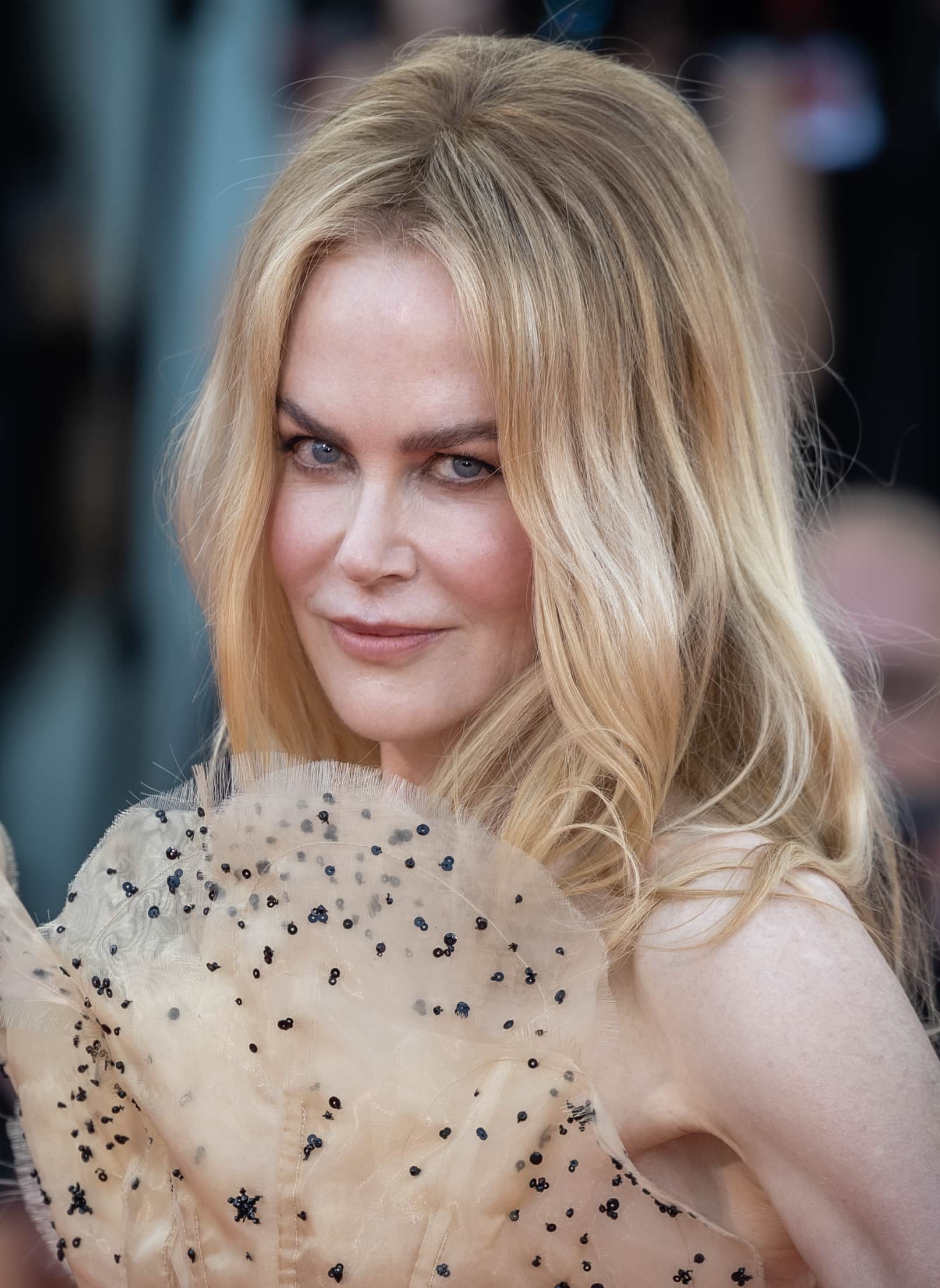
Nicole Kidman's 2017 pledge to work with a female director every 18 months could easily have gone the same way. A nice quote. A applause line. Forgotten by the next press cycle.
Instead, eight years later, she has worked with 19 female directors as an actor or producer — far exceeding her own target. The question worth asking is not whether she kept her promise. It's how.
"I was going to make it possible... I had to start to say this is how I am doing it. This is what I am doing. We will take the risk and we are going to mentor and support and help and then really protect" ~ Nicole Kidman
The Pledge — How It Started
To understand why Nicole Kidman's commitment matters, you have to understand the moment that produced it.
Kidman originally made the pledge during a May 2017 interview with The Sydney Morning Herald, before discussing it further that year in an interview with Glamour around her Women of the Year recognition. The commitment itself was simple and specific: work with a female director once every 18 months
Why She Made the Promise
Kidman laid out her thoughts pretty clearly: as an actor, she believes your talent shines through the roles you get — and unfortunately, there just weren't enough women presenting her with those opportunities. She linked this issue directly to the lack of chances for women, explaining that the reason they weren't offering her roles was that they themselves didn't have the opportunity to direct in the first place.
She positioned her pledge as part of a larger mission in her advocacy efforts — highlighting her fundraising for women's cancers and her commitment to using her platform to address violence against women. Kidman expressed her desire to be part of the movement that aims to shift the statistics in her industry.
The Number She Actually Chose
Kidman has opened up about the exact moment she made her commitment — during a press conference at Cannes, where she declared, "From now on, every 18 months, I will work with a female director." She confessed that right away, she felt 18 months was too long and actually anticipated being involved every six months to a year.
That little detail is significant. This pledge wasn’t meant to be a bare minimum to meet with reluctance. Kidman has acknowledged that she was aware from the very beginning that the actual pace would be quicker than what she publicly stated.
Early Signs She Meant It
Within the same period as making the pledge, Kidman pointed to her work with director Karyn Kusama on a new project as an early example of keeping her word. She also connected the pledge to her family — noting that her nine-year-old daughter Sunday had expressed interest in becoming a director, and reflecting on the gap between her daughter's confidence that "the world's my oyster" and the industry reality that it currently is not, equally, for everyone.
The pledge, from its earliest days, was framed less as a publicity moment and more as a personal accountability mechanism — one she would go on to reference repeatedly over the following eight years.
The Numbers — What "Far Exceeding the Pledge" Actually Means
A pledge is only as meaningful as the follow-through, and this is the part of Kidman's story that is most thoroughly documented.
The Headline Figure
In the eight years since she made her commitment, Kidman has collaborated with 19 female directors, both as a producer and an actor, as reported by Variety. During the TIME Women of the Year Leadership Forum in Los Angeles, TIME Editorial Director Lucy Feldman highlighted that Kidman has far surpassed her initial goal with that impressive number.
When you compare it to her original promise — which was to work with a female director once every 18 months over eight years, totaling about five to six projects — 19 is more than three times the rate she initially pledged to achieve.
The Number Kept Climbing
The initial figure of 19 wasn’t the end of the story. By May 2025, just a few months after that number made headlines, it had already soared to 27, thanks to new projects in the pipeline. At the Cannes Film Festival, Kidman took a moment to share the exciting news with a reporter, revealing that she had now collaborated with 27 female directors, including those projects still in development.
Kidman directly confirmed that since making her pledge eight years ago, she has indeed worked with 27 female directors. However, she also pointed out that the number of films directed by women among the top-grossing releases is still "incredibly low."
The Industry Backdrop That Makes This Notable
A diversity report from UCLA revealed that women directed less than 15% of theatrically released films around the time these statistics were shared. Back in 2017, UCLA's Hollywood Diversity Report noted that this figure was just 12.6%, coinciding with when Kidman made her commitment. Fast forward to 2024, and the industry figure has only nudged up to about 15.4%—a modest yet genuine improvement.
UCLA started tracking this data in 2011, when the percentage of female directors was a mere 4.1%. This means that over the past fourteen years, the industry has experienced nearly a 400% increase, even though the actual numbers are still quite low. While Kidman isn't solely responsible for this broader shift, her consistent and intentional choices, along with her efforts to leverage her position in the industry to create opportunities, contribute to the gradual change we're seeing.
The Films and Filmmakers Behind the Pledge
Numbers alone don't tell the full story. What makes Kidman's pledge concrete is the specific list of filmmakers and projects behind it.
Recent Collaborations
Nicole Kidman has been busy lately, teaming up with talented directors like Mimi Cave for Holland and Lulu Wang for Expats, not to mention working with Susanne Bier on The Perfect Couple. She’s also made her mark in Paramount+'s Lioness and wrapped up filming a second season of Hulu's Nine Perfect Strangers. Plus, she’s set to star alongside Jamie Lee Curtis in the upcoming series Scarpetta, with a sequel to Practical Magic also in the works.
In a recent chat, Kidman shared her excitement about her 2024 project with director Halina Reijn, titled Babygirl. She described the film as "incredibly female in its gaze and in its storytelling," expressing how powerful it is to see such a unique perspective "put out into the world."
What Drew Her to These Filmmakers
Kidman has talked about the film's "radical honesty," which she hopes will shake things up, provoke thought, and get people talking. She sees this project as a fresh and even "dangerous" venture for her, and that's exactly what makes it so thrilling.
When it comes to her collaborations, Kidman often highlights the importance of mentorship and providing access. She’s driven by a desire to support those who are just starting out in the industry, pointing to her relationship with Halina Reijn as a prime example of how she uses her influence to open doors for others.
A Pattern, Not a Single Gesture
Nicole Kidman has made it clear that her commitment to working with women in film is a deliberate and ongoing choice, not just something she does every now and then. She’s stated outright that she’s "not gonna go for two or three years without working with a woman," emphasizing how important it is for her to actively seek out female directors.
Right now, she’s on the set of Practical Magic 2, collaborating with director Susanne Bier and co-starring with Sandra Bullock. This project is just the latest in an impressive eight-year streak of consistently choosing female directors across various genres, formats, and studios.
Why She Keeps Doing It — In Her Own Words
What separates Kidman's pledge from a one-time publicity gesture is how consistently she has returned to explaining her reasoning, in detail, across nearly a decade of interviews.
The Double Standard She's Trying to Correct
Kidman has highlighted a glaring double standard that women directors face — the immense pressure to "be perfect" as soon as their films receive funding, leaving them with little room for mistakes. In contrast, male directors often have the opportunity to bounce back from a film that doesn’t perform well. She’s quite clear about her belief: "It can be changed, but it can only be changed by actually being in the films of women."
She’s emphasized this point further by sharing her own perspective: "It was something I wanted to do because the only way to change the numbers was to actually get in the trenches and do it." She adds that she’s still, in her own words, very much in the trenches, doing just that.
The Personal Cost She's Acknowledged
Nicole Kidman has been open about the personal challenges that come with her demanding career, admitting that it’s "very hard" for her to prioritize her own well-being since she tends to focus so much on caring for others.
She views her strong work ethic as a way to create opportunities for those around her, sharing, "I’m always thinking, 'I can create more work for people. I can create jobs for people.' Plus, I genuinely love what I do. I’m passionate about it. But I really need to take care of my body. If only I had superpowers, I’d love to be everywhere at once!"
What Other Filmmakers Say About Her Approach
Filmmaker Mimi Cave, who had the pleasure of directing Kidman in the psychological thriller Holland, shared her thoughts on Kidman: "She truly grasps the influence she wields, and she recognizes that her actions are opening doors for many people who might otherwise take years to find their way in."
This insight, coming from someone who has directly experienced the benefits of Kidman's commitment, adds a depth that mere statistics can't convey. The pledge isn't just a figure Kidman keeps to herself; it's, as the directors she collaborates with point out, a purposeful use of her industry influence to support others.
What This Means for Hollywood's Gender Gap
Kidman's individual record is notable on its own terms. Its broader significance comes from what it represents within an industry that has moved slowly on this issue despite years of public attention.
The Gap That Still Exists
After years of pushing for change and making some strides, Kidman hasn't held back in her assessment of the industry today. She pointed out that the number of successful films directed by women is "incredibly low." Take the Cannes festival in 2025, for instance—out of 22 films in the main competition, only seven were directed by women. This really highlights just how much work still needs to be done, even at the pinnacle of international cinema.
Why One Actress's Choices Can Matter at Scale
It's striking that women make up about 50% of all film school graduates, yet they only hold around 24% of the roles as directors, writers, producers, editors, and cinematographers in the top 250 grossing films. This disparity isn't due to a lack of qualified women entering the field; rather, it stems from the hiring practices that follow their training.
This is exactly the issue that Kidman's pledge aims to address. Over the past eight years, she has leveraged her own casting and producing power to create opportunities and high-profile credits for specific working directors. This intentional use of her influence is believed to contribute to the gradual but noticeable improvement in the industry's gender representation, as noted by those who monitor these trends.
A Model, Not a Solution
It's a bit of a stretch to say that one actress's choices can single-handedly fix the deep-rooted issues in the industry. The increase in female directors over the last 14 years certainly isn't just thanks to Kidman, even those who admire her efforts would agree. However, her method does provide a model that other top actors and producers could easily follow: a clear, public, and ongoing commitment that doesn’t just get made once and then forgotten.
Kidman has consistently leveraged major public platforms, like her 2025 Kering Women In Motion award at Cannes, to keep the dialogue about the lack of female directors alive, ensuring that the conversation doesn’t just fizzle out after the initial buzz from her 2017 pledge.
The Bottom Line
Eight years after a simple statement made during a press conference, Nicole Kidman has created a remarkable and growing portfolio focused on hiring and collaborating with women directors. By early 2025, she had already reached 19 instances, and by Cannes that same year, the number climbed to 27—and it’s still rising. What could have easily faded away in the whirlwind of media attention has instead turned into one of the most steadfast and measurable commitments to gender equity that we’ve seen from any actor in Hollywood.
While the industry still has a long way to go in achieving equality, Kidman's track record shows that making consistent, individual choices over the years—rather than just chasing headlines—plays a crucial role in driving real change.