It's shocking to think that a disease impacting 90% of women has been studied five times less than one that affects just 18% of men. This stark contrast highlights the glaring disparity in research focus between PMS and erectile dysfunction. And it's not just a random occurrence; it's a consistent trend. A 2021 analysis revealed that in about three-quarters of cases, the NIH tends to overfund diseases that primarily affect men while systematically underfunding those that predominantly impact women. Conditions like endometriosis, PCOS, adenomyosis, and PMDD are all too often left in the shadows of this funding imbalance.
For the average endometriosis patient, the journey to a diagnosis can take anywhere from 7 to 10 years, all the while being told that their pain is simply "normal." This lengthy wait shouldn't be the norm. It's largely a result of where funding is directed. Let's take a closer look at the data that illustrates this issue.
Communities and countries and ultimately the world are only as strong as the health of their women.
Michelle Obama, International Women's Day event in Washington, D.C, 2015
The Conditions — What's Actually Being Underfunded
Before examining the dollar figures, it's worth establishing the scale of the conditions being discussed — because the funding gap only makes sense once the size of the problem is clear.
Endometriosis — 190 Million People, Worldwide
Endometriosis impacts around 190 million women around the world. This condition comes with a host of often debilitating symptoms, such as intense pelvic pain, issues with bowel and bladder function, fatigue, and even a heightened risk of infertility. In the United States, about 6.5 million women are affected, which is at least 11% of women globally. Despite being recognized for over 160 years, there are still significant gaps in our understanding, particularly when it comes to pinpointing the fundamental cause of this disease.
PCOS — Common, Misunderstood, and Frequently Misdiagnosed by Clinicians
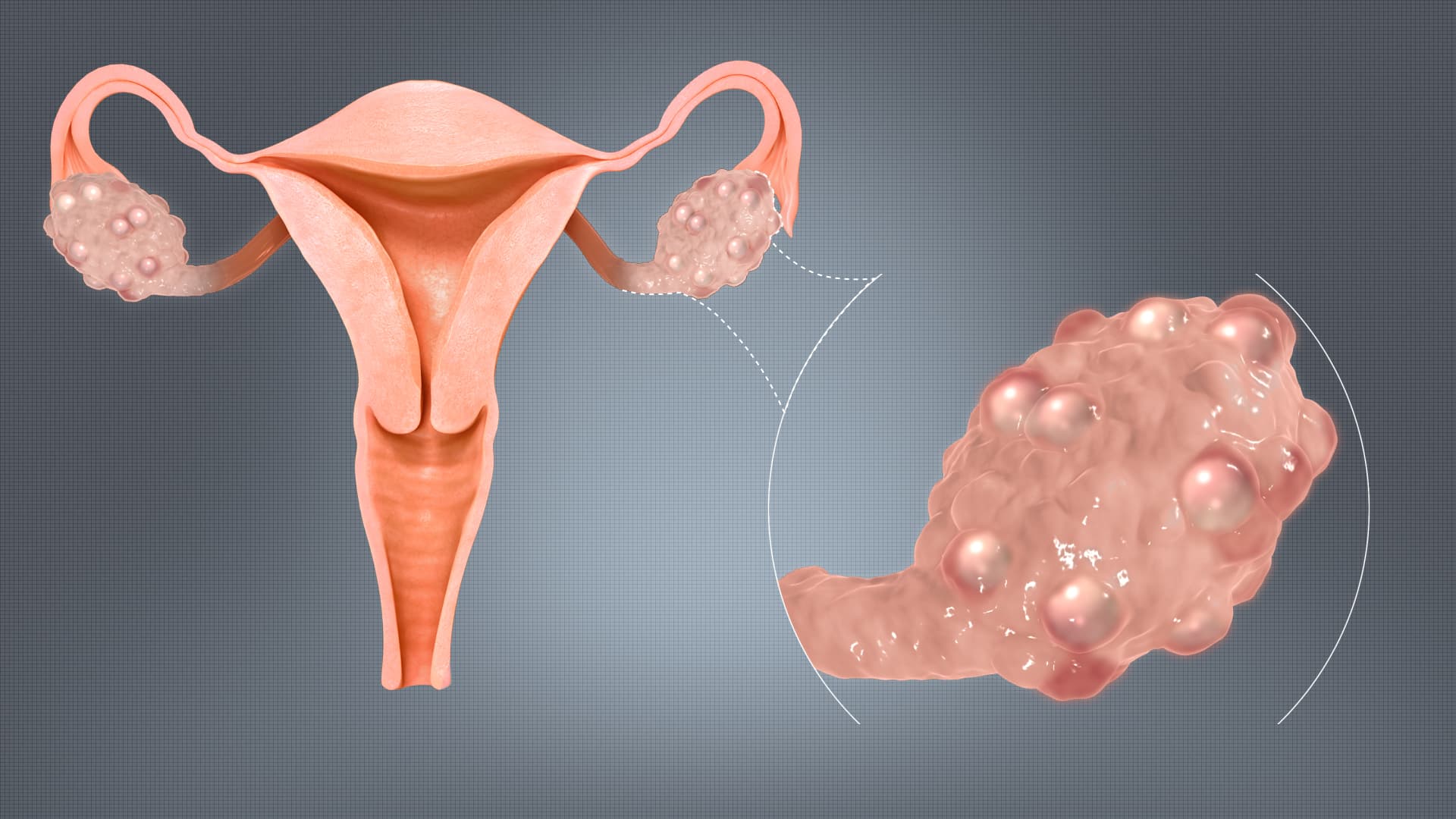
A comprehensive survey involving 630 physicians revealed some concerning insights about PCOS. It showed that 28% of the doctors weren’t even sure which diagnostic criteria they were using for the condition. Additionally, about a third mistakenly linked "cysts on ovaries" as the defining feature of PCOS. Even more troubling, only a handful recognized the associated risks of depression, anxiety, and a diminished quality of life that come with it. This confusion among healthcare professionals highlights a significant issue: the existing research is simply too sparse to create a solid, standardized understanding of PCOS in clinical practice.
PMDD — Affecting Tens of Millions, Linked to Suicide Risk
PMDD impacts around 115 million people worldwide, yet it remains largely underdiagnosed, underfunded, and often misunderstood. A study involving 599 patients with confirmed PMDD diagnoses revealed alarming statistics: 72% had experienced active suicidal thoughts at some point in their lives, 49% had made plans for suicide, and 34% had attempted it. The ongoing research bias favoring male subjects, along with a historical disregard for women's health issues, plays a significant role in the limited understanding we have about PMDD today.
A Pattern, Not a Coincidence
These aren’t just three random conditions that have been overlooked; they actually have something in common. Endometriosis, polycystic ovary syndrome, uterine fibroids, and vulvodynia all lack the attention they deserve from the NIH's 27 institutes and centers. This means that no specific organization within the world’s largest biomedical research funder is taking the lead in pushing forward the research on any of these issues.
The Dollar Figures — What the Funding Gap Actually Looks Like
This is where the frustration behind viral posts about women's health funding gets a precise, documented number attached to it.
Endometriosis — $4.30 Per Patient, Per Year
In fiscal year 2024, the NIH set aside a mere $28 million for endometriosis research, which is just 0.067% of its total budget. That breaks down to around $4.30 for each person affected by this condition each year. Now, let’s look at Crohn's disease, which impacts about 690,000 individuals in the US. In 2022, it received a whopping $90 million in funding — that’s about $130 per patient, which is more than 30 times what endometriosis gets per person.
The Funding Ratio That Quantifies the Bias
The actual-to-commensurate funding ratio is a way to gauge how much financial support a disease gets compared to what we’d expect based on its prevalence, burden, and severity. A ratio of 1 means the funding is perfectly aligned with the disease's impact. In 2019, endometriosis had a ratio of only 0.1836. On the other hand, liver cancer — the only condition predominantly affecting men that received less funding than anticipated that year — had a ratio of 0.6284, which is over three times higher.
The Three-Quarters Finding
A groundbreaking analysis from 2021, featured in the Journal of Women's Health, revealed a striking trend: the NIH tends to overfund diseases that mainly impact men, while diseases that primarily affect women are often left in the lurch. The researchers pointed out that the "NIH applies a disproportionate share of its resources to diseases that affect primarily men, at the expense of those that affect primarily women." They found that conditions predominantly affecting men received more funding, whereas those that mostly or exclusively impact women were significantly underfunded.
A Pattern That Extends Beyond the United States
The same trend can be seen in the United Kingdom, where a 2018 analysis revealed notable differences in how medical research charities and government organizations distributed funding among diseases that affect different genders. This isn’t just an oddity of one national funding agency; it’s a systemic issue that appears consistently in every formal study conducted on the topic.
The "Bob and Mascara" Problem — What Gets Funded Instead
The frustration behind posts like the one prompting this article is not abstract. It points at something real: research dollars and institutional attention flowing toward topics that, by comparison, address far less urgent human suffering.
The ED vs. PMS Comparison
By 2015, research showed that there were five times as many studies focused on erectile dysfunction, affecting around 18% of men, compared to those on PMS, which impacts about 90% of women. While erectile dysfunction is certainly a valid medical issue, the stark contrast in research—especially given the much higher prevalence of PMS—raises questions about why there's such a significant gap in attention and resources.
Where Venture Capital Goes
The gap isn't just about public funding. Between 2019 and 2023, eleven start-ups focused on erectile dysfunction and other men's health issues pulled in a whopping $1.24 billion in venture capital. In stark contrast, eight start-ups tackling endometriosis managed to secure only $44 million during the same timeframe. This creates an astonishing 28-to-1 ratio in private investment, reflecting the public funding disparity almost perfectly.
Why Trivial-Seeming Research Still Gets Funded
It's not that any specific funding organization is outright choosing "men's opinions on mascara" over the real pain experienced by women in a straightforward competition. What’s really at play here is something deeper and more structural. Medical research has long been centered around men, which means there's a lack of institutional knowledge about conditions that mainly impact women. This gap makes it tougher for proposals related to these conditions to get the attention they deserve, making them harder to evaluate and fund competitively, and it also discourages researchers from diving into these important topics. As a result, we often see smaller, simpler studies on less critical issues stepping in to fill the void left by the inadequate infrastructure for exploring complex conditions that predominantly affect women.
The Patent Gap That Reinforces the Cycle
A fascinating study that looked at over 440,000 medical patents filed from 1976 to 2010 revealed something striking: biomedical inventions patented by women were up to 35% more likely to focus on improving women's health compared to those created by men. Historically, with so few women in leadership roles within biomedical research, the flow of inventions and proposed studies has been consistently tilted away from conditions that predominantly affect women. This has created a feedback loop that simply throwing more funding at the problem won't fix overnight.
Why the Gap Exists — The Structural Reasons Behind the Numbers
Understanding why this gap persists requires looking past any single funding decision and toward the institutional architecture that produces these outcomes year after year.
No Institute Owns the Problem
The committee's study reveals that the way NIH is currently organized hampers its ability to effectively tackle the gaps in women's health research. The Office of Research on Women's Health is quite small and lacks sufficient funding, plus it doesn't have the power to mandate NIH institutes or centers to conduct research or ensure they comply with NIH's policy on considering sex as a biological variable. When no specific institute is designated to handle a particular condition, funding decisions tend to go to whichever existing institute is open to it—usually with less priority than conditions that fall neatly within an institute's main focus.
A Historical Default to Studying Men
Historically, medical research has largely centered on men, which has led to a significant lack of understanding regarding conditions that mainly impact women, like endometriosis and PCOS. This gap in knowledge directly results in worse health outcomes for women. It's not just a minor detail from the past; the way clinical trials are designed, the criteria used for diagnoses, and even the basic biological data have mostly been based on male physiology throughout much of modern medical research. This foundational imbalance continues to influence which topics are viewed as "established science" and which are still considered "emerging research" today.
The Self-Reinforcing Funding Cycle
The lack of funding for endometriosis research creates significant knowledge gaps, which complicates and prolongs the process of developing effective diagnosis and treatment options. When a field is underfunded, it tends to attract fewer researchers looking to build their careers. With fewer researchers in the mix, there are also fewer competitive grant proposals being submitted. This, in turn, leads to a justification for the ongoing low funding levels. It's a self-perpetuating cycle that doesn't need any one person to keep it going — it just continues on its own.
What a Fix Would Actually Cost
A committee from the National Academies has urged Congress to allocate $15.7 billion over the next five years to tackle the existing gap. This includes $4 billion earmarked for a new NIH institute specifically dedicated to women's health, along with $11.4 billion for a broader NIH fund that supports interdisciplinary research in women's health. While that amount is significant, it only makes up a small portion of the NIH's annual budget of about $47 billion, highlighting that addressing this gap is more about prioritization than it is about feasibility.
What Closing the Gap Would Actually Achieve
The case for fixing this is not purely moral, though the moral case alone is substantial. There is also a documented economic and public health argument that funding bodies have been slow to act on.
A Trillion-Dollar Opportunity
A recent report from McKinsey & Company for 2024, titled "Closing the Women's Health Gap," suggests that tackling the disparities in women's health could add a staggering $1 trillion to the global economy each year by 2040. Meanwhile, a different report from the World Economic Forum estimates that removing these disparities could enhance global GDP by $400 billion annually. These figures aren't just coming from women's health advocacy groups; they come from two of the leading economic analysis institutions in the world.
Faster Diagnosis Means Less Suffering — and Lower Costs
By enhancing the diagnosis and treatment of conditions like endometriosis, healthcare systems can significantly cut down on the hefty costs tied to managing complications and related health issues. Plus, investing in research not only sparks wider scientific innovation but also boosts the competitiveness of research institutions. Currently, the average person suffering from endometriosis faces a frustrating wait of 7 to 10 years for a proper diagnosis, often dealing with doctors who dismiss their pain as "normal." Just think about it: every year we can reduce that diagnostic delay means reclaiming valuable time in a person's work, family, and personal life.
What Researchers Say Needs to Happen
During a recent NIH research gaps meeting, panelists emphasized the need for improved accountability, training, and coordination among NIH institutes to tackle funding challenges. They highlighted the importance of equipping researchers with a better understanding of sex differences and ensuring these differences are integrated into research design and publication processes. One panelist, who described herself as a "poster child for women's health," shared her personal journey with endometriosis, the frustrating experience of being told her lupus symptoms were "all in her head," and the years of undetected bilateral breast cancer despite undergoing mammograms at a leading medical center. The issues of structural funding gaps and the dismissal of individual patients are intertwined; they represent the same underlying problem, just viewed from different perspectives.
The Bottom Line
The evidence doesn’t really back up the notion that women’s pain is being overlooked out of spite. Instead, it points to something a bit more ordinary—and, in many ways, more exasperating: a long-standing default in how research priorities have been established, which hasn’t been properly addressed and is now being kept alive by its own inertia. Addressing this issue comes with a financial cost, a clear institutional plan, and economic benefits that have already been mapped out. What’s been missing up to this point is the ongoing commitment to fund and implement these necessary changes.
Sources
https://www.weforum.org/stories/2026/05/womens-health-in-numbers/
https://www.wifor.com/en/womens-health-research/
https://uofuhealth.utah.edu/notes/2025/01/why-we-know-so-little-about-womens-health