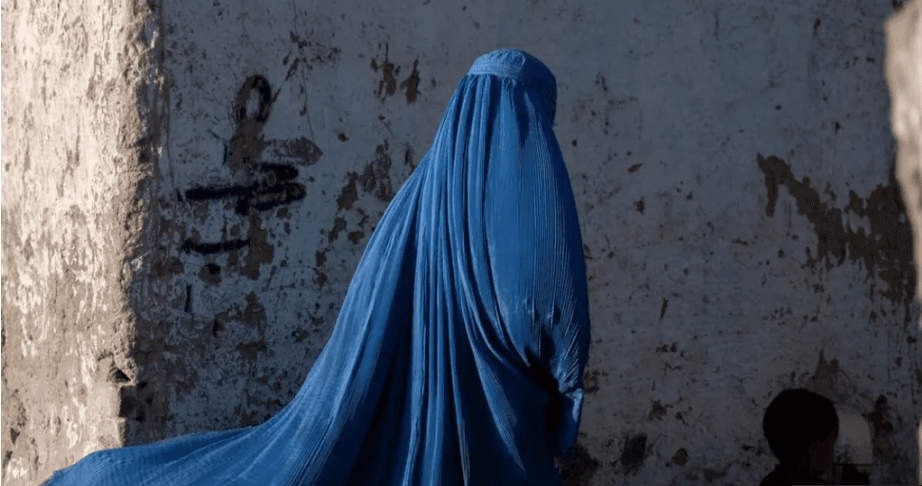
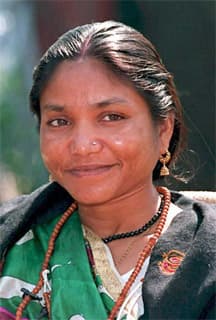
Phoolan Devi did not break the law. The law broke her first.
Imagine by the time you get to turn twenty, your family, your village, the police, and the courts have completely abandoned you. It wasn't rage, it was calculation that drove her, she organized, she armed herself, and she returned to Behmai with a single purpose.
India called her a murderer, twenty-two men slain, she would go on to win a seat in the Parliament.
The same country that hunted her, elected her.
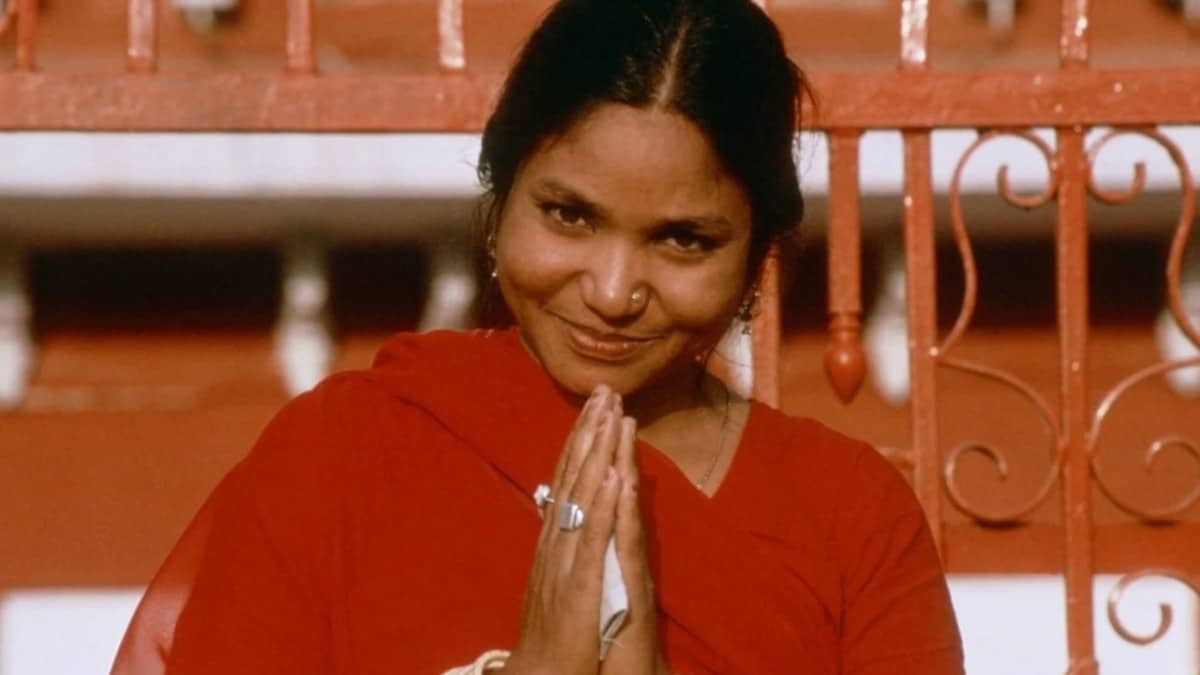
“I alone knew what I had suffered. I alone knew what it felt like to be alive but dead.”
The Early Years — Caste, Poverty, and a Childhood Stolen
Phoolan Devi was born in 1963, in a village called Gorha ka Purwa in Uttar Pradesh, she belonged to a low-caste Mallah (fisherman) community.
She came into the world with two strikes already against her - she was poor, and she was a girl.
In rural Uttar Pradesh in the 1960s, the caste determined everything. It was not just a social label, it decided where you could walk, who you could speak to, what work you could do, and ultimately, how much your life was worth in the eyes of those above you.
A Child Married Off Before She Could Read
Being born into a low caste, her future was already decided by the time she turned 11, a marriage was arranged to Putti Lal, a man reportedly in his thirties. Child marriages were not uncommon in rural India at that time - according to UNICEF data, South Asia has historically accounted for nearly half of all child marriages globally.
The marriage was short-lived, it deteriorated quickly. According to multiple sources, she was mistreated, and she eventually left or was sent back to her family home. This return carried a heavy price, as a woman who had left her husband's home, regardless of the reason was considered "damaged goods."
Land, Power, and Her First Taste of How the System Works
Phoolan Devi's family had a land dispute and this brought her into direct conflict with upper-caste figures in the village. Reports suggest that she challenged the decisions that put her family at a disadvantage, spoke up in spaces where low-caste women were expected to stay silent, and made enemies doing it.
At around 16 years of age, Phoolan Devi was arrested. The exact charges have been disputed across historical accounts, with many researchers and journalists noting credible allegations of police complicity with the upper-caste men who had grievances against her.
Regardless, a teenage girl from the lowest rungs of society sat in a cell, while the men with power over her did not.
Kidnapping, Captivity, and the Assault That Changed Everything
By the time Phoolan Devi was in her late teens, she had already been marked, she had defied upper-caste authority, survived an abusive marriage, endured arrest, and returned to a village that neglected her. She was already inconvenient, even to her family.
Kidnapped by the Dacoit Gang of Babu Gujar
Around 1979, Phoolan Devi was kidnapped by a dacoit gang operating in the Chambal Valley - a lawless ravine-scarred region of central India. The gang was represented by Babu Gujar, an upper-caste Thakur bandit whose authority represented everything that Phoolan hated.
The term dacoit refers to organized armed bandits - a category of criminals that had existed in India for centuries. They were not petty thieves, instead they conducted raids, kidnappings, and killings, operating in rural areas and out of government reach.
After being taken by Babu Gujar's gang, the assaults began almost immediately, she had no allies, no protection, and no way out.
Vikram Mallah - The Man Who Changed the Equation
Like Phoolan, there was a man in the gang who belonged to the low-caste - Mallah, the same community she was from.
Vikram Mallah killed Babu Gujar.
Accounts differ on the precise motivation - some frame it as an act of protection toward Phoolan, others label it as a power struggle within the gang.
As soon as Vikram Mallah took control of the gang, Phoolan Devi's position within it shifted entirely. What followed was by most accounts a genuine relationship, Vikram became Phoolan's companion and protector. Under his leadership, she was no longer a captive - she was a participant. Alongside Vikram, Phoolan learnt how to handle weapons, how gangs operated and for the first time in her life her low-caste background was not the thing that determined her worth.
The Murder of Vikram Mallah
Vikram Mallah's leadership made enemies - specifically among two upper-caste brothers within rival dacoit circles: Shri Ram and Lala Ram. The brothers represented the same Thakur caste dominance that Phoolan had encountered her entire life.
Shri Ram and Lala Ram ambushed and killed Vikram Mallah. With Vikram dead, Phoolan Devi lost her only protector. She was taken captive again - this time by the men who had just killed the one person who treated her like a human.
Three Weeks in Behmai
Phoolan Devi was brought to Behmai, a village in Uttar Pradesh that would later become the site of the most notorious event of her life. But before that - Behmai was where she was held captive for approximately three weeks.
During the time she was held captive, she was repeatedly assaulted by multiple upper-caste men in the village. Phoolan was paraded through the streets of Behmai, humiliated publicly, and subjected to treatment that eyewitness accounts and later judicial records described in terms that made clear this was not random cruelty - it was punishment.
The police, by multiple accounts, knew where she was. They did not come.
The Escape
The circumstances of her escape are not fully documents and multiple sources suggest that she slipped away during a moment of reduced surveillance.
After her escape, she did not go to the police or home, she disappeared into the Chambal Valley. There, she planned and tried to form connections with dacoit networks, Phoolan gathered men around her who were willing to follow.
The Behmai Massacre - February 14, 1981
In the criminal history of modern India, February 14, 1981 is considered as a dark day.
While the rest of the world was busy celebrating Valentine's day, a small village in Uttar Pradesh became the site of one of the most shocking acts of retributive violence in post-independence Indian history.
Twenty-two men were shot dead in broad daylight and the government that had failed to protect Phoolan Devi was now faced with explaining how it had failed to stop her.
This is what happened in Behmai. And this is why it still matters.
The Day Phoolan Devi Came Back
Phoolan Devi, by early 1981, had spent a lot of time rebuilding, she had reconnected with dacoit networks in the Chambal Valley, gathered a gang of men willing to follow her, and acquired weapons.
All of this was also attracting attention, Phoolan had gained a reputation in the region not yet as a convicted criminal but rather as a low-caste woman who had survived, regrouped, and was not finished.
On February 14, 1981, she led her gang into Behmai. The village was the same one where she had been held captive and repeatedly assaulted. The men there were the same men - who had participated in or stood by during those three weeks. Her primary targets were Shri Ram and Lala Ram, the true orchestrators behind her captivity and also the one who killed Vikram Mallah.
Phoolan Devi's gang entered Behmai and rounded up the men. Eyewitness accounts describe the men being separated from the women and marched to the banks of the Yamuna river. What followed took only minutes.
Twenty-two men were shot dead.
The Targets - And the Two Who Weren't There
The primary targets of the Behmai attack were Shri Ram and Lala Ram - the brothers that were responsible for the murder of Vikram Mallah and Phoolan's captivity and assault. By most historical accounts, the two men weren't present during the attack.
This detail complicates the revenge narrative that the story is sometimes reduced to. Phoolan came for specific men and those men escaped yet still twenty-two were shot dead, men who were upper-caste from Behmai.
The magnitude of the event, regardless of the incompleteness of revenge was still large and India was about to find out.
The National Reaction - Outrage, Politics, and a Folk Hero Is Born
Across India, protests were held and the Behmai massacre triggered immediate and intense reaction among the common people. Many in power remained quiet, as the lines between caste were split and something ugly was revealed about the Indian society.
People no longer wanted to remain quiet about the mass difference in living and the cruelty that prevailed in the caste system. The Chief Minister of Uttar Pradesh was called to resign over the government's disastrous failure to prevent such an attack. The massacre remained the headline for the national newspapers, and a massive manhunt was initiated across the Chambal Valley region.
Among the low-caste communities - including Mallah, the reaction was different and Phoolan Devi was seen as a symbol. Her name was spoken with reverence and images of her began appearing alongside those of Hindu goddesses.
The Wanted Poster That Made Her Iconic
The Indian government issued wanted posters for Phoolan Devi across Uttar Pradesh and neighboring states. The image that circulated — a young woman with a rifle, dressed in a khaki uniform, a red bandana around her head.
For low-caste women and men who had spent their lives watching upper-caste authority go unchallenged, this poster stood as a symbol of power to them. The image of Phoolan Devi armed and undefeated was not a warning. It was a statement.
The government created a wanted poster and the people created it into an icon.
Two Years in the Valley - How an Entire Government Failed to Find One Woman
Following the Behmai massacre, Phoolan Devi was under hiding, she evaded what was one of the largest manhunts in Uttar Pradesh's history. The Chambal Valley's geography helped - its deep ravines and scrubland made it easier for dacoits and were poorly suited to large-scale police operations.
But it wasn't just the geography that helped Phoolan escape the police for two years, the communities there also helped. She had supporters - people who fed her gang, passed information and remained quiet when the police came knocking. The manhunt was a failure of legitimacy. The government was hunting a woman that a significant portion of the population did not believe deserved to be caught.
This is what happens when a government fails its people continuously. The state had lost the moral argument.
The Caste Dimension - What Behmai Was Really About
It would be an oversimplification to call the Behmai massacre a personal revenge killing. The caste dimensions through every layer of the event that took place.
The men who assaulted Phoolan Devi were upper-caste. The police who failed to rescue her were operating within a system where upper-caste complaints mattered more than lower-caste ones. Phoolan Devi did not just avenge herself at Behmai. Whether intentionally or not, she struck at the caste hierarchy that had structured every injustice she had ever experienced.
The Behmai massacre was a crime. It was also a case study in what accumulates when structural inequality goes unaddressed for long enough.
Surrender, Prison, and the Political Resurrection
What happened after the Behmai massacre — the surrender, the imprisonment, the trial that never came, and the election that nobody predicted — is in many ways more extraordinary than the massacre itself.
What does not fit into any easy category is a woman convicted of nothing, imprisoned for eleven years, and then handed a mandate by the democratic process to make the laws of the country that jailed her.
The Surrender - On Her Own Terms
By early 1983, Phoolan Devi grew tired of the constant running around and the physical and psychological toll of being a fugitive on the run was too much.
The decision to surrender was her own, it was not a defeat. It was a negotiation.
She did not walk into a police station instead sent intermediaries that negotiated the terms of her surrender.
Her demands were specific and non-negotiable. There would be no death penalty. Her prison sentence would be capped at eight years. Her gang members who surrendered alongside her would receive protection and defined terms. She would not be handed over to the Uttar Pradesh police — the same state force whose failures had contributed directly to everything that had happened. The surrender would take place in Madhya Pradesh instead.
The government was also tired of the manhunt and they agreed on the terms.
February 12, 1983 - The Surrender Ceremony
The surrender itself was choreographed with a precision that made clear Phoolan Devi understood exactly what she was doing.
On February 12, 1983, in front of a crowd of approximately 10,000 people and an assembled press corps, Phoolan Devi emerged in a khaki uniform with a red bandana — the same visual identity that had made her wanted poster iconic. She did not surrender to a police officer. She did not surrender to a government official.
She bowed before a portrait of Mahatma Gandhi and an image of the goddess Durga.
Then she laid down her rifle.
The symbolism was not accidental. Gandhi represented the non-violent conscience of the Indian state — the standard against which its actions could be measured and found wanting. Durga represented the divine feminine force that destroys evil when human institutions fail to. By surrendering to these symbols rather than to the state itself, Phoolan Devi was making a statement that was heard clearly by everyone present: she was not submitting to the authority that had failed her. She was submitting to something she considered higher than it.
Eleven Years Without Trial
What followed the surrender was a legal situation that stands as one of the more quietly damning indictments of the Indian justice system in the twentieth century.
Phoolan Devi was charged with 48 criminal offences including the Behmai massacre. She was imprisoned. And then, for eleven years, her case did not go to trial.
She sat in prison — in Gwalior, in Tihar — while the legal machinery that was supposed to process her case moved at a pace that can only charitably be described as glacial. Her health deteriorated. She underwent multiple surgeries during her imprisonment. She had a cyst removed, suffered from gynecological conditions that went inadequately treated for years, and by multiple accounts spent significant periods in poor physical condition.
The reasons for the delay were partly bureaucratic and partly political. The sheer volume of charges — 48 offences across multiple jurisdictions — created genuine procedural complexity. But the political dimension was equally real. Phoolan Devi had become a symbol, and putting her on trial meant putting the events that preceded Behmai on trial too. It meant testimony about assault, about police inaction, about caste. There were powerful people with powerful reasons to keep that particular courtroom door closed.
The Release - Politics Behind the Decision
In 1994, after eleven years in prison without a single conviction, Phoolan Devi was released.
The decision came under the government of Mulayam Singh Yadav, the Chief Minister of Uttar Pradesh and leader of the Samajwadi Party — a political formation built substantially on the support of OBC (Other Backward Classes) communities, the same broad demographic that had sheltered and celebrated Phoolan Devi since 1981.
The political calculus was not subtle. Releasing Phoolan Devi was a signal to low-caste voters that the Samajwadi Party understood whose side it was on. It was also a practical acknowledgment of what the eleven years of imprisonment without trial had already demonstrated — that the state did not have a case it was confident taking into a courtroom.
Upon release, the charges against her were not dropped. They were suspended. Phoolan Devi walked out of prison still technically facing 48 criminal charges. She walked out anyway, into a country that had been debating her story for over a decade.
1996 - The Election That Rewrote the Narrative
Two years after her release, Phoolan Devi stood for election to the Indian Parliament from the Mirzapur constituency in Uttar Pradesh, running on a Samajwadi Party ticket.
She won.
The margin was significant. The constituency she won included communities that had direct memory of the Behmai massacre and its context. The voters who elected her were not uninformed about her history. They knew exactly who she was and what she had done. They voted for her anyway — or more precisely, because of it.
Her election sent a message that the Indian political establishment was forced to receive whether it wanted to or not. The woman who had been hunted by the state, imprisoned by the state, and held without trial by the state had just been handed a democratic mandate to sit inside it.
The symbolism was not lost on anyone.
1999 - Re-election and Consolidation
Phoolan Devi was not an exception confined to only one term. Phoolan Devi was returned to power again when she contested for re-election in 1999.
It was perhaps even more meaningful than her first election victory. It would be easy enough to rationalize an initial success as protest voting or as a unique event, but two successive victories are different. Her constituents were not merely voicing a temporary grievance in sending Phoolan Devi to power for a second time.
Phoolan Devi made her concerns regarding low-caste populations, women's rights, and the rural poor heard in the Parliament during her tenure in the legislative house. However, she was not the type of lawmaker that could be easily identified as a parliamentary expert – unlike most of her peers, she did not have any educational qualification in any high-level institution. What she did possess, however, was a valuable experience of India from a grass-root perspective.
Assassination and Legacy - What Phoolan Devi Represents Today
Some stories have an end. Others have no end.
The story of Phoolan Devi came to its end on July 25, 2001, outside her residence in New Delhi. She had recently come from the Parliament. She was either 37 or 38 years old, her birth date never having been definitively established for the mysterious woman that she was. There were three gunmen there waiting for her. They opened fire on her, shooting her point blank. She died instantly.
The woman who escaped assault, kidnapping, eleven years of captivity, and two general elections was unable to escape murder on a Tuesday afternoon in the capital of the country she represented.
What she left behind continues to be debated. It is a worthwhile debate.
The Assassination — What Happened on July 25, 2001
The attack was not random and it was not subtle. Phoolan Devi was shot outside the gate of her official residence on Ashoka Road in New Delhi, in broad daylight, by men who had clearly planned the operation.
The primary suspect arrested for the killing was Sher Singh Rana, a man with connections to upper-caste Rajput communities. His stated motive, offered without apparent remorse in subsequent interviews and court appearances, was revenge for the Behmai massacre. He claimed to be acting on behalf of the families of the men killed in 1981. Sher Singh Rana was convicted of Phoolan Devi's murder in 2014 by a Delhi court, more than thirteen years after the killing. He was sentenced to life imprisonment. He has since filed appeals, and the legal proceedings have continued in the years following conviction. The irony embedded in the assassination is almost too precise to be accidental.
Phoolan Devi was killed as retribution for a crime she was never formally convicted of. She had faced 48 criminal charges for over two decades. Not one of them had resulted in a conviction. The state had held her for eleven years without proving its case in court. And yet she was executed — in the street, by a private individual — as though the verdict had already been delivered.
The Symbol She Became — And What It Costs
Phoolan Devi's transformation into a cultural icon started while she was still alive and has gained momentum since her death. Her image appears in murals and is often referenced in debates about caste violence, gender justice, and institutional failures. Activists, academics, and politicians cite her as an example. University courses on postcolonial studies and gender theory also cover her story.
This iconic status has tangible benefits. Her life story has helped keep discussions about caste-based violence, rural law enforcement failures, and the challenges faced by low-caste women in India alive. These conversations are crucial, and Phoolan Devi's life serves as a clear and compelling case study.
However, being a symbol comes with drawbacks. As people become symbols, their complexities are often oversimplified. The Phoolan Devi portrayed in activist literature is often a more straightforward figure than the real person. That injustices she faced seem more stark, her actions more clear-cut, and the moral issues simpler. The Behmai incident, where 22 men died, affects families still; the full impact can get lost in the symbolic narrative.
It's challenging but more honest to acknowledge both the structural violence Phoolan Devi endured and the human cost of her actions.
The Broader Question Her Story Raises
Phoolan Devi's story raises a tough question that institutions — legal, political, journalistic — are structurally uncomfortable answering directly: how does structural injustice relate to individual violence? This question shows up in discussions of resistance movements, colonial histories, and civil rights struggles worldwide. Her case makes the issue unusually personal and concrete, involving a specific woman, specific attackers, specific police officers who didn't act, and specific politicians who benefited from inaction. That connection between cause and effect is short and documented.
The law's default answer is that individual violence can't be justified by structural injustice; the law must be applied consistently, regardless of the circumstances that preceded the crime. That position makes sense but comes from a system that failed her at every turn. The moral answer isn't straightforward; it can't be captured on a wanted poster or in a courtroom. Perhaps it fits between the 22 deaths at Behmai and her 11 years in prison without trial. These two events sit in the historical record, refusing to form a neat conclusion.
Phoolan Devi didn't give India a neat conclusion; she gave it a mirror. This question isn't new; it's been part of colonial histories, struggles for civil rights, and discussions around the world. Her story highlights the complexity of this issue, and the need for a more nuanced understanding of the relationship between structural injustice and individual violence.
Sources
https://www.theguardian.com/news/2001/jul/26/guardianobituaries
https://www.opendemocracy.net/en/article-436jsp/
https://www.theatlantic.com/magazine/archive/1996/11/indias-bandit-queen/304890/