Updated October 8, 2026: we added sources and corrected how long the outbreak lasted. Later accounts say it continued until mid-1964, about two and a half years, not 18 months.
Her name has been lost to history, but she was one of three girls at a small mission school in the village of Kashasha, near the shore of Lake Victoria in what was then Tanganyika. On 30 January 1962, she began to laugh.
There was no joke. Nothing funny had happened. But the laughter would not stop — it came in waves, sometimes for minutes, sometimes for hours, broken up by spells of crying and restlessness. Then it spread to the girl beside her. Then to the next. Within weeks, ninety-five of the school’s pupils were caught in the same helpless fits, and the school was forced to shut its doors.
Over the next two and a half years, by later accounts, the laughter would travel from village to village, affect close to a thousand people, and force roughly fourteen schools to close. No virus was ever found. No poison, no drug, no gas. And remarkably, no one died. This is the story of one of the strangest documented outbreaks in medical history.
Where It Began
To understand how laughter could shut down a region, you have to start in a very specific place and a very specific moment in time.
A Girls’ School Near Lake Victoria
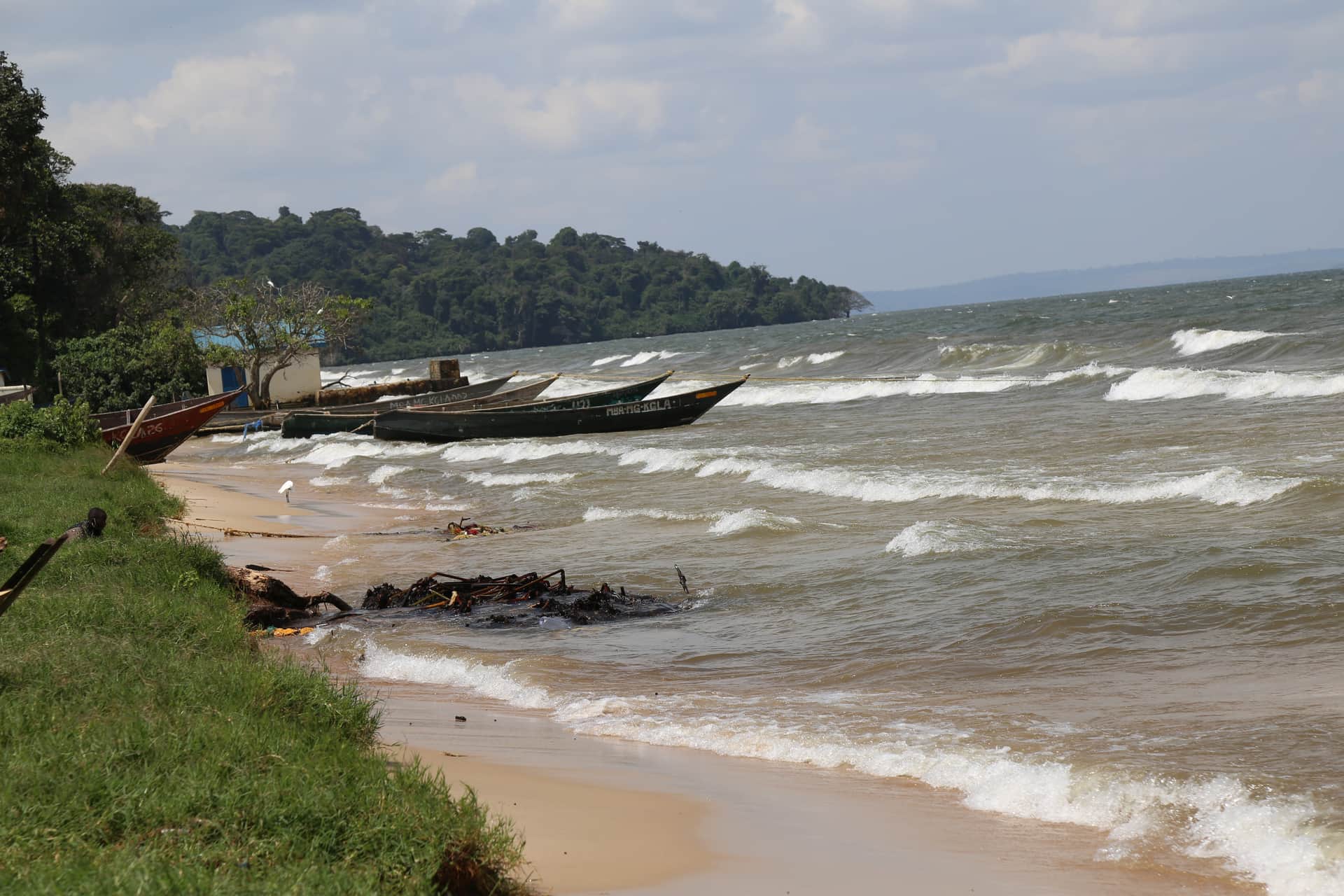
The outbreak began on 30 January 1962, at a mission-run boarding school for girls in Kashasha, a village in the Bukoba district on the western shore of Lake Victoria, close to the border with Uganda. The pupils were mostly between twelve and eighteen years old.
It started with three of them. The first symptoms were attacks of laughing and crying that would come on without warning and last anywhere from a few minutes to several hours. Between attacks, the girls seemed normal. Then another attack would arrive.
How Fast It Spread
From those first three girls, it moved through the school with startling speed. Of the 159 pupils enrolled, 95 were affected over the following months. The fits were not only laughter: victims also reported crying, fainting, rashes, pain, and episodes of screaming or running about in fear. Teachers were untouched — the outbreak stayed almost entirely among the students.
By 18 March 1962, the staff gave up trying to hold classes. The school was closed and the girls were sent home.
From a School to a Region
Closing the school did not end the outbreak. It did the opposite — it scattered it.
The Girls Carried It Home
When the pupils returned to their home villages, the fits went with them. In the village of Nshamba, where several of the girls lived, the symptoms appeared in the wider community; by some accounts, over two hundred people there were affected within weeks. The reopened Kashasha school had to close a second time.
The pattern repeated elsewhere. A school near Bukoba was struck, affecting dozens more girls, and forcing yet another closure. As the months passed, the fits touched village after village across the district.
The Toll by the Numbers
By the time the outbreak faded, an estimated one thousand people had been affected, and around fourteen schools had been shut down at one point or another. The episodes for any single person could flare and fade over days; the outbreak as a whole rippled through the region until about June 1964, roughly two and a half years after it began, before it finally burned itself out on its own.
For all its scale, its most important feature was what it didn’t do. There were no deaths. There was no lasting physical harm. When the fits stopped, people simply went back to their lives.
What Actually Caused It
Naturally, people wanted an explanation. Investigators went looking for one — and what they ruled out is as revealing as what they concluded.
The Search for a Poison or Virus
The obvious first suspects were physical: something in the water, the food, the air. A toxin. An infection. But nothing fit. There was no fever, no consistent physical sign of illness, and no evidence of any contaminant. Crucially, the outbreak spread along lines of social contact — friendships, families, schools — rather than the way a poisoned well or an airborne virus would move. It followed relationships, not geography.
Mass Psychogenic Illness
The conclusion doctors reached, and the one still accepted today, is that this was a case of mass psychogenic illness — sometimes called mass hysteria. In these episodes, real physical symptoms spread through a group not by germ or toxin but by shared stress and social contact. The symptoms are genuine; the sufferers are not faking. But the trigger is psychological, and it moves person to person the way an idea does.
Why 1962, and Why Them
The timing may be the most telling detail. Tanganyika had gained its independence only weeks earlier, in December 1961. It was a period of enormous change and pressure, and the young people expected to carry the new nation forward felt much of it. The girls at these mission schools lived under strict discipline and heavy expectation, far from home. Researchers have long pointed to that build-up of anxiety as the fuel — the laughter was less a joke than a release valve for a stress the girls had no other way to discharge.
The line between the mind and the body is far thinner than we like to believe.
Why the Story Still Matters
It would be easy to file this away as a bizarre footnote. But it endures for a reason, and not the one most people assume.
The “Tanganyika laughter epidemic” is often passed around online as a spooky curiosity — a village that laughed itself into chaos. The reality is quieter and more human. It was mostly frightened teenage girls, under real pressure, whose bodies expressed a stress their circumstances gave them no other outlet for. Understood that way, it stops being a horror story and becomes something closer to a warning about what unrelieved anxiety can do to a community.
Mass psychogenic illness did not end in 1962. Documented episodes have appeared in schools, factories, and towns around the world in the decades since — the same pattern of real symptoms spreading through stressed, tightly-knit groups. The laughter of Kashasha is simply one of the earliest and best-recorded examples we have. It reminds us that the line between the mind and the body is far thinner than we like to believe.
Read next: When nostalgia was treated as a deadly disease, and the Victorian girl said to have slept for nine years.
The following contains an affiliate link. If you purchase through it, we earn a small commission at no extra cost to you.
Want the full history of mass hysteria?
The Tanganyika laughter epidemic is just one case. Robert Bartholomew’s A Colorful History of Popular Delusions is the definitive, readable tour of mass psychogenic illness and crowd behavior through history.
Check Price on AmazonSources
- A. M. Rankin and P. J. Philip, “An epidemic of laughing in the Bukoba district of Tanganyika,” Central African Journal of Medicine 9 (May 1963): 167–170 (the original medical report).
- Christian F. Hempelmann, “The laughter of the 1962 Tanganyika ‘laughter epidemic’,” Humor: International Journal of Humor Research 20, no. 1 (2007): 49–71
- Robert R. Provine, Laughter: A Scientific Investigation (Viking, 2000), pp. 130–131.
- “Tanganyika laughter epidemic,” Wikipedia (consulted for later accounts, cross-checked against the papers above)