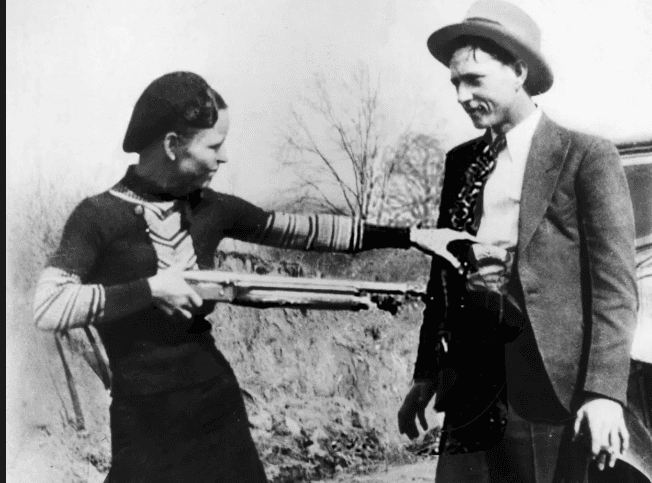
The most intriguing criminal in any setting is rarely the one who poses the greatest threat. Instead, it's often the one who catches us off guard.
When you look at the numbers, female offenders are a pretty rare sight. Women are far less likely than men to get involved in criminal activities or violent crimes. Society tends to view public crimes and acts of violence as a male domain, a notion so ingrained that when a woman breaks that mold, the reaction is swift and exaggerated—think headlines, documentaries, podcasts, and years of public discourse that similar male cases hardly ever spark.
Research featured in the British Journal of Psychology highlights a significant gender gap in true crime consumption—women are much more likely to engage with true crime content than men. This fascination isn't just about a morbid curiosity; it stems from a deeper instinct: a threat management system that interprets stories of violence as vital information, warnings, and a way to arm ourselves with protective knowledge.
So, it’s not just about why we’re drawn to female criminals. It’s about understanding why that intrigue is so persistent, so powerful, and what it reveals about the assumptions we often overlook.
Perhaps we liked creepy stories because something creepy was in us.
RACHEL MONROE, SAVAGE APPETITES, 2019
The Numbers Don't Explain the Attention — So What Does?
The first thing to establish is the scale of the gap between how often women commit crimes and how much attention those crimes receive — because without that gap, the entire psychology falls away.
Women and Crime: The Statistical Reality
When we look at the numbers, female offenders are actually quite rare. Women tend to engage in criminal activities or violent offenses far less frequently than men. For instance, female juvenile offenders make up just 14% of those in residential placements, while their male peers represent a staggering 83%. The disparity is even more pronounced in homicide cases, where men are responsible for the vast majority of violent crimes across all major jurisdictions with reliable data.
The Media Gap That Mirrors the Statistical One — Upside Down
Women who break the law are quite uncommon, and because of that, they often catch our attention in surprising ways. When cases involve female offenders, they tend to make headlines and grab media spotlight. The character of "the female offender" is often portrayed as sensational and intriguing. This rarity plays a big role in how we perceive these stories—when something unusual happens, it naturally draws more eyes. When a woman commits murder, it shatters deeply held expectations, and that shock often overshadows the actual crime itself.
What the Research Says About Media Selection
Public opinion about women, crime, and victimization is heavily shaped by how the media uses language, the visuals it chooses, and the cases it highlights. It's not just about what the audience wants to see; the journalists, editors, and producers who decide which stories to spotlight are influenced by the same gender biases as their viewers. This means that the decisions they make about what’s newsworthy often mirror and strengthen a common cultural narrative about the roles women are expected to play.
A Pattern Documented Across More Than a Century
A fascinating study looking into how newspapers reported on crime in Sweden from 1905 to 2015 revealed some striking differences in how female offenders were covered compared to their male counterparts. Not only was the amount of coverage different, but the way these women were described also varied greatly from the language used for men committing similar crimes. This isn't just a recent trend influenced by social media or the true crime craze; it's a deep-rooted issue that reflects historical and structural biases, and it shows up consistently across different cultures.
"Doubly Deviant" — The Academic Concept That Explains Everything
Criminologists have been studying this phenomenon long enough to give it a name. Understanding that name is the key to understanding why female criminal cases hit differently — in courts, in newsrooms, and in audiences.
The Term and What It Means
There's a notion out there that when women break the law, they’re seen as "doubly deviant." This is because they not only violate legal standards but also step outside the bounds of what society expects from women. Essentially, the cultural ideals surrounding femininity don’t really leave room for criminal behavior. So, when a man commits a crime, he’s just breaking one rule—the law. But when a woman does the same thing, she’s breaking two: the law itself and the societal expectation that women should be nurturing, gentle, and non-violent.
Why Double Deviance Drives Double Coverage
That double transgression is exactly what makes cases involving female criminals feel so much more shocking and newsworthy to editors, audiences, and social media algorithms alike. When a woman commits a crime, it clashes dramatically with the traditional view of her gender as gentle, nurturing, and almost angelic. This isn’t just a crime; it’s a betrayal of societal expectations — and let’s be honest, betrayal stirs up a lot more emotional response than just plain old wrongdoing.
The Two Boxes Women Get Put In
This emphasis on potential internal motivations leads to narratives that depict these women as either wicked monsters or helpless victims, unable to make their own choices because of mental health issues. Scholars have labeled these broad categories as mad, sad, or bad. There’s no middle ground for a woman who commits a crime; she’s either a monster—something inhuman that has lost its claim to femininity—or she’s a victim of circumstances beyond her control, stripped of agency just as she’s stripped of what it means to be a “normal” woman. Both perspectives, in their own ways, refuse to recognize her as a person capable of making decisions.
The Case of Aileen Wuornos
Aileen Wuornos became infamous for the unusual nature of her crimes — she was among the very few female serial killers in the United States. Despite enduring horrific abuse and incest during her childhood, and her insistence that she only killed in self-defense, Wuornos didn’t receive the sympathy one might expect. Instead, her identity as a prostitute and a lesbian overshadowed her struggles, leading many to label her a monster. She was firmly placed in the "bad" category, and the public's fascination with her story only grew because she didn’t conform to the typical narratives of being "sad" or "mad."
The Psychology of the Audience — Why We Cannot Look Away
The media's disproportionate coverage of female criminals would not persist if audiences did not respond to it. The question of why they do has now been studied directly — and the answers are more specific than "people find it interesting."
True Crime's Most Loyal Audience Is Women
A study featured in the British Journal of Psychology has revealed a striking gender difference in how true crime is consumed — women are significantly more drawn to true crime content than men, especially when it comes to podcasts. This trend doesn’t seem to stem from broader media consumption habits, as men generally listen to more podcasts and news overall. Instead, there’s something unique about true crime that particularly captivates women, setting it apart from other types of media.
Defensive Vigilance — The Protective Function of True Crime
Research has shown that many women are drawn to true crime because they perceive a heightened risk of victimization and want to learn how to prevent potential attacks in real life. This interest stems from the fact that women's threat management systems are particularly attuned to physical and sexual dangers that could impact their safety and reproductive choices. As a result, engaging with true crime media serves a purpose beyond mere entertainment; it becomes a form of preparation, allowing them to explore and process various threat scenarios while remaining in a safe environment.
Why Female Perpetrators Specifically Fascinate
When a woman takes center stage as the perpetrator in a true crime story, it introduces a whole new layer of psychological intrigue. The fascination many women have with serial killers might stem from a mix of romanticized projections of fear, anger, and curiosity, but it also reflects a deeper desire to grasp the incomprehensible aspects of human behavior that defy logic or statistics. A female offender shakes up the usual threat model even more — she isn't the type of predator that our instinctual threat detection is trained to recognize. Instead, she embodies something more elusive, more unpredictable, and consequently, more compelling to engage with.
The Evolutionary Angle on Gossip and Social Learning
McDonald and his team shed light on the evolutionary role of storytelling and social gossip, which tends to be more common among women. This dynamic facilitates the sharing of important information related to fitness and encourages learning from the experiences of others, especially their mistakes. When it comes to cases involving female perpetrators, these instances provide particularly valuable social insights—they help reshape our understanding of threats in ways that cases with male perpetrators, no matter how serious, simply don’t. They tackle the question: what does danger look like when it resembles me?
How the Media Frames Female Criminals Differently
It is not just that female criminal cases get more coverage. It is that the coverage itself operates by entirely different rules — in the language used, the details selected, and the conclusions drawn.
Her Sex Becomes the Story
When a woman is involved in a violent act, the conversation often zeroes in on her gender, with biological instincts frequently cited as reasons behind her actions. In media coverage and discussions among criminal justice professionals, the focus tends to be on the individual’s misdeeds rather than the broader systemic challenges that shape these women's experiences. When a man commits a crime, he’s simply labeled a criminal. In contrast, a woman who commits a crime is always referred to as a woman who committed a crime, with her gender taking center stage in every sentence.
The Appearance Dimension
Studies have shown time and again that the way female defendants look gets way more attention in the media compared to their male counterparts. Whether a woman is labeled as beautiful or plain, dressed to the nines or looking a bit rough, or whether she’s emotional or keeping it together, these aspects are highlighted in reports as if they actually matter in determining guilt or innocence. Meanwhile, similar details about male defendants often go unnoticed.
Motherhood as Amplifier
When women commit crimes against children, especially in cases of filicide, the media tends to focus heavily on the theme of maternal betrayal. Stories about mothers who kill their children often revolve around the idea of breaking the sacred bond of motherhood, rather than examining the clinical or systemic issues that criminologists point to as potential causes. In contrast, when a father kills a child, the narrative typically paints him as a violent man. However, when a mother is involved, the coverage portrays her as an enigma—something that doesn’t quite fit into our cultural understanding.
Race, Class, and Who Gets the "Sad" Label
When it comes to lesbians who commit murder, they often get unfairly labeled as villains, stripped of their femininity and humanity. This leads to their portrayal as these gender-neutral monsters who somehow deserve the harshest punishments. Interestingly, the way society views female offenders isn't consistent. Research shows that white, middle-class women who fit the traditional feminine mold tend to get the sympathetic "victim of circumstance" narrative. In contrast, women who don't fit that mold—whether due to their race, sexuality, or socioeconomic status—are more likely to be seen as monsters, with their crimes viewed as signs of deep-rooted deviance rather than just unfortunate circumstances.
What This Reveals About Us — Not Just About Them
What the research on female criminal fascination really highlights isn’t just the behavior of women who commit crimes. It shines a light on us—the assumptions we carry about gender so deeply ingrained that we often don’t even realize we have them, until a woman wielding a weapon brings them to the forefront.
The Expectation We Did Not Know We Had
When we think about public crimes or violent offenses, they often seem to be viewed as a man's game, a masculine domain. The emergence of "the female offender" acts like a wrench in the gears, challenging our traditional ideas of femininity and what it means to be a woman, a mother, or a wife. The reason we see such a strong cultural reaction to female criminal cases isn't because the crimes themselves are more serious. It's because they shatter a deeply held belief that many people don’t even realize they have: that women simply don’t behave this way. This isn’t what we expect from women.
The Cost of the "Doubly Deviant" Framework
The way we treat female criminal cases as inherently more intriguing has some serious implications. Both the media and the criminal justice system are key players in how society manages women. The media often portrays a select few women as masculine and villainous, effectively pushing them out of the "safe" realm of femininity, while simultaneously glorifying the supposed passivity of the rest of women. This fascination goes beyond just being a quirky media trend; it serves as a tool for social control. By showcasing female deviance, it helps to define what acceptable womanhood looks like for everyone who’s watching.
What the Research Cannot Yet Fully Explain
While current research has made strides, it still has its limitations. We know that the interplay of race, class, sexuality, and gender plays a significant role in how society views female offenders—some are met with intrigue, others with condemnation, and many simply fade into the background. However, we haven't fully developed a theory around this. Additionally, the ways in which social media algorithms treat female criminal cases differently from male ones are still not well explored. There's also an ongoing question about whether the fascination with "doubly deviant" women is changing as gender norms evolve—are we seeing a shift in the disparity between how male and female criminals are covered as women's roles in society continue to grow? This remains an open question that needs more empirical investigation.
The Question Worth Sitting With
The next time a female criminal case captures the public's attention — whether it’s a woman’s mug shot turning into a meme, a mother’s trial taking over the news, or a female teacher’s arrest getting way more coverage than a similar male case — the research prompts us to ponder a rather unsettling question: what expectation did she break? Not the legal one, but the unspoken one. The kind that isn’t written down anywhere, yet everyone seems to uphold.
Sources
https://meganwahn.substack.com/p/why-were-obsessed-with-female-criminals
https://www.magellantv.com/articles/research-reveals-why-women-love-true-crime
https://www.refinery29.com/en-us/female-killers-obsession-why-women-kill