She had him on tape. The most powerful man in Hollywood, in his own voice, admitting what he’d done — caught on a recording the police themselves had asked her to make.
And the case still went nowhere.
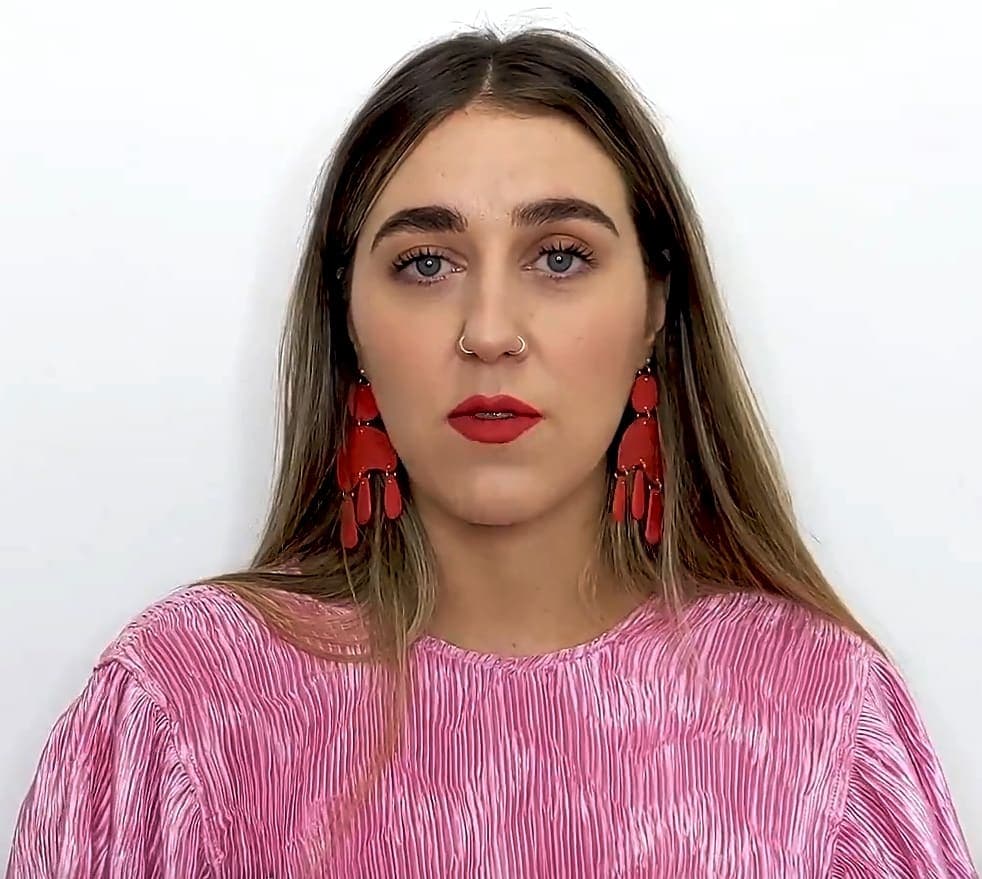
This is the part of the Harvey Weinstein story that still makes me angry, because it wasn’t missing evidence that protected him. It was everything wrapped around the evidence. Her name is Ambra Battilana Gutierrez — and if you’ve never heard it, that’s exactly the problem.
She was twenty-two. An Italian model, new to New York, who went to a business meeting in Manhattan in 2015 and left it shaken enough to walk straight into a police station. She told the NYPD that Harvey Weinstein had groped her.
Here’s what most people don’t realize about what happened next: the police believed her. They believed her enough to ask her to do something almost nobody would have the nerve to do.
Going Back In — Wearing a Wire
They asked her to see him again. Alone. Wearing a recording device.
Think about that for a second. She’d just reported a man for assaulting her, and the plan was to send her back into a room with him, wired up, to get him talking. She did it. On the recording, Weinstein can be heard pressuring her to come into his hotel room and, when she asks why he touched her, admitting he had — brushing it off with the line that he’s “used to that.”
It’s one of the most damning pieces of audio in modern celebrity crime. She got it. The NYPD got it. The Manhattan District Attorney’s office got it.
And then they didn’t charge him.
They Had the Confession. They Dropped It Anyway.
Let that sit, because it’s the whole point. This wasn’t a “he said, she said.” It was a “he said it out loud on tape, and they let him go.”
Then–Manhattan DA Cyrus Vance’s office declined to prosecute, arguing the recording — as damning as it sounds — wasn’t enough to prove a crime beyond a reasonable doubt. The office has always defended that decision as a legal judgment, not a favor.
But according to Ronan Farrow’s reporting, Gutierrez was up against far more than a cautious prosecutor. Weinstein reportedly surrounded himself with a formidable roster of insiders — among them Rudy Giuliani and Linda Fairstein, herself once the head of Manhattan’s sex-crimes unit — while investigators dug into Gutierrez’s past and a quiet PR campaign worked to paint her as unreliable.
Here’s where I’ll say the uncomfortable thing plainly: when a young immigrant model with a recorded confession loses, and a billionaire producer with famous lawyers wins, “not enough evidence” stops sounding like law and starts sounding like access. She ended up signing a nondisclosure agreement. The tape went into a drawer.
Have you ever wondered how many stories end right there — in the drawer?
Two Years in a Drawer
This one didn’t stay buried, and that’s down to timing and one reporter.
In October 2017, Ronan Farrow published his investigation into Weinstein in The New Yorker — and the recording the DA had waved off as insufficient became the smoking gun. Suddenly the public could hear it. You can argue about what a jury needs. It’s much harder to argue with a man admitting it in his own voice.
That reporting helped crack the entire Weinstein story open, and with it, the floodgates. The #MeToo movement as we know it — the hashtag, the reckoning, the dozens of women who finally felt safe coming forward — is hard to imagine without that tape being heard. A recording that a prosecutor said wasn’t enough turned out to be enough to help topple him and shift the whole culture.
The Convictions — and the Fine Print
Now, the part that gets flattened in viral posts, and where accuracy matters.
Weinstein was convicted in New York in 2020. But in April 2024, an appeals court overturned that conviction on procedural grounds — essentially, how the trial judge handled certain witnesses. He was retried. In June 2025, a New York jury again found him guilty, this time on one count of a criminal sexual act, with a split decision on the remaining counts. Separately, he was convicted in Los Angeles in 2022 and sentenced to sixteen years.
So no, it’s not the clean “convicted, done” ending a tweet wants. It’s messier and more honest: he remains a convicted sex offender who has spent years fighting in courtrooms — and the fight isn’t fully over.
Pure happiness.
— Ambra Battilana Gutierrez, on hearing Weinstein was found guilty
Why Her Name Should Be the Famous One
We remember the movement. We remember the mogul who fell. We rarely remember the twenty-two-year-old who wore the wire before any of it was safe to do.
What strikes me most about Ambra Battilana Gutierrez is that she got almost nothing out of it. She didn’t get her day in court in 2015. She got an NDA, a smear campaign, and years of being the woman “the DA didn’t believe.” She’s said she felt “pure happiness” when he was finally found guilty — and after everything, she was still generous enough to feel that.
She’s one of hundreds whose names history quietly filed away. Maybe the least we can do is un-file this one.
Her name is Ambra Battilana Gutierrez. Remember it.