Once a year, in a northern Italian city, a cage gets winched out over a freezing river while a crowd roars its approval. Inside is the figure the town has judged responsible for the year’s single most boneheaded decision. Then, slowly, they go under.
If you’ve been on the internet long enough, you’ve seen the photo and thought exactly what the rest of us thought: why don’t we all do this?
Good news — it’s real. The twist — it’s not quite what that viral caption is selling you. And honestly, the real version might be smarter than the myth.
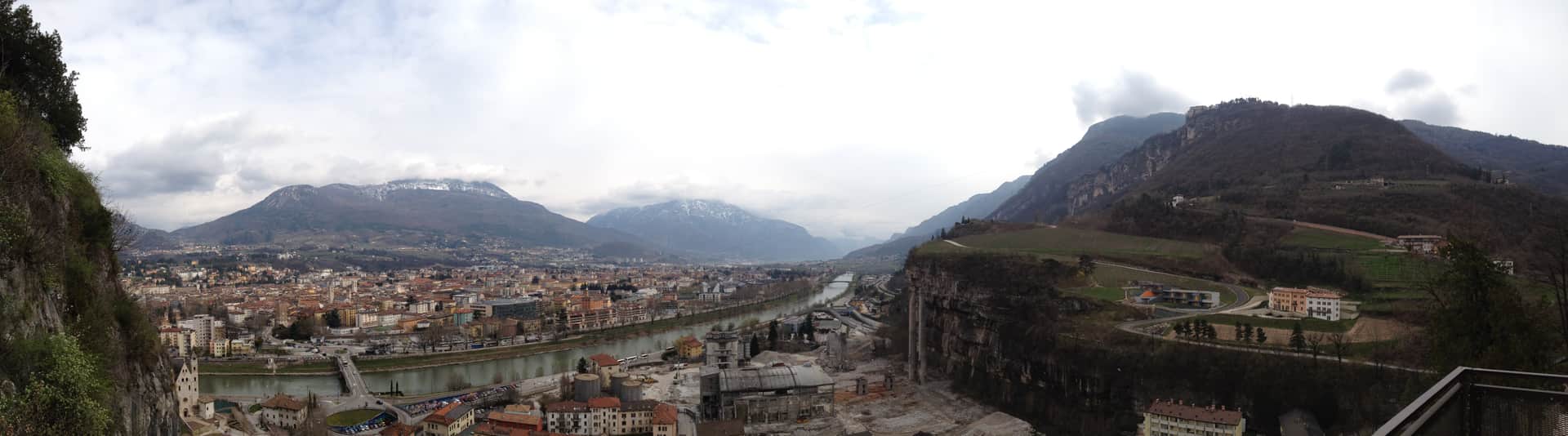
The place is Trento, a handsome city tucked in the Alps of northern Italy, closer in spirit to Austria than to Rome. Every June it throws a sprawling street festival called the Feste Vigiliane, in honour of San Vigilio, the city’s patron saint. There’s food, costumes, a raft race, a chaotic polenta-flinging battle between two teams called the Ciusi and the Gobj — the kind of centuries-old civic chaos that most modern cities have quietly retired.
And then there’s La Tonca. The main event. The one that goes viral every single year, usually with a caption that oversells it.
Meet La Tonca, Trento’s Annual Reckoning
Here’s the basic shape of it. Over the course of the year, the people of Trento keep a running mental tally of their public figures — the councillor who greenlit something absurd, the official whose big idea backfired, the local bigwig who stepped on a rake in full public view. Come festival time, the town settles the score.
One “winner” is chosen. The person judged to have committed the year’s most foolish, tone-deaf, or self-defeating act. And their reward is to be symbolically lowered, in a cage, into the cold waters of the Adige — the second-longest river in Italy, and not exactly bathwater temperature even in June.
The crowd loves it. That’s the point. This isn’t a solemn civic ceremony; it’s a roast with a river. Think of it as the town collectively rolling its eyes at power, out loud, in public, with a crane.
What most people overlook is how old this instinct is. We tend to assume public mockery of leaders is a modern sport invented by Twitter. It isn’t. Trento has been doing a version of this for centuries, long before anyone could subtweet a mayor.
How the Whole Thing Actually Works
The dunking gets the photos, but the dunking isn’t really the heart of it. The heart of it is the trial.
The Court of Penance
Before anyone goes anywhere near the water, Trento holds a mock tribunal — the Tribunale di Penitenza, or Court of Penance. It’s a full satirical performance: charges are read, the year’s civic sins are laid out, and the “defendant” is publicly held to account for whatever nonsense earned them the nomination.
It’s theatre, but it’s pointed theatre. The comedy works because everyone in the crowd already knows exactly what’s being referenced. The blunders are local, specific, and fresh. This is a town telling its own leadership, to its face and in front of everyone: we saw that, and we haven’t forgotten.
Have you ever wished you could put a decision-maker on a stage and simply ask them to explain themselves? Trento does that. Annually. With costumes.
The Cage, the Crane, and the Adige
Then comes the spectacle. A cage — in some years an ornate iron affair, in others a rougher wooden-and-metal build like the one in the photos that blow up online — is suspended over the Adige. The condemned is “sentenced.” The cage descends. The river does the rest.
Rescue crews sit right there in the water on jet-skis, which tells you something important about the modern version: nobody is actually in danger. This is choreographed. It’s a stunt, performed for laughs and catharsis, not cruelty.
Which brings us to the part the internet almost always gets wrong.
The Twist the Viral Posts Leave Out
Here’s where I have to gently ruin the fantasy — because the whole appeal of the viral version is the idea that a real, named politician gets locked in a cage and dropped in a river against their will. That’s the part that makes people cheer. It’s also the part that isn’t true.
The person actually lowered into the Adige is a performer — a stand-in. In the official language of the event, the “guilty party” is immersed tramite controfigura: by means of a body double. The real politician is roasted in absentia, in effigy and in spirit. They are not physically caged and dunked. Snopes has fact-checked exactly this claim, and that’s the correction it lands on: it’s a satirical ritual, not a literal punishment.
Does that make it less fun? Personally, I don’t think so — I think it makes it smarter. A society that actually threw its officials into rivers would be a mob. A society that stages the whole thing as pantomime gets all the catharsis of accountability with none of the assault charges. It’s the difference between a lynching and a roast, and that difference is the entire point of civilization.
Here’s where I’ll disagree with the way these stories usually get shared: the “twist” isn’t a buzzkill. The twist is the best part.
Trento figured out how to shame power safely six hundred years before we invented the group chat.
Where a Tradition Like This Even Comes From
So how does a town end up with a crane, a cage, and a grudge as an annual fixture?
When the Dunking Was Real
La Tonca reaches back to somewhere between the 14th and 17th centuries — and in those days, the dunking wasn’t a bit. Public immersion, the stocks, the cage, the pillory: these were real punishments across medieval and early-modern Europe, used to humiliate people convicted of everything from fraud to public nuisance. Shame was a legal instrument. Being displayed, mocked, and physically punished in the town square was the sentence.
Trento’s ritual is a direct descendant of that older, harsher world. The bones of it — the cage, the water, the public judgment — are genuinely medieval.
From Punishment to Pantomime
What changed is the target and the tone. Somewhere along the way, the ritual stopped being a tool the powerful used against ordinary people, and flipped. Now it points upward. The cage isn’t for the pickpocket anymore; it’s for the powerful. The people hold the trial, and the authorities are the ones on the hook.
That inversion is the whole story, and it’s easy to miss. A punishment invented to keep the little guy in line became a once-a-year ritual where the little guy gets to judge the big guy. The tool didn’t change much. Who holds it did.
Why I Think the World Actually Needs More of This
I’ll say it plainly: I’m with the person who looked at this and said they’d be “down for it to become a worldwide tradition.” Not the literal cage — we’ve established that even Trento doesn’t do the literal cage. I mean the idea.
Because think about what La Tonca really is. It’s a structured, scheduled, community-wide moment of accountability that everyone actually shows up for. It’s not a comment section screaming into the void. It’s not a poll nobody reads. It’s the whole town, in one place, agreeing out loud on the year’s biggest civic failure and making the people responsible sit with it.
The biggest mistake we make with public accountability today is that it’s constant, formless, and exhausting. Outrage never resolves; it just rolls into the next thing. What Trento has is ritual — a container. It happens once a year, it has rules, it ends, and then everyone goes and eats polenta. There’s a strange health in that. You get the release valve without the permanent war.
When was the last time your town collectively agreed on anything, let alone laughed about it together?
But Should We Really Bring Back Public Shaming?
Now, the fair counterargument, because I promised myself I’d make it.
Public shaming has a genuinely dark history, and we’re living through a moment that should make anyone cautious about celebrating it. We’ve watched online mobs destroy people over a bad joke, a misread tweet, a moment taken out of context. “Let’s publicly humiliate the person we’ve decided is guilty” is a sentence that has ended very badly, very often.
So here’s where the Trento model earns its keep — and where I think the distinction really matters. La Tonca has three guardrails the internet doesn’t: it targets power, not private citizens; it’s consensual theatre, not a surprise ambush; and it ends. Nobody’s life is ruined. There’s no permanent record. The mayor doesn’t lose their livelihood; they lose face, for an afternoon, in a way they’ll survive and probably laugh about later.
Strip those guardrails away and you don’t get La Tonca — you get a pile-on. The tradition works precisely because it’s bounded. Remove the rules and the same instinct turns toxic fast. That’s the part worth copying, and the part most people cheering the photo don’t clock.
The Bottom Line
So no, Trento is not really locking its worst politician in a cage and drowning them a little bit every June. It’s staging an elaborate, centuries-old civic joke, with a stand-in taking the plunge and rescue divers idling nearby. The reality is tamer than the myth.
But it’s also, I’d argue, better than the myth. Because what Trento actually preserved isn’t a punishment — it’s a pressure valve. A once-a-year, community-sized way of telling power that it’s being watched, that this year’s blunders were noted, and that nobody is too important to be laughed at by the people they serve.
We don’t need the cage. We need the reminder. And maybe a little cold water wouldn’t hurt.