Updated 6 October 2026. This article has been rewritten and fact-checked. The earlier version misspelled the family name and included details that could not be verified.
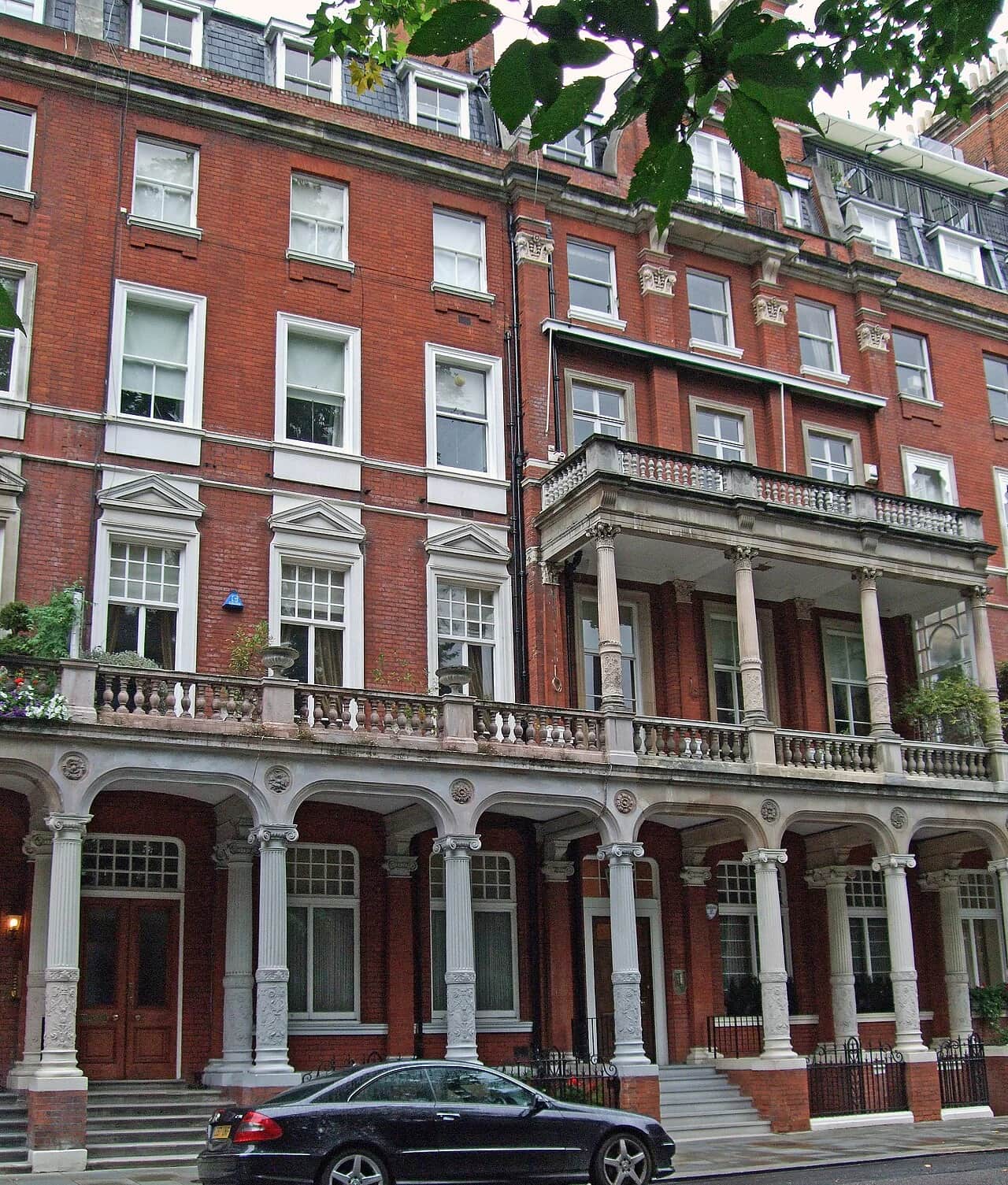
On the afternoon of 17 November 1972, police were called to a penthouse flat in Cadogan Square, one of the most expensive addresses in Chelsea. In the kitchen they found Barbara Daly Baekeland, 51, dead on the floor. She had been stabbed once with a kitchen knife, which severed an artery and killed her almost instantly. Her son, Antony, 26, was in the flat. By the accounts later collected about that day, he was on the telephone ordering a Chinese takeaway.
The killing became one of the most notorious society murders of its era, the subject of a bestselling oral history and a 2007 film. Behind the gossip about wealth and alleged incest is a sadder, more ordinary story about a young man with severe mental illness and the people who failed to get him treated.
A fortune made of plastic
The Baekeland money came from Antony's great-grandfather, Leo Baekeland, a Belgian-born chemist who in 1907 invented Bakelite, the first fully synthetic plastic. It made the family rich for generations.
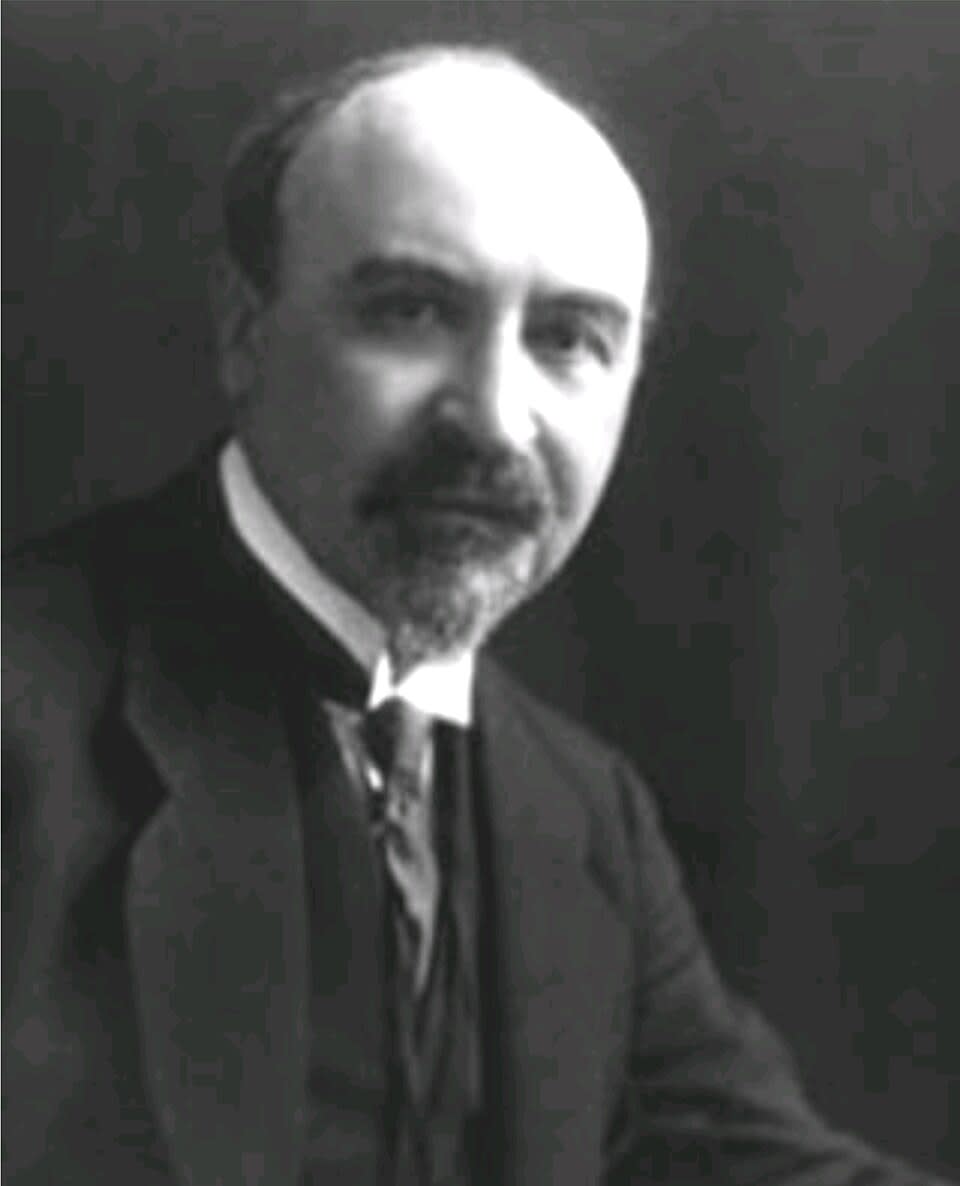
His grandson Brooks Baekeland married Barbara Daly, born in Cambridge, Massachusetts, in 1921, a striking former model with Hollywood ambitions. Their only child, Antony, known as Tony, was born in August 1946. The family lived a restless expatriate life between New York, Paris and the Mediterranean, moving in artistic and society circles. The marriage was turbulent, with affairs on both sides and suicide attempts by Barbara, and it ended in divorce in 1968.
The cracks in the family ran through Tony. By the mid-1960s the family was living in Europe, and in 1967, while visiting Morocco, the 20-year-old began an intimate relationship with an Australian man. His mother was furious and travelled to Spain to bring him home. For a young man already struggling, the message from both parents was that who he was had to be fixed.
An illness no one treated
Tony grew up shy, sensitive and frequently uprooted. By his early twenties he was showing signs of serious mental illness, later diagnosed as schizophrenia. He was gay, which his parents could not accept. According to accounts gathered for the book Savage Grace, Barbara tried to "cure" his sexuality, and those accounts allege that this included a sexual relationship with her son. The allegation has been repeated ever since, but it was never tested in a court. What is clearer is that Brooks distrusted psychiatry, and that Tony did not receive sustained treatment.
That matters more than the scandal. Schizophrenia most often first appears in the late teens or twenties, and it is treatable. Most people with the condition are never violent, and they are far more likely to be harmed by others than to harm anyone. But untreated psychosis, especially combined with drug use, a chaotic home and no one willing to insist on care, raises the risk. Tony's life had nearly all of those factors, and the adults around him had the money to get him the best help available.
The warning signs were not subtle. In late July 1972, outside the flat in Cadogan Square, Tony tried to push his mother into the path of oncoming traffic. Her friend Susan Guinness intervened. Police arrested him for attempted murder, but Barbara refused to press charges. He was admitted to the Priory psychiatric hospital in south London and released soon afterwards. By the autumn he was spending long periods in catatonic trances.
17 November 1972
Shortly before she died, Barbara had dined with a friend in London and talked warmly about the life she shared with her son. Friends who saw the reality were less sure. The relationship was possessive and volatile, and the two had argued with knives before.
On the day she died, Barbara and Tony argued, reportedly about a friend he had invited to the flat whom she did not want to see. The argument turned violent. Tony hit her, she ran into the kitchen, and he followed her, picked up a knife and stabbed her. When he was arrested, according to accounts of the case, he claimed his grandmother, who was thousands of miles away in New York, had done it.
My mind was slightly wacky and I was very much under my mother's influence. I felt she was controlling my mind.
— Antony Baekeland, in his statement to police after the killing
His grip on what had happened was loose. Held on remand at Brixton prison, he would ask visitors how his mother was, as if she were still alive.
At the Old Bailey in 1973 he was defended by the barrister and writer John Mortimer. He was convicted of manslaughter on the grounds of diminished responsibility and sent to Broadmoor, the high-security psychiatric hospital in Berkshire, for an indefinite period.
Diminished responsibility is a partial defence in English law, introduced by the Homicide Act 1957. If a defendant who killed was suffering from an abnormality of mind that substantially impaired their responsibility, a murder charge is reduced to manslaughter. It does not mean the killing is excused. It means the court accepts that illness played a real part, and it opens the way to a hospital order rather than a life sentence in prison.
He spent nearly eight years there. Accounts of that time describe a man who seemed, at least on the surface, to settle: he worked in the hospital's handicrafts shop and received visitors from his mother's old social circle. His father saw something else. Brooks, who had remarried, was disturbed by gifts Tony made at Broadmoor and sent to his young stepbrother in the United States, and described his son as "evil". He believed Tony should have been convicted of murder.
The release
His grandmother, Nina Daly, campaigned for years for his release so that he could live with her in New York. She enlisted influential friends, including Hugo Money-Coutts of the banking family, and the case was discussed between the American embassy in London and officials in Washington. She believed that under her care he could live a normal life. His father opposed it, believing Tony could kill again. On 21 July 1980 Tony was discharged from Broadmoor on condition that he return to the United States, and he flew to New York to live with his grandmother, who was 87.
The arrangements were thin. By most accounts he made the flight accompanied only by a near-stranger, and there was little in the way of psychiatric supervision waiting for him in Manhattan. His grandmother was herself frail and needed care. His Broadmoor consultant later admitted the release had been a "faux pas".
On 27 July, six days later, he attacked her with a kitchen knife after an argument over a phone call he wanted to make to England. She was stabbed eight times and suffered broken bones, but survived. He was charged with attempted murder and held at Rikers Island, New York's main jail complex, where he spent the next eight months under psychiatric assessment while the case waited for his records from Broadmoor. On 20 March 1981, after a court hearing at which his case was adjourned because his medical records had still not arrived from Britain, he returned to his cell. About half an hour later he was found dead with a plastic bag over his head. His death was recorded as suicide, although his father believed he had been killed. He was 34.
The Baekeland case
- 1907Leo Baekeland invents Bakelite, founding the family fortune.
- 1946Antony Baekeland is born to Brooks Baekeland and Barbara Daly.
- 1968Brooks and Barbara divorce.
- Jul 1972Tony tries to push his mother into traffic in Cadogan Square; she refuses to press charges.
- 17 Nov 1972Tony stabs his mother to death in their London flat.
- 1973He is convicted of manslaughter by diminished responsibility and sent to Broadmoor.
- 21 Jul 1980He is released and flies to New York to live with his grandmother.
- 27 Jul 1980He stabs his grandmother, who survives; he is held at Rikers Island.
- 20 Mar 1981He is found dead in his cell, aged 34.
Savage Grace
The story was told in full in 1985 in Savage Grace, an oral history by Natalie Robins and Steven M. L. Aronson built from letters, diaries and interviews with people who knew the family. In 2007 it became a film of the same name, with Julianne Moore as Barbara and Eddie Redmayne as Tony.
The book's form is worth keeping in mind. Because it is an oral history, much of what is known about the family's private life, including the allegations about Barbara and Tony, comes from the recollections of friends and relatives, told years later and shaped by their own loyalties and grievances. That does not make it wrong, but it is why the most lurid details are best treated as accounts rather than established fact.
It is easy to tell this as a lurid tale about the rich behaving badly, and plenty of retellings do. Read the facts in order, though, and what stands out is how many chances there were to intervene. A son attempted to kill his mother in public, and the response was a short hospital stay. Years later a man with a history of violence was released into the care of an 87-year-old woman, with no plan that matched the risk. Families that look perfect from outside can be coming apart; the research on family estrangement shows how common quieter versions of that are. Tony also left behind words that read, in hindsight, as a confession of how little he understood what was happening to him, a theme that runs through history's most famous confessions.
The final irony was noted at the time. The fortune that insulated the Baekelands from consequences was made of plastic, and so was the bag that ended the last of their line's tragedy.
Sources
- Natalie Robins and Steven M. L. Aronson, Savage Grace: The True Story of Fatal Relations in a Rich and Famous American Family (Simon & Schuster, 1985).
- The Washington Post, "Heir Accused in Stabbing" (29 July 1980).
- Crime+Investigation UK, "Death of a socialite: the Barbara Baekeland case".
- Wikipedia, "Barbara Daly Baekeland" (consulted for dates, cross-checked against the sources above).
- Savage Grace (film), directed by Tom Kalin (2007).
- NHS, "Schizophrenia" (overview of symptoms, onset and risk).