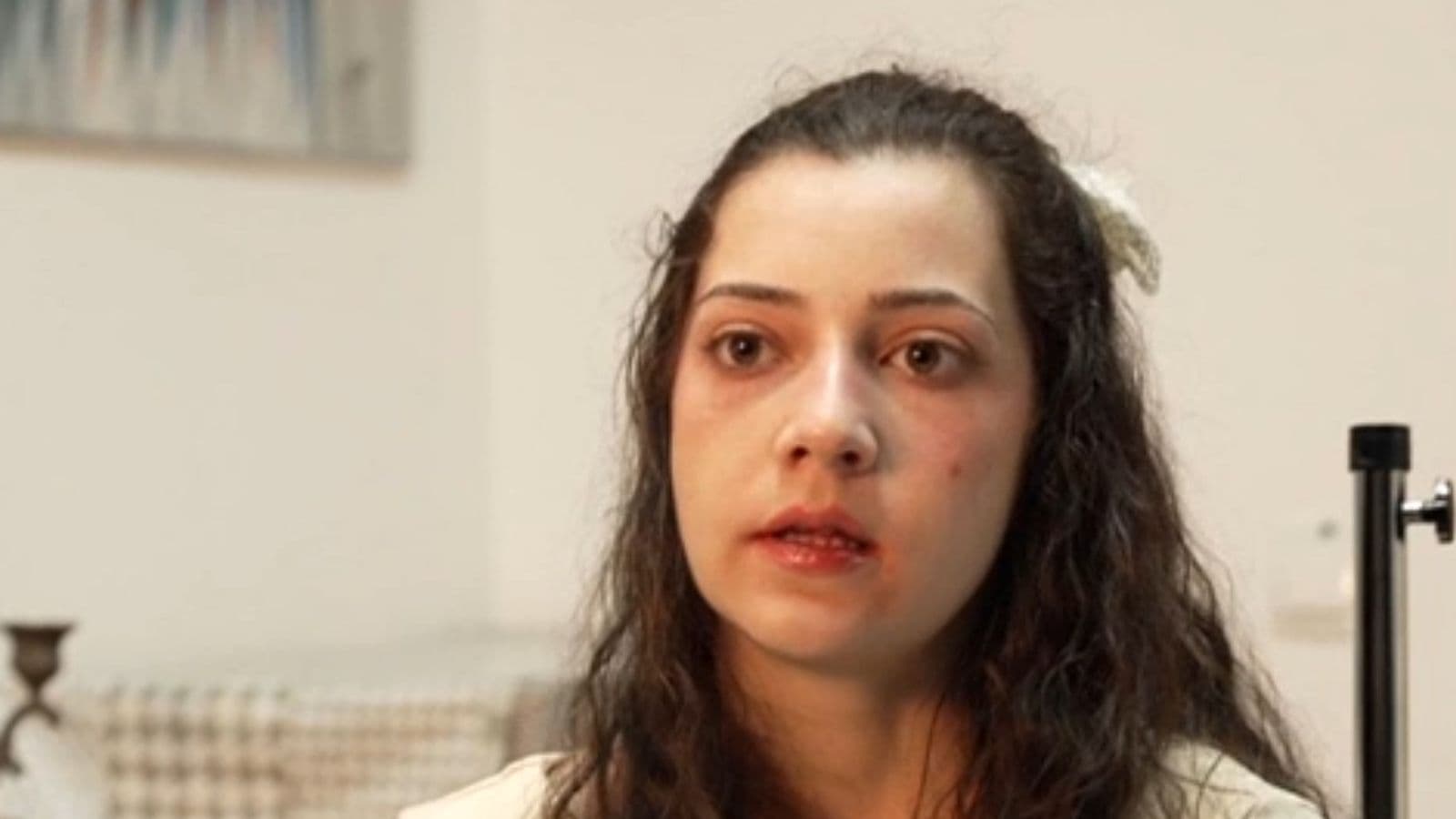
She told the truth. The machine said she didn't. The officers believed the machine. Her rapist walked free and found two more years of victims before anyone stopped him.
She did everything she was supposed to do.
She reported the assault. She went to the police. She sat across from an officer and told them exactly what happened to her.
And then they handed her a polygraph machine and told her to prove it.
She "failed."
Case closed. Man free. Two more years of assaults before anyone stopped him.
And until very recently, this was legal in Utah. In most of the country, it still is.
I told the truth. I sat in that room and told them everything. And they told me the machine said I was lying. That was the end of it. He was just — free.
— A survivor whose polygraph "failure" ended the investigation into her assault
What Utah Just Did — and Why It Matters
Utah passed legislation banning law enforcement from requiring rape victims to submit to polygraph examinations as a condition of filing or continuing a sexual assault report.
That sentence should not need to exist. The fact that it does — that a state legislature had to pass a law to stop police from subjecting trauma survivors to lie detector tests before agreeing to take their case seriously — tells you almost everything you need to know about how the American criminal justice system has historically treated victims of sexual violence.
The legislation was driven in part by a specific case. A woman reported a sexual assault to police. Before they would proceed with the investigation, they required her to take a polygraph. The test results indicated deception. The officers closed the case.
Her attacker continued for two more years.
He assaulted more women during those two years. Women who might have been protected if the first case had been taken seriously. Women whose assaults were a direct consequence — not of the perpetrator alone, but of a system that decided a machine's output mattered more than a survivor's testimony.
When he was eventually caught, the evidence connecting him to the earlier unreported case emerged. The woman had been telling the truth the entire time. The machine had been wrong. And two years of assaults had happened in the space between.
What Most People Don't Know About This
Here is the part that makes this not just a policy story but a scientific scandal.
Polygraphs don't work.
Not in the way most people imagine. Not in the way television depicts them. Not in any way that meets the basic standard of scientific reliability.
The American Psychological Association states plainly that polygraph tests cannot reliably detect lies. The National Academy of Sciences, in a sweeping 2003 review commissioned by the U.S. Department of Energy, concluded that the scientific evidence for polygraph validity was "scanty and modest at best." The test is banned as evidence in most federal courts. It is considered inadmissible in the majority of state courts. The FBI does not use polygraph results as sole determining evidence in criminal investigations.
And yet police departments across America were using it as a gatekeeper for sexual assault victims.
Not as corroborating evidence. Not as one tool among many. As the deciding factor in whether a rape investigation would even begin.
Here is the part almost nobody discusses: trauma physiologically mimics the very responses the polygraph is designed to detect as deception. Elevated heart rate. Increased perspiration. Quickened breathing. Changes in skin conductivity.
Every symptom of acute trauma looks, to a polygraph, like lying.
The most distressed, most traumatized, most honest rape survivor sitting in front of a polygraph machine will produce results that the machine interprets as deception — not because she is lying, but because her body is doing exactly what a body does when it has been through something catastrophic. The test was not just unreliable. It was designed, in effect, to fail the people most in need of being believed.
This Was Never About Finding the Truth
Let's be direct about something.
Using a polygraph on a rape victim was never really about determining whether she was telling the truth. It was about having a procedural mechanism — one that looked clinical and objective — to justify not pursuing cases that were difficult, resource-intensive, or unlikely to result in conviction.
The polygraph gave officers cover. It turned a decision not to believe a victim into a technical finding. Instead of a detective saying "I don't find this credible," the machine said "deception indicated" — and the file was closed with the appearance of due process intact.
This is the same system that produced the epidemic of untested rape kits sitting in police evidence rooms across the country. In 2020, the Joyful Heart Foundation estimated there were approximately 150,000 untested rape kits in the United States. Evidence collected from survivors' bodies, sitting in a box on a shelf, never sent to a lab, never processed.
The polygraph and the untested kit are the same philosophy in different forms: sexual assault cases are not a priority, and when the system wants to close them, it will find a way.
The polygraph just made it faster.
"A rape victim's trauma response — racing heart, shallow breath, hyperarousal — is physiologically indistinguishable from what a polygraph reads as deception. The test was built to fail survivors."
— On the intersection of trauma science and polygraph testing
Why This Still Matters Today
Utah is not the first state to address this. The Violence Against Women Act, reauthorized by Congress in 2005, included a provision making it illegal to require polygraphs as a condition of sexual assault investigation for federally funded agencies.
But implementation has been inconsistent, enforcement has been weak, and the practice has continued in various forms across the country.
Approximately thirty states still have no explicit state-level ban on the practice. That means right now — today — a woman in one of those states can report a rape, be required to submit to a polygraph before investigators will proceed, produce a result the machine classifies as deception, and have her case closed.
And her attacker walks out.
The broader context matters here too. The national conviction rate for rape is approximately 2-5% of reported cases — already catastrophically low. When you add a procedural barrier at the very first step of reporting, you are not weeding out false claims. You are deterring true ones. You are building a system that punishes the act of coming forward.
Research consistently shows that false rape reports make up between 2% and 10% of all reports — roughly comparable to false reports of other violent crimes. Yet sexual assault uniquely requires victims to prove their credibility before investigators will proceed.
No other violent crime works this way. Robbery victims are not polygraphed before their case is opened. Assault victims are not asked to prove they were really hit. The polygraph requirement existed because the system was built, from its foundations, with more skepticism toward rape victims than toward any other class of crime victim in the country.
The Women Nobody Counted
Think about the women he assaulted in those two years.
They don't have names in this story. They are abstract — "additional victims," "subsequent assaults." The law and the media tend to count crimes, not the weight of what those crimes cost in human terms.
But those women are real. And every one of their assaults was, in part, a consequence of a system that decided a machine's blinking needle mattered more than a survivor's word.
The first woman didn't just lose her case. She watched — from a distance, from silence, probably from a private grief she carried alone — as her attacker continued. Knowing she had tried to stop it. Knowing the system had handed him back his freedom with a printout.
That is what a polygraph requirement costs. Not an abstract policy failure. Specific women. Specific assaults. Specific years of a man operating freely because a test that the scientific community rejected decades ago told a police officer what he apparently needed to hear.
What a Real Reform Looks Like
Banning polygraphs for rape victims is not radical. It is the minimum.
The deeper reform requires addressing the investigative culture that made the polygraph feel necessary in the first place — the chronic under-resourcing of sexual assault units, the lack of trauma-informed training, the institutional skepticism toward complainants that permeates law enforcement at every level.
It requires testing the backlog of rape kits. It requires standardized trauma-informed interview protocols. It requires accountability when cases are closed without proper investigation.
Utah's law is a step. A real one. It will prevent future versions of this exact story from happening in that state.
But thirty other states still haven't taken it. And in every one of those states, a woman is sitting across from an officer right now, being handed a machine, being asked to prove that the worst thing that ever happened to her actually happened.
The Point
She told the truth. The machine said she was lying. The officers believed the machine. Her rapist spent two more years assaulting women because a device the scientific community has rejected for decades was used to close her case. Utah passed a law to stop this from happening again. Thirty states haven't. The polygraph didn't fail her because the technology was flawed — though it is. It failed her because the system was built, from the ground up, to make it easier to close a rape case than to pursue one. The machine was just the instrument. The skepticism was already there.
Sources
1. National Academy of Sciences. (2003). The Polygraph and Lie Detection. Committee to Review the Scientific Evidence on the Polygraph. National Academies Press.
2. American Psychological Association. (2004). "The Truth About Lie Detectors (aka Polygraph Tests)." APA Science Directorate.
3. Violence Against Women Act Reauthorization (2005). Section 1001 — Polygraph Restrictions for Sexual Assault Victims. U.S. Congress.
4. Lisak, D., Gardinier, L., Nicksa, S.C., Cote, A.M. (2010). "False Allegations of Sexual Assault: An Analysis of Ten Years of Reported Cases." Violence Against Women, 16(12), 1318–1334.
5. Joyful Heart Foundation. (2020). "Ending the Rape Kit Backlog." joyfulheartfoundation.org.
6. Utah State Legislature. HB [relevant bill number], An Act Relating to Polygraph Examinations of Sexual Assault Victims, 2024 session.
7. RAINN (Rape, Abuse & Incest National Network). "The Criminal Justice System: Statistics." rainn.org, 2024.