She was 25 years old. She had been destroyed by four men, then destroyed again by every day that followed. She asked to die. Her father begged the world to keep her alive. Every court said no. She died today.
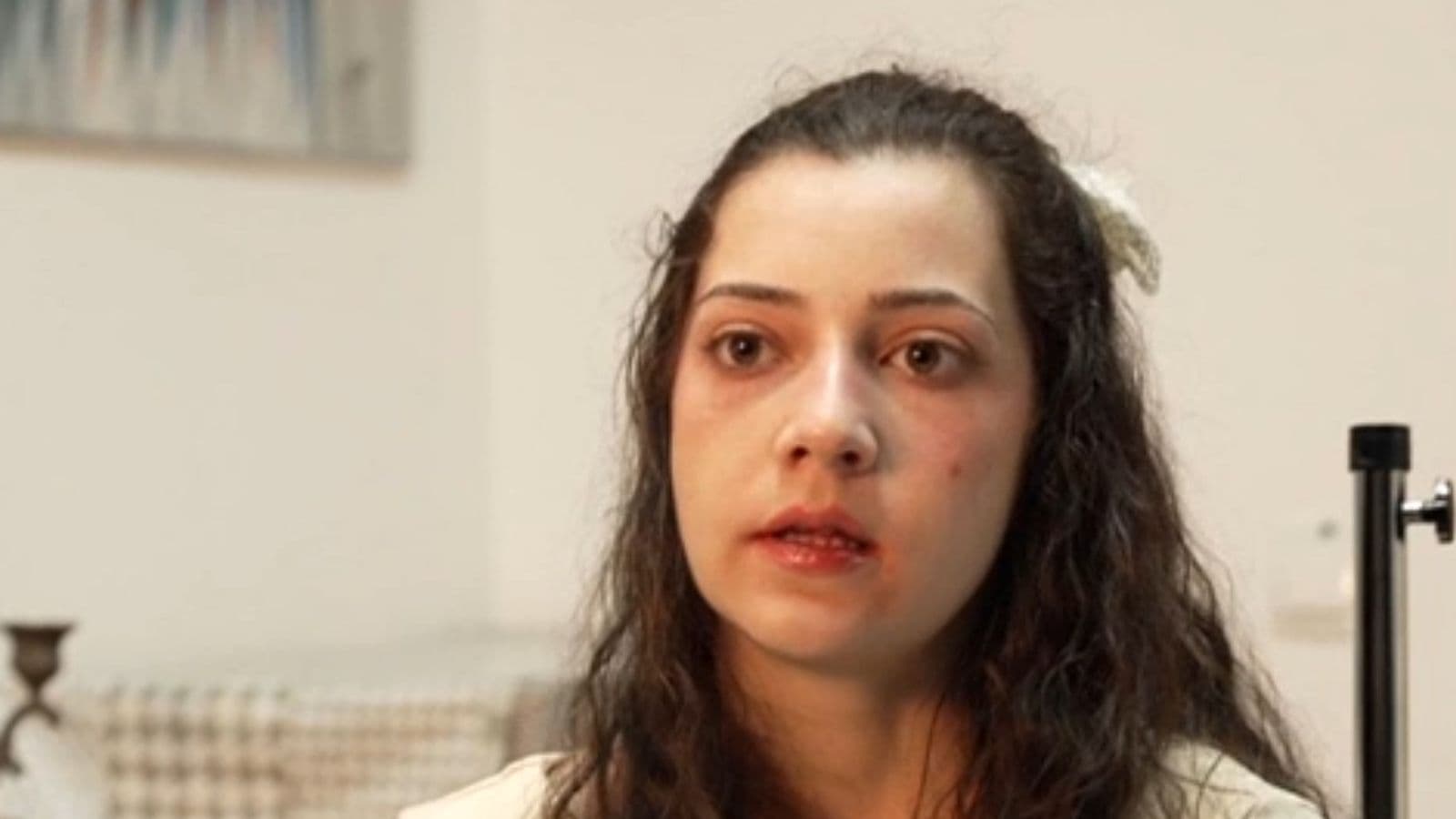
Her name was Noelia Castillo.
And by the time you read this, she is gone.
Not because of an illness. Not because of an accident. Because four men did something to her that she could not live with — and then the body she was left with made sure she couldn't forget it for a single second of any day.
She asked for one thing. The right to stop suffering. And the answer, from every legal body she encountered, was yes.
I just want to stop suffering.
— Noelia Castillo, 25, in her final public statement
What They Did to Her
In 2022, Noelia Castillo was gang-raped by her ex-boyfriend and three other men in Spain.
Four men. Someone she had once trusted and three others he brought with him.
What followed was not survival in any way the word is normally used. In the aftermath of the assault, in a state of psychological devastation so total that continuing to exist inside her own body became unbearable, Noelia jumped from a fifth-floor building.
She did not die.
She became paraplegic from the waist down. Wheelchair-bound. Incontinent. And trapped inside a body that was now a source of constant, unrelenting neuropathic pain — the kind of pain that doesn't respond to most medication, that doesn't fade, that fires through damaged nerves every hour of every day like an electrical current that never shuts off.
She was in her early twenties.
The men who did this to her had taken her body once. The fall took it a second time. And the pain took it every single day after that.
She Asked to Die. Her Father Begged Her to Live.
Spain legalized euthanasia in June 2021 under the Organic Law on the Regulation of Euthanasia. The law allows individuals with serious, chronic, debilitating, or terminal conditions to request assisted dying — provided the suffering is intolerable and the request is voluntary, informed, and repeated over time.
Noelia met every criterion. Her suffering was documented. Her condition was irreversible. Her request was consistent, clear, and made over a sustained period.
Her application was approved.
And then her father fought it.
Not out of cruelty. Out of the most devastating kind of love — the kind that cannot accept that the child you raised, the daughter you held, the person you would die for, wants to leave. He argued that Noelia's mental health had been so shattered by the assault and its aftermath that she was not capable of making this decision. That her desire to die was a symptom of her trauma, not a rational choice. That she needed treatment, not death.
He took the fight everywhere a father could take it.
Every Court Said the Same Thing
Her father appealed first to the regional courts. Rejected.
He went to Spain's Constitutional Court. Rejected.
He went to the Supreme Court. Rejected.
He went to the European Court of Human Rights — the highest human rights body on the continent, the last possible avenue. Rejected.
Every single legal body that reviewed the case arrived at the same conclusion: Noelia Castillo was of sound mind. Her suffering was real, documented, and irreversible. Her decision was her own. And no one — not even a father who loved her — had the right to overrule it.
That is the sentence that sits at the center of this story like a stone. No one had the right to overrule it. Not even love.
"My daughter was destroyed by what those men did to her. I am not fighting against her. I am fighting for her. She cannot see that there could still be a life worth living."
— Noelia's father, in his appeal to the European Court of Human Rights
The Question Nobody Wants to Answer
This story does not have a clean moral. It has a wound.
On one side: a woman's right to autonomy over her own body. The right to say enough. The right to decide, after years of pain that no medication could control and no therapy could erase, that she did not want to exist inside that body for one more day. That is a right. It is codified in Spanish law. It was affirmed by every court that reviewed her case.
On the other side: a father watching his daughter choose to die. A man who held her when she was born and who will bury her before the week is over. A parent who looked at every institution in Europe and said please, she is not well enough to make this choice — and was told, by every one of them, that she was.
Both of these things can be true at the same time. That is what makes this unbearable.
Noelia's autonomy was real. Her father's grief is real. The law can hold one of those things. It cannot hold both.
But Here Is the Part That Should Haunt You
Noelia Castillo did not want to die because she was tired of living.
She wanted to die because four men made her life unlivable.
That is the part of this story that gets lost in the euthanasia debate, the legal analysis, the ethics discussions. A young woman is dead because she was raped. Everything that followed — the jump, the paralysis, the pain, the wheelchair, the euthanasia request, the court battles — all of it traces back to one night and four men who decided her body was theirs to use.
They are the reason she is gone.
Not the law. Not the courts. Not the doctors who administered the procedure. Not even Noelia herself.
Four men. They didn't just assault her that night. They set in motion a chain of destruction so total that it ended with a 25-year-old woman asking a government to help her stop existing. That is what sexual violence does. Not just in the moment. In every moment after.
The Men Who Did This
Her ex-boyfriend and the three men who participated in the assault face criminal proceedings. The legal process is ongoing.
But here is the thing that should make you angry enough to not look away.
Noelia is dead. She is dead today. She died in a care home in Catalonia, by a procedure she requested because the life those men left her with was not a life she could bear.
And her rapists are alive.
They are breathing. They are walking. They have the use of their legs. They are not in constant neuropathic pain. They are not in wheelchairs. They have not spent years begging a court for the right to stop suffering.
The victim is dead. The perpetrators are not. Whatever sentence those men eventually receive, it will never equal what they took. Because what they took was not one night. It was a life. The whole thing. Every year she would have had. Every morning. Every possibility. Gone.
"She didn't die today. She died in 2022. Today they just made it official."
— A comment on the case that has circulated widely on Spanish social media
A Young Life Destroyed
Noelia Castillo was 25 years old.
At 25, most people are starting their lives. Making plans. Figuring out who they are. Building something. Falling in love. Getting it wrong. Trying again.
Noelia spent her final years in a care home, unable to walk, unable to control her own body, unable to escape the pain that followed her from the moment she woke to the moment she managed to sleep — if she slept at all.
She asked for one thing.
I just want to stop suffering.
Not to make a political statement. Not to advance a legal debate. Not to become a headline.
She just wanted it to stop.
The Point
She was raped by four men. She jumped from a building. She survived — paraplegic, in constant pain, trapped inside a body that had become a prison. She asked to die. Her father, broken by love, fought every court in Europe to stop it. Every court said the choice was hers. She was 25 years old. She died today in a care home in Catalonia. The men who did this to her are still alive. Whatever you believe about euthanasia, about autonomy, about the right to die — sit with that last sentence for a moment. She is gone. They are not. That is not a legal debate. That is an obscenity.
Sources
1. Spain's Organic Law 3/2021 on the Regulation of Euthanasia (Ley Orgánica 3/2021, de 24 de marzo, de regulación de la eutanasia). Boletín Oficial del Estado, 2021.
2. European Court of Human Rights — case filings related to the appeal by Noelia Castillo's father. ECHR press communications, 2025.
3. El País. Reporting on the case of Noelia Castillo and the euthanasia proceedings in Catalonia, 2024–2025.
4. La Vanguardia. "El padre de Noelia Castillo agota todas las vías legales." Coverage of the Constitutional Court and Supreme Court rejections.
5. BBC News. "Spain euthanasia: Gang-rape victim, 25, dies after courts reject father's appeals." March 2026.
6. Amnesty International Spain. Statements on sexual violence, victim support, and the legal framework surrounding Noelia Castillo's case.